A Parochial School Finds New Life in the Heart of a Parish

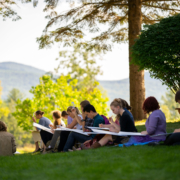
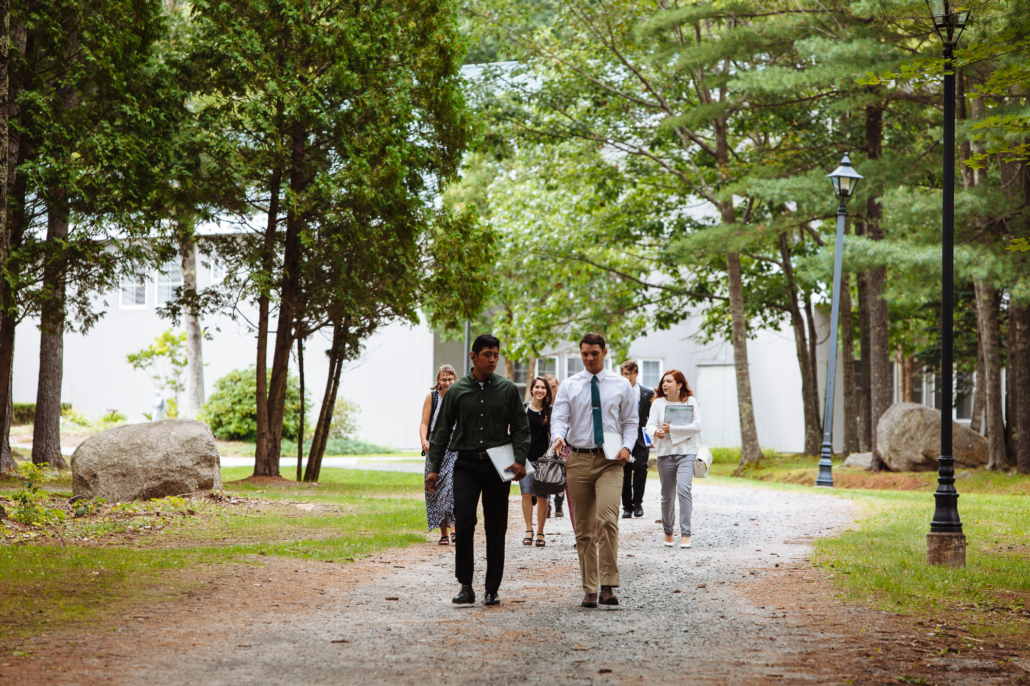
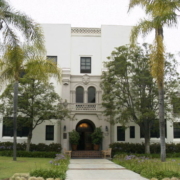
A few years ago, a visitor traveled to Grand Rapids, Michigan, to tour Sacred Heart Academy, a classical, K-12, parochial Catholic school that has turned around completely after nearly closing its doors.

The visitor said, “This is incredible. This is like looking into the past.”

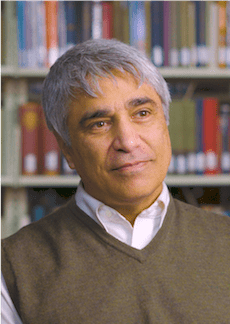
Fr. Robert Sirico, then the pastor of Sacred Heart Parish, replied, “No, what you’re looking at is the future.”

A bright future for Catholic parochial schools would be a welcome change. The number of elementary students in parish schools has declined nearly 75 percent since the 1960s, and weak catechesis has propelled many Catholic parents toward independent schools and homeschooling.

But a change is underway. Sacred Heart Academy is one of a growing number of parochial schools that have embraced a more distinctly Catholic formation in both the faith and the liberal arts, which is attracting more Catholic families and strengthening parish life.

And Fr. Sirico, whose faith and leadership made the transformation possible at Sacred Heart, has helped spark excitement among other priests and bishops to bring about the renewal of parochial education.

Continue reading at Crisis Magazine…

John Paul II Was Right: Catholic Athletes Must Be Champions of Virtue

Twelve-year-old me looked forward to one thing every day: swim practice. Every day, five days a week, I was in the pool churning out laps for at least an hour. And I did not want to be anywhere else.

Between dreams and aspirations of one day living Michael Phelpsian Olympic glory in the water, that hour a day was an important part of my daily Catholic education.

My mother, in her highly-structured homeschool curriculum, was adamant that physical activity was as important to my education as was the time I spent learning about the sacraments, the saints, the American Revolution, fractions and coefficients, and everything else a 12-year-old kid learns in school.

For centuries, it was commonly understood that an education, fully realized, included athletic practice and competition, and the practice of such things nurtured greater virtue and intelligence. The classically educated person nourished mind, body and soul.

Today, athletic competition is no less formative. It has the potential to impress and the potential to depress — to inspire celebration or disgust. And as such, it embraces the human experience, with all its highs, lows, twists and turns.

Continue reading at National Catholic Register…

Liberal Arts, Science, Technology ‘Work Together,’ Says UST Houston President

Students interested in deepening their understanding of the Catholic intellectual tradition while also embracing developments in the sciences will find a beautiful harmony of both at the University of St. Thomas in Houston, Tex. Dr. Richard Ludwick, president of The Newman Guide-recommended University, explains that Catholic universities have the “responsibility to search for meaning in these developing fields.”

The Newman Society recently asked Dr. Ludwick to discuss the University of St. Thomas’s majors and initiatives in the sciences and how the University is a leader in uniting faith and science.

Dr. Richard Ludwick

Newman Society: The University of St. Thomas is unique among colleges in The Newman Guide with its variety of majors and initiatives in science and technology, while also embracing the liberal arts and the Catholic intellectual tradition. Can you tell us how the University balances this approach? 

Dr. Ludwick: It’s not so much of a balance as it is a beautiful symbiosis. The liberal arts can actually work together with science and technology for the benefit of both and for all humanity. That is an essential part of the Catholic intellectual tradition and the part that will continue to lead us forward. For 75 years, the University of St. Thomas has been bringing together the greatest minds of our time to study and teach philosophy and theology and the many other disciplines that we treasure in an education grounded in the liberal arts, but the most essential question is how do we use that expertise not just to study the past but to win the future? How can we call upon the 2,000-year repository of great Catholic thought to help us understand and leverage these unprecedented breakthroughs in science and technology for the benefit of the human person? Ex corde Ecclesiae doesn’t just tell us we should do this, it tells us that we must. For the authentic good of all humanity, it is our responsibility to search for meaning in these developing fields. It’s also a lot of fun, and it continues to demonstrate daily to students the importance and relevance of our faith in the modern world.

Newman Society: What are some of the University’s new digital ventures, and how are you drawing inspiration from St. Maximilian Kolbe for them? 

Dr. Ludwick: In his time, St. Maximilian Kolbe built the largest media apostolate in human history by leveraging radio and print. Not many people know that he even had plans to start a movie studio! Those were the platforms that he had available to him at the time. Just imagine what he would have done today using YouTube, social media, Virtual and Augmented Reality, learning management platforms and a host of other spaces across the digital landscape. Just as with science and technology, we are called to use these tools for the authentic good, to advance society. Guided and inspired by St. Maximilian Kolbe, we have opened the USTMAX Center, a micro-campus concept; the St. Maximilian Kolbe Innovation Network for integration of technology and innovation, focused on the dignity of the human person; and MAX Studios, a new digital apostolate at the University of St. Thomas that seeks to encounter the culture with a missionary spirit. We create podcasts and shows with a focus on intentional dialogue that help us understand our faith and role in this world. We are also forming partnerships with other apostolates for innovation and technology, as well as businesses, including e-sports, for pathways of evangelization.

Newman Society: What do you think makes the University attractive to Catholic students in the 21st century?

Dr. Ludwick: Catholics come to St. Thomas now in growing, record numbers! They want and need more in their formation and they get it: Jesus Christ, the living love of the Father. They tell us they need a coherent core curriculum, not a buffet of unrelated classes, so they can answer timeless questions and make sense of the world. They want the best faculty and relevant majors, all in an authentically Catholic culture that is vibrantly alive. That’s what attracts them to UST. The special bonus is that they get to do all that in one of the world’s top cities, Houston. Our town is the biggest little town ever. It is a community that best reflects the entirety of our human family, and students get the chance to come together with Catholics from all across the globe. We also enjoy the food that such a mix of cultures brings. With the nation’s largest medical center just down the street, amazing museums and unparalleled career opportunities, it’s no wonder that Houston is one of the fastest growing cities. Students get access to all of that from our serene, leafy campus in the middle of the arts district. Once prospective students visit our campus, they almost always make the decision to stay.

Newman Society: Looking forward to the future, how can the University of St. Thomas be a leader in uniting faith and science? 

Photo via University of St. Thomas – Houston

Dr. Ludwick: There is a void to be filled in society, as science and technology continue to rocket forward at accelerating speed. We must keep pace. Armed with our values and a core curriculum that sets students up to ask the big questions, we will make sure that the human person remains at the heart of research and innovation. Whether our graduates go on to be priests, nurses, theologians, engineers or philosophers, they will be a force for good in the world. Ex corde Ecclesiae calls us to a continuous renewal as both “universities” and “Catholic.” As we navigate this bold new world, guided by that apostolic constitution, we will continue to engage the unknown without fear, but instead knowing that our questions will always lead to the Truth. It is that spirit, which we often refer to as the Spirit of St. Thomas, that will lead us into the future for centuries more to come.

Faithful Catholic College Prepared Nurse to Make Daily ‘Gift of Self’

Scott and Clare Held

When Clare Held (née Stiennon) graduated from St. Ambrose Academy in 2012, she knew she wanted to be a nurse—but what she didn’t know was what that path would look like.

She chose to attend the University of Mary in Bismark, N.D., one of the faithful Catholic colleges recommended in The Newman Guide, because of its highly rated nursing program. She was blessed to receive scholarship money to attend the University because she attended Catholic school, and the University was looking to increase the number of Catholic students on campus. “I got out of it what I intended to get: a bachelor’s degree in four years, the ability to work, affordability (I have no debt between my scholarships and the help from my parents) and development as an individual person.”

“I really valued the community. I was on the campus ministry; I have a lot of friendships that have lasted. I felt very well formed with very good friendships with other people who care about Catholicism.” She even met her future husband there, but they didn’t marry until July of this year—after they re-met years later!

She majored in nursing with a minor in theology. She worked as a certified nurse assistant (CNA) all throughout college, and perhaps unexpectedly, she hated her work. She worked in a nursing home at the time, and while she enjoyed ministering to the elderly, the environment was a challenge. She tried a psychology degree, but when that didn’t feel quite right either, she started working in the insurance business.

“I was an insurance claim examiner and producer for a while. I just didn’t enjoy it much. I did enjoy reviewing medical notes to preauthorize treatments and medications. So, I decided to switch back to medicine.” Now, she works as a CNA on the cancer floor in her hospital, which also receive a lot of medical patients. She ministers to the dying through doing a lot of the practical tasks such as flipping patients, giving them comfort baths, changing them and helping them use the restroom.

“I don’t find it to be emotionally challenging, because I think it’s meaningful to help care for those patients. I like my work better now, because I believe we offer better care to our patients, and my co-workers are good people.”

She likes the fact that she’s come full circle. “I am doing a corporal work of mercy every time I go to work.”

From her time at the University of Mary, she distinctly remembers the opening talk that President, Monsignor James Shea, gave to freshmen. He talked about how students must find a way to give theirselves away, and that’s how they find fulfillment, both in a career and in their personal lives.

“That’s always stuck with me,” Held says. “When I switched from insurance back to nursing, I felt that extra-strong feminine desire of giving myself in a meaningful way. How do I make a sincere gift of self? That was an influencing topic when I was at the University, in the culture, friendships and theology. I’ve come to see that nursing is a really wonderful way to give yourself away: I can give myself to the sick and dying.”

Clare has truly come full-circle. After being in an unfulfilling career, one in which she struggled to see how she could give herself away—a strong theme from her time at the University—she has discovered that caring for the sick and dying is how she can truly “make a sincere gift of self,” as Pope St. John Paul II encouraged. Thanks to her time at the University of Mary, she is able to pursue her vocation in nursing in a profoundly radical way and give herself in a Christ-like manner.

Q&A: What is ‘Franciscan’ about Franciscan University of Steubenville?

Franciscan University of Steubenville in Steubenville, Ohio, is widely known as one of the most faithful institutions of Catholic higher education. But among those institutions recommended in The Newman Guide, it is the only one that maintains a “Franciscan” identity. The Cardinal Newman Society recently caught up with Father Jonathan St. André, a Franciscan friar of the Third Order Regular who works and ministers at Franciscan University, about what makes this Catholic university so unique.

Newman Society: When someone says they are “going to Steubenville,” most Catholics today immediately recognize that they are headed to that vibrant Catholic university in Ohio. We almost forget to say, “Franciscan University,” and yet the Franciscan charism is essential to the education you provide. What is it about Franciscan University’s charism that makes it so special? 

Fr. Jonathan St. André, TOR: The primary charism of Franciscan University of Steubenville is ongoing conversion, since that charism is the foundation of the TOR friars who serve at the University (the Franciscan Friars of the Third Order Regular of Penance—penance being another word for ongoing conversion). The University’s charism is to offer in everything it does the opportunity for people to become disciples of Our Lord Jesus Christ! People can tell there is something special here, and what they sense is a vibrant faith rooted in an openness to the Holy Spirit and the joy that comes from following the Lord.

Newman Society: As a Franciscan friar yourself, you have studied the lives of Saint Francis of Assisi and Saint Clare. What about their lives translates into a Franciscan University education?

Fr. Jonathan St. André, TOR: Contrary to popular opinion, Saint Francis and Saint Clare were not against education, rather, they were wary of the pride that can puff up one who has been educated, and they warned that studies were to be promoted as long as they did not extinguish the spirit of prayer and devotion. A Franciscan University education is Franciscan in that it promotes humility through study, always recognizing that one is called to further learning and to be generous in sharing what one has learned. A Franciscan education aims to direct all disciplines to charity, the love of God and love of neighbor. Saint Francis and Saint Clare exemplified this love of God and love of neighbor in the way in which they encountered all created things. They saw the hand of God in creation, and they shared this vision of God’s presence in the material world with their followers so that through the created world every person could make their way toward the eternal life for which they were made. At Franciscan University, we seek to adopt the same understanding of Saint Francis and Saint Clare—that the created world leads us back to God.

Newman Society: How do students experience this Franciscan charism on campus and in the classroom?

Fr. Jonathan St. André, TOR: Whether it is in the classroom, on the sports field, participating in our households (faith-based communities) or going on a mission, there are multiple invitations to grow in holiness every day and throughout one’s time at Franciscan University. Saints Francis and Clare were in love with Jesus and the mysteries of his life, particularly the Incarnation and the Passion. Students experience the Franciscan charism in the University’s devotion to the Lord in the Eucharist (daily Mass, perpetual adoration of the Blessed Sacrament) and in the call to ongoing conversion (sacrament of reconciliation). We cultivate the Franciscan charism on campus by celebrating Franciscan feast days and teaching our community about the holy men and women of the Franciscan tradition. The friars in their witness and preaching seek to show our University community the many ways that they can live the Gospel in fulfilling their personal vocation to holiness. In the classroom, students are taught the connection between the Franciscan charism and the discipline they are studying. Students can also enroll in classes that focus on Franciscan spirituality and gain a Franciscan Studies minor.

Newman Society: What do you hope Franciscan University students carry forward into their lives after graduation?

Fr. Jonathan St. André, TOR: I hope our students who graduate bring with them a deep, vibrant, personal relationship with the Lord grounded in a sacramental life in the Church. I hope they have a sense of their personal vocation to holiness and a sense that their discipline of study can be carried out to the glory of God. I hope they continue the deep relationships they have formed and always foster a sense of Christian community in their lives.

Facing Hard Truths About Secular Colleges

Editor’s Note: The article below is included in the forthcoming fall 2021 edition of the Newman Society’s Our Catholic Mission magazine. A version of this piece was published at The Catholic Thing.

An article by R.R. Reno made waves this summer, especially in academic circles, because of his frank rejection of “elite” secular universities.

Reno is editor of First Things magazine, which caters to a generally highbrow readership. He is a graduate of the prestigious Haverford College, earned his Ph.D. at the Ivy League’s Yale University, and taught theology at Creighton University—a Jesuit institution that has national prominence, despite having drifted away from its Catholic mission.

Still, Reno no longer recruits Ivy League graduates for employment.

“I don’t want to hire someone who makes inflammatory accusations at the drop of a hat,” he writes, responding to the increasingly hostile “cancel culture” on Ivy League and other “elite” college campuses. He also doesn’t want to hire graduates who have become “well-practiced in remaining silent when it costs something to speak up” against the prevailing campus ideologies.

“I have no doubt that Ivy League universities attract smart, talented and ambitious kids,” Reno acknowledges. “But do these institutions add value? My answer is increasingly negative. Dysfunctional kids are coddled and encouraged to nurture grievances, while normal kids are attacked and educationally abused.”

Toxic for Catholics

Most Catholic college students attend secular colleges (and largely secularized Catholic colleges) where the anti-reason “cancel culture” threatens anyone who espouses Catholic teaching and even Western culture. Shouldn’t the Church be doing more to warn them of the dangers?

Jennifer Frey, a philosophy professor at the public University of South Carolina, is a faithful Catholic who promotes multidisciplinary dialogue about virtue and goodness among her faculty. But as she explained recently in The Point Magazine, she is confronted by the very definition of secular higher education today. Its focus is deliberately concentrated on scientific knowledge, it rejects philosophical thinking about higher truths, and it excludes the essential truths of theology.

“My own vision of what a university should be is inspired by the Catholic tradition in which it originally came to be: a university is, in its essence, a community of scholars and students who seek the truth together as a common end for its own sake,” writes Frey. She cites St. John Henry Newman and his argument for theology as the foundational discipline of all education, “since God is the only coherent source of the sort of unity and order that such a search presupposes.”

Photo via Adobe Stock

Newman’s vision of a true university “has no chance of being realized outside of a Catholic context,” Frey acknowledges. But she strives for some “alternative vision of a secularized university” that at least recaptures an appreciation of various theologies. It might be the most that can be accomplished in a public university today—but it this the education young Catholics deserve?

Concerns about secular education go well beyond academics, of course. Student life on most secular campuses is toxic to students trying to uphold Christian morality and to simply live healthily. Many students lack sleep and good physical habits, they abuse alcohol and possibly drugs, and they may suffer anxiety as a result of promiscuous lifestyles and shallow relationships. Most secular institutions today aggressively promote gender ideology and sexual immorality, even to the point of demanding students’ assent in contradiction to our Catholic faith.

The Church has made it a priority to provide Catholic centers and Bible studies on secular campuses, offering some opportunity for Christian fellowship and the grace of the sacraments. But these cannot alter the general campus culture, which is increasingly dangerous for young Catholics. Such apostolates also cannot provide an authentically Catholic education, in which the insights of our Catholic faith bring light to every subject and provide a solid foundation for personal formation.

Parents’ right to know

The Catholic Church must not turn a blind eye to the growing dangers of secular education. There is surely nothing “elite” about colleges that embrace depravity and lack commitment to truth and reason. Long ago, they turned against faith-filled, liberal arts education. Many today seem intent on malforming young people.

“We do not flourish without communion with the good,” Frey argues, and that first requires forming students in “virtues like wisdom, courage and justice.” These are best cultivated in the home and within an education that is centered on Christ.

Secular education, with its focus on training students for functional roles in the economy and society, rejects an authentic higher education that forms the whole person. Catholic leaders must recover confidence in Catholic education and proclaim it, especially (but not only) to the faithful who either have lost appreciation for the superiority of a Catholic education or have been let down by colleges that are not truly committed to their Catholic missions. We need to restore trust as well as confidence.

Frey, who argues the essential roles of theology and philosophy to higher education, concedes that the ideal is a Catholic institution. Reno has chosen to hire graduates of “quirky small Catholic colleges such as Thomas Aquinas College, Wyoming Catholic College and the University of Dallas,” which are not “deformed by the toxic political correctness that leaders of elite universities have allowed to become dominant.” These are among the colleges highlighted by The Cardinal Newman Society in our Newman Guide, which offers Catholic families a variety of faithful options for higher education.

These colleges are for the most part growing each year, even as many private colleges across the country are struggling to maintain enrollment. Catholics should be rallying around these faithful colleges and encouraging families to give them strong consideration. Meanwhile, we need to talk openly about the dangers that young Catholics face at secular colleges and steer them to better options.

I recently spoke to a good friend who provided a strong Catholic education to his children but then sent the eldest to his alma mater, a highly reputed public university. He regrets the choice and bemoans the poisonous campus culture.

“I just didn’t know how bad it had become,” the father told me. I think he deserved to know.

Time for an Exodus from Public Schools?

Editor’s Note: The article below is included in the forthcoming fall 2021 edition of the Newman Society’s Our Catholic Mission magazine. Mary Rice Hasson, JD, and Theresa Farnan, PhD, are authors of Get Out Now: Why You Should Pull Your Child from Public School Before It’s Too Late. Hasson is the Kate O’Beirne Fellow in Catholic Studies at the Ethics and Public Policy Center in Washington, D.C., and director of the Catholic Women’s Forum. Farnan is a founding member of the Person and Identity Project and has taught at Franciscan University of Steubenville and two seminaries. Both have been leading Catholic voices on education, gender ideology and other issues. 

Laura Morris, a public-school teacher in Loudoun County, Va., was excited about returning to a classroom of “amazing” 5th grade students this fall. Instead, in August she quit her job.

In a short, heart-wrenching speech before the county school board that was shared on social media, Morris explained why: the school district’s “transgender” policies and “equity” trainings promote “political ideologies that do not square with who I am as a believer in Christ.” Her final words—before the school board silenced her microphone—urged “all parents and staff in this county to flood the private schools.”

In other words, leave public schools. Catholics should listen well.

A good education forms the whole person: intellectual, emotional, moral and spiritual. But today’s public schools promote a curriculum that is radically antagonistic to Judeo-Christian morality and anthropology. Public schools of past generations were not perfect, but they incorporated an implicitly Judeo-Christian moral viewpoint and vision of the person (anthropology). No more.

Current public-school curricula and programs view the person through the lenses of atheism and materialism, often distorted even further by gender ideology. As a result, Catholic children in public school must navigate a school culture hostile to “ foundational Catholic beliefs. They face pressure from peers, teachers and administrators to use wrong sex pronouns that affirm a classmate’s “gender identity” and to pretend “everything’s normal” when a male student who identifies as a “girl,” for example, undresses in the female locker room. LGBTQ-inclusive sex education programs break down modesty and function as “how to” instructions for children too young to understand or even legally consent to sexual activity.

At the same time, the militantly secular atmosphere within public schools sends the message to Catholic students that their religion has no place in the public square and that they should be ashamed of Catholic moral teachings, which are painted as intolerant and hateful. The Church’s beliefs about marriage and gender are described as bigoted, “transphobic,” and a form of “cis-heteronormative” oppression. The schools exalt the individual as “self-creator” and define fulfillment in terms of pleasure and self-gratification.

The Center for Applied Research in the Apostolate reported in 2015 that weekly Mass attendance was only five percent among millennials who attended non-Catholic schools (photo via adobe stock).

The impact is predictable. The Center for Applied Research in the Apostolate reported in 2015 that weekly Mass attendance was only five percent among millennials who attended non-Catholic schools.

Unless we take seriously, right now, the need to give every Catholic child a Catholic education, our churches will be nearly empty of young people before the decade is over. And our nation will suffer as well. Eight years ago, only about one in 10 Catholic children attended Catholic schools. Today Hispanic families account for the majority of Catholic children, yet more than 95 percent of them enroll in public schools.

This really is a watershed moment. Public school parents are shocked at the prospect of daughters changing for gym in the presence of male (“transgender”) students, angered by the erosion of athletic opportunities for their daughters, and troubled that teachers encourage impressionable kindergarteners and vulnerable teens to “explore” alternative “gender identities.” They are alarmed over school policies that intentionally keep them in the dark about their own child’s “gender” confusion and frustrated that they are unable to shield their children from school curricula or programs that will undermine their child’s faith. Remote learning during the COVID lockdowns gave many parents an unvarnished look at their children’s daily lessons and the “woke” indoctrination embedded within.

Many parents today are rightly questioning whether public schools are the right choice for their children. There is no better time for Catholic dioceses to explain why a Catholic education—whether at home or in hybrid, classical, or parish schools—is not only a good option but the best option. The Church must do three things at once:

  1. educate parents about the ideological capture of public education and the very real threats that gender ideology and “wokeness” pose to their children’s faith and psychological stability;
  2. convey the vision of Catholic education (broadly speaking), which offers unparalleled benefits for faith, character-building and educational excellence; and
  3. work alongside parents and the larger Catholic community to ensure that financial costs will never prevent a Catholic child from receiving a Catholic education, not only by reducing costs in parochial schools but also by promoting less costly options.

These steps require a radical shift in mindset not only among parents but also among priests and diocesan personnel, who have long regarded public education as a lesser but benign alternative. Perhaps that was true in the past; it is not true today.

It is critical for diocesan bishops to assess each pastor’s commitment to Catholic education, in all forms. A priest who thinks Catholic education is unimportant, or who discounts homeschooling as a means of Catholic education, would seem to be a poor fit for a parish with many young families or a parish school. On the other hand, a bishop or pastor who is committed to ensuring a strong Catholic identity in diocesan schools, willing to listen to parents’ insights and be open to new educational models, and motivated to reach out to Catholic Hispanic families, whose children represent the future of the Church, will see the Church flourish in spite of the challenging culture.

Now, more than ever, Catholic parents, clergy, parishes and philanthropists need to prioritize Catholic education. Like Laura Morris, we must be unafraid to say that today’s public schools promote “political ideologies do not square with who [we are] as believer[s] in Christ.” Our children deserve better, and there are no do-overs on childhood. Let’s give our kids the education they need not only for the here and now, but for eternal life.

A Pastor Saves His Flock by Catholic Education

Editor’s Note: A version of this piece was published at Crisis Magazine.

“We shall have to build the schoolhouse first and the church afterward,” the bishop declared, expressing his alarm about the corruption of young Catholics in secular schools. “In our age, the question of education is the question of the Church.”

These famous words of Archbishop “Dagger John” Hughes, who was New York City’s first Catholic shepherd in the mid-1800s, seem no less relevant today. And in Fairfax County, Va., where critical race theory, gender ideology and emptied classrooms because of COVID have sparked protests by angry parents, a parish priest is taking up Hughes’s mission of helping Catholic children get out of public schools by every means possible.

Father John De Celles (Photo by Paul Haring)

When the pandemic hit last year, Father John De Celles of St. Raymond of Penafort Parish in Springfield, Va., instituted a one-time $2,000 scholarship for each child in his parish who switches from a public elementary or secondary school to a Catholic parochial or lay-run school. Father has renewed that offer again for the 2021-22 school year, thanks to the generosity of parishioners who don’t have school-age children.

In addition, this year he doubled the parish’s annual, renewable scholarships to $1,000 for students in Catholic grade schools and $2,000 for students in Catholic high schools. On a case-by-case basis, St. Raymond’s offers additional financial aid to families in need and helps cover the direct educational costs of families who homeschool.

These scholarships are not a marketing strategy for the parish school—in fact, there is no school at St. Raymond’s. Instead, parishioners attend nearby parochial schools or Angelus Academy, one of a growing number of faithful, lay-established schools. St. Raymond’s also supports an active group of Catholic homeschooling families.

The goal in promoting all of these options is to ensure that kids get a Catholic formation.

“We need to do whatever we can to help parents get their kids out of these corrupt government-run schools,” Fr. De Celles tells The Cardinal Newman Society. “We talk a lot about ‘evangelization,’ but we’re losing the souls we already have if we let these little ones be prey to the wolves. They will leave us and Jesus. We must do everything we can to save them, literally.”

The parish scholarships and Father’s efforts to highlight the dangers of public schools in bulletins and other parish communications have persuaded families to make the switch to Catholic education. One family told him they “cannot imagine going back to the public school system.”

Another family, whose 5th-grade son transferred from a public school into a Catholic school, told Father, “It was the best decision we made. Your assistance helped to make this happen for us, and we remain eternally grateful to you!”

Fr. De Celles was especially happy to grant a full scholarship to a single immigrant mom with huge financial troubles. He awarded another to a family caught up in financial problems related to the pandemic. This year, he said, the family is back on their feet and able to pay most of the tuition themselves.

“Parents tell me all the time how they love the Catholic schools, and how grateful they are,” Father says.

Returning to an old solution

The outlook for Irish Catholic immigrants in the mid-19th century was dismal, but Archbishop Hughes did not abandon his people. Instead he brought them to Christ through rigorous moral preaching and continually proclaiming the love of the Sacred Heart. The Archbishop’s attentiveness helped the Irish people relearn a sense of sin and guilt and become outstanding citizens and leaders in the city.

Importantly, he knew that education was the way to help the Irish people up from poverty and lawlessness to stable and upstanding lives. Hughes fought against the public school system, which was essentially run by Protestants. His attempt to win state support for Catholic schools caused controversy and a backlash with the Maclay Bill of 1842, which barred religious instruction from public schools and funds for denominational schools. But Hughes was not deterred, establishing even more Catholic schools.

Were the challenges he faced much different from what we face today? American Catholics were openly discriminated against for their religious beliefs. Large numbers of Catholic immigrants were quickly assimilated into public schools, which opposed Catholic teaching. Families were in crisis—especially the poorest in the inner cities—and they were battered by promiscuity, alcoholism, disease and absent fathers.

Today America is much more prosperous, yet the challenges facing the Church and society still include discrimination against Catholic beliefs, the assimilation of Catholic immigrants, sexual immorality, substance abuse, fatherlessness and even a devastating plague—plus the corruption of public schools.

All this suggests a return to the solution of Archbishop Hughes: first and foremost, tend to the spiritual and temporal needs of Catholic families. Renew courageous moral preaching, confidence in the love of Christ. And renew commitment to faithful Catholic education in any way that serves the needs of families, forming Catholics to be lights in the darkness.

Pastors like Father De Celles carry on the mission of Archbishop Hughes and others who established Catholic education in America, including St. Elizabeth Ann Seton, St. John Neumann and St. Katherine Drexel. Fr. De Celles recalls the Third Plenary Council of Baltimore in 1889, in which America’s bishops urged parents to withdraw their kids from public schools.

“Today we have an even worse problem,” Father says. “In 1889 the public schools were at least teaching with a Christian foundation, albeit Protestant. Now we face an anti-Christian and really anti-Christ school system.”

On the dangers of public education, bishops today are “essentially silent,” laments Fr. De Celles. “Parents and pastors and bishops should be doing everything possible to save their children from the abuse of public schools.”

Protecting children

Northern Virginia’s Fairfax County, where St. Raymond Parish is located, and nearby Loudoun County have become hotbeds for false ideology. For example, the Loudoun County public schools recently required teachers to use students’ preferred gender pronouns. Students who identify as “gender-expansive and transgender” are allowed to participate in sports “in a manner consistent with the student’s gender identity,” Fox News reported.

In Fairfax County, public school teachers, principals and other leaders held a one-hour Zoom conference with author Ibram Kendi, an advocate of critical race theory. As the Federalist reported, the call cost $20,000, and the district spent $24,000 on Kendi’s books while making them required reading for K-12 students.

Fairfax schools are also required to make bathrooms and locker rooms available to students based on their self-identified gender. Students must be identified by chosen names and genders, even in official school yearbooks.

These are just a handful of the dangerous influences in public schools. The bottom line is that many public schools today are promoting a worldview that’s inconsistent with our faith and often anti-Catholic. Parents, especially Catholic ones, are pulling their kids out.

“We sent our eldest daughter to Kindergarten at a public school, with the hope of using public school for as long as possible, given the expensive tuitions for four children in Catholic school,” recalled one of the families that sought help from St. Raymond Parish. “But we pulled her after her first year, when a teacher casually spoke about same-sex marriage.”

“We have tried to instill our faith in our children as their primary teachers, and now more than ever we know how important it is to protect them from what is being taught in the public schools,” the family wrote.

It’s a concern that Fr. De Celles wants everyone in his parish to take seriously. In a parish bulletin in May, Father wrote that the problems “cause me to wonder if it is immoral to send children to these schools.”

St. Raymond of Penafort Parish in Springfield, Va.

“Think about this: we were all rightly outraged when we heard about the abuse of children by priests and bishops a few years back,” wrote Fr. De Celles. “I remember how, for a while, so many people treated all priests as suspect of these horrible deeds. And we still have all sorts of rules in place in the Church that are to protect our children from the possibility of this ever happening. I understood that.”

“But now I wonder, why do we not feel/think the same outrage and suspicion toward our government bureaucrats and elected officials who are also abusing our children by warping their minds with this filth and nonsense? How can we corrupt our kids with this cow manure, and still say we love them, much less expect them and ourselves to remain in God’s favor? How can we do this to our little ones and not fear the fires of hell—for them and us?”

It couldn’t get more serious than that. For Fr. De Celles, helping young Catholics obtain a faithful Catholic education is a pastor’s solemn duty. He is leading the way through his own actions and the generosity and conviction of his parishioners.

It is an approach that will, we hope, be replicated in parishes and dioceses around the country.

Q&A: Walking in the Footsteps of Saints at The Catholic University of America

As the only Catholic university in America founded by the U.S. bishops, The Catholic University of America boasts a rich Catholic tradition going back to the late 1800s from its campus in Washington D.C. This tradition has provided the school with one of the most unique legacies for an American Catholic institution of higher education: a legacy filled with saints. The Cardinal Newman Society recently asked Catholic University President John Garvey to discuss the many saints and holy people who have walked the halls and sidewalks of “bishop’s university.”

Newman Society: The Catholic University of America is known as the “bishops’ university,” since it is the Church’s national university in the U.S., but not many people know that canonized saints and prominent Church leaders have visited and studied there. Who are some of these saints, and what stories stand out from their time on campus?

President Garvey: For nearly 25 years beginning in 1926, Venerable Fulton Sheen (then Monsignor Sheen) taught in room 112 in McMahon Hall, prayed daily in Caldwell Chapel, and studied in Mullen Library. During those years, The Tower, Catholic University’s student newspaper, published more than 180 articles about Monsignor Sheen — his speeches, debates, books, and radio programs. Today, there is a plaque at room 112 to commemorate those years and the University hosts a website about the life of Fulton Sheen and his cause for sainthood.

Catholic University awarded Mother Teresa her first honorary degree in 1971, eight years before she would receive the Nobel Peace Prize. Thousands of papers and records related to her are housed in our University Archives. Students remember our connection to this saint every fall when we come out by the hundreds to help our surrounding communities on the University’s Annual Mother Teresa Day of Service, which is this coming Sunday.

Sister Thea Bowman, whose cause for sainthood has been endorsed by the U.S. bishops, received her master’s degree and Ph.D. at Catholic University. She was an educator, trailblazer, and advocate for the Black Catholic experience. When we formed a committee last year to explore and recommend ways in which the University can promote racial justice on campus, we naturally named it the Sister Thea Bowman Committee, and a road is named for her on our campus.

Servant of God Emil Kapaun, a priest from the Diocese of Wichita and a candidate for sainthood, received a master’s degree from Catholic University in 1948. He was captured by the North Koreans in 1950 while serving as a U.S. Army chaplain, and was killed while a prisoner of war. President Obama awarded him the Medal of Honor in 2013, and his remains have recently been identified. Later this month a Catholic University representative will be present when they bury his remains in Wichita.

The Knights of Columbus, founded by recently beatified Father Michael McGivney, is a permanent fixture here on campus. Our law school was named the Columbus School of Law after we merged our law school with Columbus University in 1954. In 2008 we named a renovated hall McGivney Hall after the Knights of Columbus generously gave $8 million for the facility’s extensive renovations. We have a statue of Blessed Michael McGivney outside of the hall’s entrance.

Cardinals and bishops frequent our campus, often interacting with students. They celebrate Mass with us and many serve on our Board of Trustees. Our chancellor, Cardinal Wilton Gregory, archbishop of Washington, became the first African American cardinal in November 2020. He is part of our community and an inspiration to many of our students.

Newman Society: Considering the honorary degrees awarded to Saint Teresa of Calcutta, Venerable Fulton Sheen, Saint Katharine Drexel and others, why is it important for the Catholic University of America to hold up exemplars of moral virtue?

President Garvey: The role of Catholic University is not simply to produce scholars, but to produce scholars steeped in the Catholic intellectual tradition. These men and women – saints, blesseds, and servants of God – inspire us to live lives of virtue, founded in our faith and in service to others.

Newman Society: Pope Francis, Pope Saint John Paul II and Pope Benedict XVI have all made historic visits to campus. How did that contribute to students’ experience and their education?

President Garvey joins Catholic University students as they prepare food for those in need at a local community center in Washington, D.C., on the University annual Martin Luther King Jr. Day of Service hosted by campus ministry, 01/20/20 (Photo credit: Patrick G. Ryan, The Catholic University of America)

President Garvey: The Catholic University of America is the only university in the country to have been visited by three popes. Pope (now Saint) John Paul II visited our campus in 1979. We hosted Pope Benedict in 2008 when he delivered an address on Catholic education at the Edward J. Pryzbyla University Center. On Sept. 23, 2015, Pope Francis came to our campus, and, for me, it was an honor to be part of the experience as University President. On that day the Holy Father celebrated the canonization Mass of Junípero Serra from the East Portico of the Basilica of the National Shrine of the Immaculate Conception overlooking our campus where more than 25,000 worshippers gathered. Among them were hundreds of our students, many of whom would later tell me it was a life-changing moment.

That visit to our campus was historic for many reasons. It was the first canonization to take place on U.S. soil. It was the first Mass Pope Francis celebrated in the United States, and it was in fact his first visit to the U.S. in his life. For those of us who attended the Mass, most especially our students, it was a day we will never forget.

Our involvement with the pope’s visit went beyond the Mass. During the summer before Pope Francis’s visit, the Archdiocese of Washington and Catholic Charities launched the #WalkwithFrancis campaign to encourage D.C.-area residents to follow the example of Pope Francis, pledging service and prayer in the weeks leading up to his visit. At the University we embraced the theme, which we wore on bracelets, with Campus Ministry-sponsored service events and a series of educational programs. Our goal as a University was to ensure our community had the opportunity to be part of the historic visit in meaningful and memorable ways.

For the visits by both Pope Benedict and Pope Francis, students in our School of Architecture competed to design the liturgical furniture used for papal Masses. The altars continue in use today, at the Basilica and Washington’s Saint John Paul II Seminary.

Newman Society: Catholic education should be forming every student for sainthood. How is Catholic University preparing the next generation of saints and leaders for our Church and world?

President Garvey: We encourage our students to love both God and neighbor, and to do so in that order. That’s why I tell freshmen at orientation to not forget to pray. I hope they’ll study hard at Catholic University and make good friends. These are important things. But they’re not the last things. Prayer helps our students balance all the demands of university life, and helps them keep their priorities in view. It also reminds them why they are here — not just here at The Catholic University of America, but here on earth. College can be stressful at times. God’s abiding peace is the best stress reliever. So I encourage them to take advantage of the many opportunities to pray with others at Catholic University.

We want our students to have a vibrant spiritual life, so we provide the sacraments on campus often. Every year I conclude orientation with a Public Service Announcement to the incoming class that includes all Mass and confession times, just so they know how easy it is to keep up their spiritual life.

And from our commitment to love God there naturally flows a deep commitment to serve our neighbor. We begin every fall semester with our Annual Mother Teresa Day of Service and at the start of each spring semester, our community turns out for the Martin Luther King Jr. Day of Service. On nearly every day of our academic year, students can participate in service, from our homeless food runs that take them into the city with meals to after-school reading programs to visits to senior housing facilities. Domestic and international service-learning trips are available every spring break and summer. The NCAA and the Catholic Volunteer Network have recognized Catholic University students for national leadership in giving back to the community.

Some Hard Truths About Secular Colleges

R. Reno made waves a few months ago, because of his frank rejection of “elite” secular universities. Let’s hope Catholic educators were paying attention.

Reno is editor of First Things magazine, which caters to a generally highbrow readership. Before teaching at Jesuit, but largely secularized, Creighton University, he graduated from the prestigious Haverford College and earned his Ph.D. at Yale.

Still, Reno no longer recruits Ivy League graduates for his staff.

“I don’t want to hire someone who makes inflammatory accusations at the drop of a hat,” he writes, responding to the increasingly hostile “cancel culture” at Ivy League universities and most other secular colleges. He also doesn’t want to hire graduates who have become “well-practiced in remaining silent when it costs something to speak up” against prevailing campus ideologies.

“I have no doubt that Ivy League universities attract smart, talented, and ambitious kids,” Reno acknowledges. “But do these institutions add value? My answer is increasingly negative. Dysfunctional kids are coddled and encouraged to nurture grievances, while normal kids are attacked and educationally abused.”

Most Catholic college students attend secular colleges or largely secularized Catholic colleges, where the anti-reason “cancel culture” threatens anyone who espouses Catholic teaching or celebrates Western culture. Shouldn’t the Church be doing something about these dangers?

Continue reading at The Catholic Thing…