False Freedom at Some Catholic Colleges

The purpose of higher education can be summed up in one word: truth. If a college is not genuinely committed to truth, then the education is not “higher” at all.

Today students and educators are greatly challenged by distortions of the truth about man and God. Some of the most faithful Catholic colleges respond admirably, helping their students and society navigate very confusing times. But too many other Catholic colleges are guilty of scandal, leading young people away from truth and toward dangerous ideologies and falsehoods.

At Notre Dame of Maryland University next week, in the midst of Lent, former Planned Parenthood President Cecile Richards and outspoken dissident Sister Jeannine Gramick will be featured at a women’s event presented by the university. Richards is responsible for thousands upon thousands of abortions.

By definition, a Catholic college is devoted to teaching and learning truth, beginning with the firm foundation of Catholic teaching. There is no possible way that presenting Cecile Richards and Sister Gramick accomplishes that mission. It is directly opposed to it.

When such events are criticized, Catholic college leaders will sometimes assert that, well, a college should be free to invite anyone it wants to speak on any topic. The claim is that freedom is needed to discover truth by reason, which it certainly is. But if truth is the aim, then a serious educator would place equal emphasis on upholding what is known to be true and rejecting falsehood. This is especially important at an authentic Catholic college, which is founded upon the conviction that God’s revelation through Christ and His Church is true.

Richards and Gramick oppose Catholic teaching and even natural law. Their advocacy is an attack on truth. Their falsehood is a severe limitation on freedom and an obstacle to students’ unity with God.

On Feb. 4, the University of Notre Dame hosted a panel discussion on “Affirming Care for Gender-Diverse Youth.” The event, presented by the Gender Studies Program at the university, urged that children be allowed to decide for themselves whether they are boys or girls. It endorsed horrific procedures to help children live out their new identities.

Again, such events are often defended by asserting a radicalized, absolute freedom to dialogue while claiming to pursue truth. But what’s presented is known falsehood. That might not be apparent at a secular college, but it should be obvious at a college that roots all of its teaching and research in the truth of Christianity.

Moreover, as at so many other such events, Notre Dame made no pretense of dialogue — not even one speaker who could defend the truths about man and sexuality that have been embraced by humanity for millennia. Notre Dame alumna Alexandra DeSanctis reports that all of the panel’s speakers were “entirely in agreement” on the possibility of sex change, which is in disagreement with Catholic teaching.

Then there’s Loyola University Maryland, which was featured at The Washington Post this week for its Sunday night Mass “incorporating Jimi Hendrix music, ‘Batman’ film clips, YouTube videos on current events” and other innovations chosen by students.

The article quotes the university’s director of student engagement: “For our students who were raised Catholic, there’s that piece of wanting to respect tradition, but then I think about who I was when I went off to college. There’s that desire to have more fun, to be more personally engaged, even to rebel. This Mass answers that as well.”

But does it embrace truth, beauty and goodness? Does it adore, worship and give glory to Truth Himself, present in the Eucharist? Certainly not. This is reminiscent of the 1970s “clown Masses,” appealing to the same base desires for entertainment and excitement, focused on the self instead of the Son of God in flesh and blood. I wonder if many people who were enthralled by clown Masses are faithful Catholics today?

Catholic families would do well to consider their college choices carefully. It makes no sense to invest four years of a young person’s life — and thousands of dollars — only to be taught a distorted view of humanity, morality and reality. Today this is the norm at secular colleges and even many Catholic ones.

Find a faithful Catholic college — not simply with a Catholic heritage or a Catholic appearance, but humbly devoted to truth. The college years are so crucial to a student’s preparation for life!

“Sociological studies tell us that between the ages 18-24… three things happen to young people: they develop life-long relationships, they make the faith their own, and they discover their vocation,” says Stephen Minnis, president of Benedictine College in Atchison, Kansas.

“This is why, when I talk to seniors in high school, I tell them that choosing a college isn’t a four-year decision — it is a 40-year decision,” he says. At Benedictine and other Newman Guide colleges, that outlook is apparent.

Unless a Catholic college is obviously and deeply committed to the full truth of the Catholic faith, it has compromised its mission. Catholic families deserve authentic Catholic education, and they shouldn’t settle for less.

This article first appeared at The National Catholic Register.
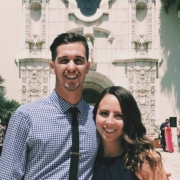
Unique College Prepared Artist to ‘Impact the Culture for Christ’

Although truth and beauty are often lacking in the creative arts today, graduates of John Paul the Great Catholic University in Escondido, Calif., are working to buck that trend and positively impact the culture.

JPCatholic, which is recommended in The Newman Guide, provides students with a solid formation in the liberal arts and faithful Catholic theology, while also preparing them for careers in the creative arts, business, film-making and other new media.

Graduate Nate Sjogren says that the College’s curriculum “forms Catholic artists to be well-rounded Christian storytellers,” and he sees the creative process as a “cooperation with God and his creation.” Today, Sjogren is a motion graphics designer at Drive Studio in San Diego, Calif. The Cardinal Newman Society is grateful for his time in sharing about the impact of his faithful Catholic education, as a part of our “Profiles in Faithful Catholic Education” series.

Newman Society: How did your education at John Paul the Great Catholic University help form you as a Catholic artist?

Nate Sjogren: From the outset, JPCatholic begins with the intention to impact the culture for Christ. This mission influences everything we were taught and encourages us to create art with a greater purpose beyond ourselves. Throughout the curriculum there is one central theme: story. Our entire formation is motivated by telling meaningful, powerful stories. Even now as a motion graphic designer, everything I create has a narrative, even if it is metaphorical. The curriculum forms Catholic artists to be well-rounded Christian storytellers, regardless of their expertise in the industry.

Newman Society: JPCatholic combines practical classes like film-making and new media with courses in the liberal arts and theology. How do you think this well-rounded education has influenced your professional success?

Nate Sjogren: I think the well-rounded education is the key. Like myself, many students are struggling to discover their expertise as they journey through film school. It is crucial that young adults are well-formed in many areas so that they are able to sample a variety of creative specialties. In fact, it wasn’t until I began my internship at Drive Studio that I discovered my passion for motion graphics. Being well-rounded increases the opportunities to get a foot in the door. Beyond that, expertise — let alone success — is earned through practical experience in real-world scenarios.

Newman Society: What does Pope St. John Paul II’s “Letter to Artists” mean to you?

Nate Sjogren: The idea that artists are called by vocation to be co-creators with God is revolutionary. When I first sat down to design, I was immediately stumped by the blank canvas in front of me. How am I supposed to magically come up with a completely original idea out of thin air and also put it on paper? The task is daunting… until I realized that nothing is original. God created everything already.

This very fact diffuses the pressure that new artists feel to be completely original. Instead, the creative process becomes a cooperation with God and his creation. It is liberating knowing that any creative brilliance doesn’t solely rely on me, and that my designs are a fusion of life experiences, inspiration and concepts already in existence. I’m not the Creator, but I’m brought into the creative process with God. That truth is humbling yet exhilarating.

Newman Society: Do you have any stories or experiences from your time at the college that stand out to you?

Nate Sjogren: When I was in my third year, I was hired for my very first gig as an editor. After the studio had filmed the interview I was supposed to cut together, I received a call from one of the producers. He mentioned that they would like to add in some motion graphics to complement the interview, and he asked if I could pull it off. Although I had never done motion graphics before, I knew some basic After Effects [motion graphics software], so I told him, “Let’s do it!” 

That weekend I spent every last bit of free time learning After Effects. YouTube and other free tutorial sites like Video Copilot and Creative Cow were invaluable during this formation process. And as a result, we pulled off our first motion graphic commercial without a hitch.

This was a breakthrough moment for my education and my career. Through the formation and network at JPCatholic, I got my first gig and discovered my passion for motion graphics. Not long after, I was offered an internship at Drive Studio because of my interest in graphic design and animation, and the rest is history.

Newman Society: As a motion graphics designer, you’ve produced logos, motion graphics and branding for the FIFA World Cup, the NFL, NBC Sports, National Geographic and others. What have been some of the most exciting projects to be a part of?

Nate Sjogren: When I was a kid, I was obsessed with soccer — watching every professional match I could, training with my team all year round, and even playing the FIFA video games for hours. So it was a dream come true to help design and animate the entire graphics package for the 2018 FIFA World Cup on FOX Sports with the Drive Studio team.

It was also very exciting to see the months of hard work pay off on the Super Bowl LIV scoring system and information graphics that debuted on FOX earlier this year. You may recognize the larger-than-life touchdown graphic that my team and I came up with as an innovative solution to make the scoring moments more dramatic.

Let’s Follow Bishop Paprocki’s Lead

Last week, Bishop Thomas Paprocki of Springfield, Illinois, released a clear, truthful guide on gender identity that does a great service for Catholic schools in his diocese. Catholic educators everywhere should follow his lead in implementing similar policies in their schools.

The timing of the guide could not be better, as society embraces a sorely confused understanding of gender identity. For example, biological males are winning female events in Connecticut high school sports, and high school districts like one in Illinois are allowing biological males to use female locker rooms, and vice versa.

But the Catholic Church’s teaching on gender identity and human sexuality is clear. Catholic school policies should be consistent, as well.

For handling situations of a student facing “gender dysphoria,” Bishop Paprocki’s guide stresses the importance of “gentle and compassionate pastoral skill and concern” and condemns any sort of “discrimination or harsh treatment.”

At the same time, the guide states that sex is determined at birth. The truly loving thing to do in a situation when a person is facing gender dysphoria is to be “clear on the reality of human biology as a gift from God that we cannot change.”

As a result, students at diocesan schools must “use bathrooms and locker rooms that correspond with their biological sex,” and they will be “addressed and referred to with pronouns in accord with their biological sex.”

Thank you, Bishop Paprocki! More than ever, Catholic schools need to teach and witness to the Truth.

The Church’s teaching on human sexuality should be steeped deeply in our Catholic schools. A Christian anthropology should guide classroom learning, student activities and all school policies.

In fact, Catholic schools might consider adopting Human Sexuality Policies, like the ones developed by The Cardinal Newman Society, that go beyond the issue of gender identity. If a school has a firm commitment to forming young people in chastity, then it is clear that the concern is for all students of every stripe, and not targeting certain students as many activists claim.

“As a Catholic institution, we believe that human bodies are gifts from God and temples of the Holy Spirit,” the resource states. “All men and women are called to a life of chastity appropriate to their vocation as single, married, or consecrated religious.”

“Because our efforts at integral formation include the integrity of body, spirit, and moral development, our school has a proper concern for each student’s behavior and development in the complex area of human sexuality,” the resource continues.

The resource offers examples of specific policies related to human sexuality, including addressing athletics, dances, dress code, facilities use, same-sex attraction and more.

In the months ahead, Catholic schools will face even more questions related to human sexuality. Catholic educators must be prepared with responses that are clear and consistent, upholding Church teaching.

Having strong policies in place will help Catholic schools to fend off attacks and legal threats. But even more important is the witness for students — they should learn the Truth about the human person in the classroom and see it lived out.

This article first appeared at The National Catholic Register.
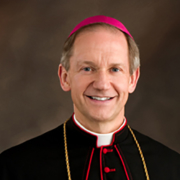
Pentagon Leader: Faithful Catholic Education Provided ‘Fundamentals to Succeed’

When Catholic education is done well, it benefits not only its graduates, but also society at large.

Thomas Alexander is a top leader in the Pentagon who is the principal advisor to the Secretary of Defense on special operations, counterterrorism, and more around the world. He credits his education at Thomas Aquinas College in Santa Paula, Calif., which is recommended in The Newman Guide, with preparing him with the “fundamentals” he needed to “succeed” in his work.

“You can study all of the things that you want foreign policy-wise to try to prepare for these types of positions,” explains Alexander. “But I don’t think you can do any of those things well if you don’t have the fundamentals.”

“Thomas Aquinas College gives you the ability to quickly analyze, break down a particular issue into its parts, put it all back together in a way that makes sense, reach a conclusion, and then go forward,” he explains.

Students develop this “analytical training” through the College’s great books curriculum. “By putting the original works in front of you, you’ve got sit down with Aristotle, with St. Thomas Aquinas, with other great thinkers, and figure out what they were saying, and then apply it across the board.”

The College also provided Alexander with excellent ethical training. “In policy jobs, we are answering the question, ‘Should we be doing a particular activity?’ What are the ramifications one, two, three steps down the road for doing things?”

“The good teaching at Thomas Aquinas College really prepares you for this so that you do have that good moral sounding board inside of you,” he explains. “It allows you to perform that gut-check. Yes, we can do something, but is it a good thing to do?”

As the senior-most civilian overseeing special operations, Alexander also provides advice on the manning, training and equipping for special operations, and he oversees a budget of $14 billion. Recent high-profile special operations include the Abu Bakr al-Baghdadi operation and the Osama bin Laden operation.

Helping keep our nation safe is no small task, but Alexander is up for the challenge. He has successfully climbed the ladder in his career, thanks to his strong Catholic education, both at Thomas Aquinas College and Ave Maria School of Law, hard work and the relationships he has built.

“There hasn’t been a day that I ever regretted attended Thomas Aquinas College, and receiving the education that I did.”

True Love at Faithful Catholic Colleges

Are students being prepared for careers — and for life — in colleges today? Some college professors are noticing that students are “excelling academically but not necessarily in other areas of adult life,” including dating and preparing for the vocation of marriage.

Students at faithful Catholic colleges, however, may be the exception. A good Catholic college will promote a campus environment that supports healthy relationships, and that’s greatly needed today.

Popular chastity speaker Jason Evert, a graduate of Franciscan University of Steubenville in Steubenville, Ohio, argues that there needs to be a revival of Catholic dating in our culture. He recently published The Dating Blueprint: What She Wants You to Know About Dating but Will Never Tell Youadvising men to “put down their screens, look a woman in the eye, and ask her on a date.”

Michael Kenney, director of The Cardinal Newman Society’s Catholic Identity Standards Project and one of the curriculum developers for the Dating Project, agrees. “The most consequential decision a person makes is the decision concerning marriage,” he says. “A healthy dating culture is essential to building strong marriages and families. Tragically, our culture saturates the airwaves with false lyrics, images and messages concerning dating.”

If a revival of traditional courtship seems unlikely on most college campuses, students can expect something different at a faithful Catholic college. At several colleges recommended in The Newman Guide, students can still find evidence of mature, chaste relationships leading to healthy marriages.

At Thomas Aquinas College, which has campuses in Santa Paula, California, and Northfield, Massachusetts, “about 10 percent of the College’s alumni have entered the priesthood or religious life,” the college reports. “Most of the rest marry, often wedding fellow Thomas Aquinas College alumni and raising fruitful, faithful families that bear joyful witness to the Culture of Life.”

With an annual enrollment of just 500 students, Christendom College in Front Royal, Virginia, boasts more than 480 alumnus-alumna marriages in its 40-year history. This has something to do with the academic program, the college explains:

Students learn Pope St. John Paul II’s Theology of the Body in one course, while they learn about Catholic doctrine and moral theology in other courses as well. As students complete each course, they gain a greater knowledge of the principles of the faith, especially pertaining to the Church’s teachings on sexuality, marriage and family.

But even more than the academic study, Christendom’s campus fosters healthy relationships by providing only single-sex dorms, which are totally off limits to students of the opposite sex. That’s opposite to the typical college hookup culture, but the marriages among Christendom alumni are evidence that true love is in the air.

Such is true also of John Paul the Great Catholic University, Magdalen College of the Liberal Arts, Thomas More College of Liberal Arts and Wyoming Catholic College, where — like Christendom and Thomas Aquinas — student dorms are single-sex and opposite-sex visitation is not allowed.

Such dorm policies help combat the hookup culture and preserve the privacy of student bedrooms. A Newman Society report cites one study finding that “students living in co-ed housing were also more likely [than those in single-sex residences] to have more sexual partners in the last 12 months.” Further, those students were “more than twice as likely as students in gender-specific housing to indicate that they had had three or more sexual partners in the last year.”

Of course, reducing the hookup culture doesn’t automatically lead to healthy dating — that’s something that needs to be taught to a generation of students who see casual relationships promoted in popular entertainment — but responsible campus policies certainly can help. Student programming, such as the chastity speaking events at Franciscan University and other faithful colleges, are helpful too.

New online dating apps and other options are being created to help address the Catholic dating problem. But it helps to live in a culture that supports authentic relationships. Faithful Catholic colleges attract students with similar values, and they are uniquely positioned to help prepare Catholic students for happy and meaningful lives.

This article first appeared at The National Catholic Register.
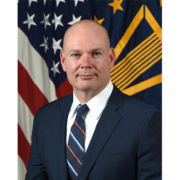
Successful Businessman Says Faithful Catholic College ‘Changed My Life’

Mike McGrath
Mike McGrath

All too often, students go off to college and lose their faith on campus — but the opposite is true in the case of Mike McGrath, who is forever grateful for the influence of a faithful Catholic college on his life.

After spending a semester at a state university in New York, Mike McGrath was preparing to join the Army. An ear infection delayed his plans — during which time he went on a retreat, met a family associated with Magdalen College of the Liberal Arts in Warner, N.H., and ended up enrolling in the College.

McGrath immersed himself in the Great Books curriculum provided by Magdalen College, which is recommended in The Newman Guide, and was “blown away” by the education. He remembers being introduced to Euclidean geometry for the first time, and all the subject areas that are “parallel paths to open your mind to the truth of things.”

“My whole perspective on life, on what was really true completely opened up,” he shares, noting how the students went to Mass, classes, meals, activities, and study together.

Growing up, McGrath attended mostly public schools and was raised in a nominally Catholic family. He entered Magdalen as an “un-catechized” young adult, but that quickly changed. At Magdalen, he was immersed deeply in the faith, and exposed to beautiful and reverent liturgy.

“When you go to confession regularly, when you go to Mass daily, when you’re praying the rosary, your life is going to get great,” he explains, noting the infusion of grace from the sacraments. “It’s night and day between who I was as a person before and after attending Magdalen College.”

“Magdalen College has a rich history of liturgy and music,” explains McGrath. Even though he studied vocal performance at the state university, he said that he never delved deep into the music in the way that he did at Magdalen College. At the state university, “we never asked the question, ‘what is music?’” and he was pleasantly surprised to be introduced to an “incredible repository of music” at Magdalen.

“My life is so rich now because of my Catholic faith,” McGrath continues. “Magdalen College played a significant role— it changed my life.”

The College altered McGrath’s life in nearly every way, including propelling him into his successful career of the past 20-plus years in the software sales industry. Through the College’s Socratic style classes, McGrath learned “how to listen,” which is essential to becoming a business leader.

“You listen to the master thinkers, and then you discuss the truth of that work whether it’s Aquinas, Aristotle or Nietzsche,” says McGrath about the courses at Magdalen. “When you stop talking and start listening, you learn so much.”

He also gained hands-on leadership experience. “Because it was a small campus and a small community, there were a lot of opportunities for leadership.”

In McGrath’s experience and as countless studies now show, employers today are desperately in need of liberal art graduates who are “well-rounded.” The ideal candidates are “versatile” and don’t just know a particular subject area, but can “think critically, learn how to work within and lead a team, are strong writers, delegate tasks, listen, and grow organically in their career.”

Today, McGrath serves on the board at the Magdalen, and has two children who attend the College. He is excited about the changes Magdalen has made in recent years, the direction it’s headed, and its emphasis on “forming the whole human person.”

“Magdalen really helped me grow as a person,” McGrath says. “The students there today are afforded similar opportunities to lead, to grow in community, to grow in their faith, to grow as a human person.”

“The College will prepare students with the foundation they need to remain faithful and serve the Church and world in whatever capacity they’re called to.”

CNS Joins Amicus Brief Upholding Ministerial Exception – Our Lady of Guadalupe School v Morrissey-Berru, U.S. Supreme Court

Click here to read.

Celebrate the Students Who Marched for Life

Again this January, huge numbers of young people from around the country showed up in Washington, D.C., to demand an end to abortion. Many were from faithful Catholic schools and colleges that bused students to the annual March for Life.

Seeing all those schools and colleges represented made me very proud of our Catholic educators and their continued renewal of Catholic identity. And so, how perfect was it that we celebrated National Catholic Schools Week (Jan. 26-Feb. 1) just following the March?

The two events should remind us: when Catholic education is done well, it prepares its students to be ethical leaders and to transform the culture. And nothing could be more important than defending the weakest among us, the innocent baby in the womb.

Two pro-life leaders with Students for Life of America, one of the most dynamic pro-life organizations, say that their Catholic education prepared them for the work they do today.

Katie Portka credits her faithful Catholic education at Benedictine College in Atchison, Kansas, with strengthening her pro-life convictions. Portka learned about Benedictine through The Newman Guide, and then, while a senior in high school, saw the College’s students carrying the banner at the head of the March for Life.

“I loved how energetic they were — this huge group of young adults who were so full of life and passionate,” says Portka. She had been involved in pro-life efforts with her family, but she didn’t often see large groups of young people standing for life as a high school student. Shortly after the March for Life, Portka signed her acceptance letter to attend Benedictine.

On campus, Portka immediately got involved in the large Respect Life Ravens Group. “The school at large was a very pro-life campus,” she says, “in the dorms, in classes, and in the faculty.”

Benedictine “really did embody the Church’s teaching on life and the dignity and sanctity of life,” says Portka. “In college was when I realized why I was pro-life and why I wanted to be pro-life.”

Stephanie Stone works for Students for Life of America as regional coordinator in Maryland, Washington, D.C., and Virginia. She credits her faithful Catholic education with helping her discover that pro-life work was part of her “mission.”

As a high school student, Stone visited The Catholic University of America in Washington, D.C., and “fell in love with how proudly the school wore its Catholic identity.”

“Catholic University helped me to dive deeper into my faith and experience how faith is applied to the world around us,” says Stone. “It also gave me a number of opportunities to become more active in the pro-life movement, eventually leading me to understand that pro-life work was my mission.”

On campus, Stone served as president of the Cardinals for Life club and was instrumental in organizing the first Pep Rally for Life for students ahead of the March for Life. Stone also found that studying in Washington, D.C., was a great place to learn about politics and grow in her pro-life beliefs.

“In my experience, having a Catholic education really solidified my understanding of the value of the human person,” explains Stone. “It helped me form a deep respect and radical love for all of God’s people, which is what ultimately encourages me to do this work.”

Whether at the elementary, secondary or higher education level, the fruits of Catholic education can be seen in the witness of its graduates. Many alumni of faithful Catholic schools and colleges are doing important work in rebuilding a culture of life in our country.

Hopefully, last week’s celebration of Catholic Schools was a reminder to Catholic educators everywhere to redouble their focus on the most important things that distinguish Catholic education from a secular program. Students should be prepared to follow God’s will for their lives and impact the world.

This article first appeared at The National Catholic Register.
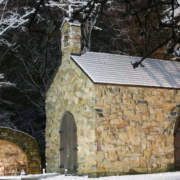
March for Life Leader: Catholic Education Instilled ‘Greater Respect’ for All Life

In 2017, Katrina Gallic was a senior at the University of Mary in Bismarck, N.D, who gave a beautiful speech at the March for Life Rally in Washington, D.C. After the speech, Gallic and her classmates had the honor of leading the March.

The year before, University of Mary students found themselves caught in massive snowstorm and stopped traffic on their way home from the March for Life. Their joyful witness while they waited on the bus garnered national media attention for the pro-life cause.

Today, Gallic works for the March for Life full-time. She credits her experience at the University of Mary and attending the March for Life with opening her heart to working in the pro-life movement. We are thankful for her time in responding to our questions as a part of our “Profiles in Faithful Catholic Education” series.

Newman Society: How did your education and experience at the University of Mary help prepare you to become a leader in the pro-life movement?

Katrina Gallic

Katrina Gallic: When students arrive at the University of Mary as freshmen, the first address they hear from President Monsignor Shea can be summarized by the phrase: “your life is not about you.” Your life, he explains, will only find fulfillment when it is given away in loving service to others. Each of us then has a distinct mission, a unique and necessary gift that only we can give, a gift that is not so much about what we do, but about who we are. I can say for my part that his message, which was repeated through all my years there, instilled in me a greater respect for each person’s life. No matter how small, no matter how seemingly “insignificant,” each person is a profound gift made in the image of God. And who is smaller, who is more seemingly “insignificant” than the little one in the womb? It was my experience traveling with the University of Mary students to the March for Life as a junior, and then leading the March for Life as a senior, that opened my heart to God calling me to serve Him by working full-time in the pro-life movement. I am profoundly grateful to the many, many people at the University of Mary who have so greatly impacted my life, and the lives of my classmates.

Newman Society: Can you tell us about the work you do today, and what excites you the most about it?

Katrina Gallic: Today, I am the Director of Development for the March for Life! That means I have the privilege of sharing the life-saving mission of the March for Life with pro-life people across the country and inviting them to join us in our mission. This is an exciting time for the pro-life movement and for the March for Life in particular. We are seeing passion for the cause of life building, as more eyes are opened to the horrible agenda of pro-abortion activists and politicians, and we have responded by bringing the inspirational power of the March for Life’s state march program to state capitals across the country. In 2020, we will march in Virginia on February 13th, in Connecticut on April 15th, and in Pennsylvania on May 18th. I’m excited to see the energy and positive impact that these local marches will bring to the pro-life movement at the state level!

Students Make History at the March for Life

Nearly every year of Simone Kelly’s life, she attended the Walk for Life West Coast in San Francisco, California, with her family. As the president of her high school’s pro-life club, she was intimately involved in the planning of the trip.

This year, Kelly has a different but exciting project on her hands. As a sophomore at the recently opened east coast campus of Thomas Aquinas College (TAC) in Northfield, Massachusetts, Kelly volunteered to help plan the college’s first trip to the March for Life in the nation’s capital.

Classes are canceled at New England campus Jan. 24 so that the entire student body of 58 students, along with faculty, staff and families, can attend the March. TAC has thus joined other faithful Catholic colleges that cancel classes for the March for Life, including The Catholic University of America in Washington, D.C., Christendom College in Front Royal, Virginia, Magdalen College of the Liberal Arts in Warner, New Hampshire, and the Thomas More College of Liberal Arts in Merrimack, New Hampshire. Christendom has been doing so every year since the college’s founding, so that its entire student body can attend.

The TAC contingent will leave campus Thursday night and attend Mass, adoration and confession at a nearby parish before driving through the night to Washington, D.C. Kelly says that everyone on campus is “super excited” for the upcoming trip to defend the unborn, noting that all students raised money to help fund the trip.

Since there are no juniors or seniors on the new campus, Kelly plays a leadership role as a sophomore. Part of the reason why she transferred to the new campus is so that she could help “bring traditions” from TAC’s home campus in California, founded in 1971, while also developing “new traditions.”

The March for Life is a new tradition that Kelly is eager to organize so that “in the years to come, the details will be worked out.” At the west coast campus, the Walk for Life tradition, taking place this year on Jan. 25, is well-established — students from the college have participated in the Walk every year since the event was founded.

For Kelly, the opportunity to make a stand for the unborn makes sense with the “liberating” education she is receiving. “My education is forming me to learn the truth, know the truth and defend the truth,” says Kelly. “Attending the March for Life allows me to live out what I’m learning.”

Other Catholic colleges are making history at this March for Life, too. For the first time in many years, the University of Dallas in Irving, Texas, is making an official trip to the March for Life.

“Many students have traveled the 1,300 miles on their own in recent years,” says Mary Kate Tomassi, treasurer of the Crusaders for Life Club, but this year is different. “We have 44 students officially going with UD to Washington, D.C. for the March for Life this year.”

“We have all been working hard to figure out the logistics for this trip, get approval, and fundraise. Thanks to many generous donors, and one in particular who wishes to remain anonymous who matched nearly $8,000 in gifts, we are able to make this important trip,” she continues.

Making the long journey is not for the faint of heart – and students will miss two days of classes. But Tomassi believes it’s important to “stand up” and “witness to the nearly 62 million lives lost and the 62 million families torn apart since 1973” due to abortion.

Beyond the witness of Thomas Aquinas College and the University of Dallas, there are other records being set by faithful Catholic colleges at this year’s March.

Some of the groups traveling the farthest distance with the greatest numbers of students include Benedictine College in Atchison, Kansas, and the University of Mary in Bismarck, North Dakota. They will both be traveling more than 1,000 miles to the March, with approximately 250 and 200 students, respectively.

Franciscan University of Steubenville in Steubenville, Ohio, is sending approximately 500 students. A junior at the university, Kyle Taggart, believes that “we have a serious obligation to do everything in our power to fight legalized abortion” given the “gravity of the abortion issue.” His fellow classmates seem to be taking that message to heart.

History will be made at this year’s March for Life, in no small part due to the efforts of faithful Catholic colleges. Let’s pray that this witness leads to a change of minds and hearts — and the law — in our country, and that ultimately the lives of all unborn children will be protected.

This article first appeared at The National Catholic Register.