
Courage Priest Says ‘Pride Month’ Events Inappropriate for Catholic Schools, Colleges
Responding to The Cardinal Newman Society’s request for guidance on “Pride Month” celebrations at Catholic schools and colleges, Fr. Colin J. Blatchford, Associate Director of Courage International, warned that such celebrations are not appropriate for Catholic institutions and cause “scandal.”
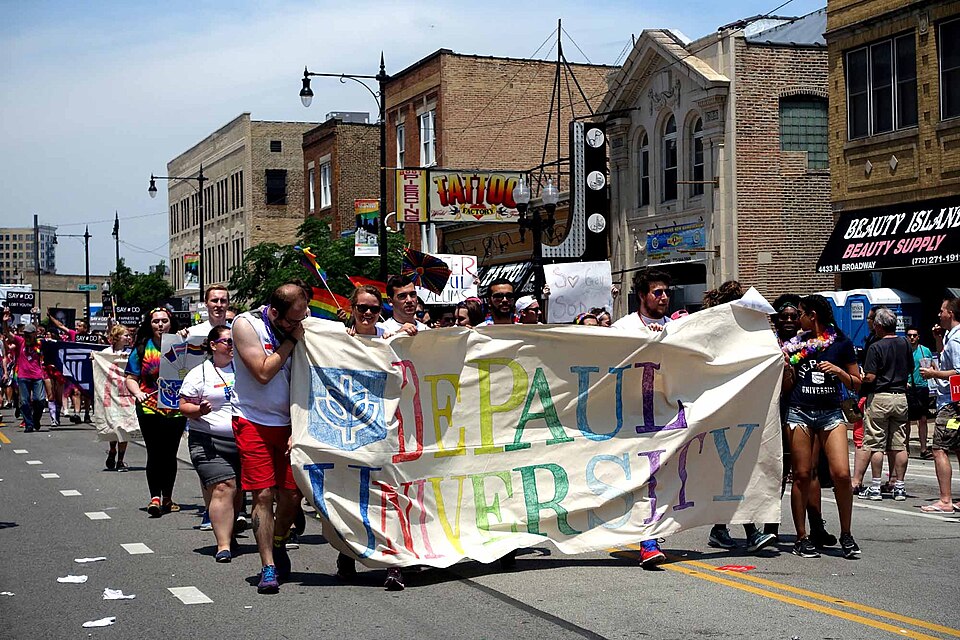
The Cardinal Newman Society recently documented “Pride Month” events and promotions at colleges including DePaul University, Georgetown University, and the University of Notre Dame. Such events encourage students to take part in activities like “Big Gay Bingo” and “Pride Parades,” and they affirm students identifying as LGBTQ.
The Cardinal Newman Society also highlighted the disturbing reality of Catholic colleges hosting LGBTQ resource centers that offer numerous materials to affirm students in their LGBTQ attractions and “identities,” yet lack resources on Catholic Church teaching regarding human sexuality and the dangers of gender ideology.
Courage International is a Catholic apostolate that offers resources and guidance to men and women who experience same-sex attractions. Their EnCourage program provides pastoral care to family members and friends of persons who identify as LGBTQ.
Unlike other programs and resources that promote taking “pride” in disordered sexual attractions and gender confusion, Courage’s approach is rooted in Church teaching and the “Five Goals of Courage”:
- To live chaste lives in accordance with the Roman Catholic Church’s teaching on homosexuality. (Chastity)
- To dedicate our entire lives to Christ through service to others, spiritual reading, prayer, meditation, individual spiritual direction, frequent attendance at Mass, and the frequent reception of the sacraments of Reconciliation and Holy Eucharist. (Prayer and Dedication)
- To foster a spirit of fellowship, in which we may share with one another our thoughts and experiences, and so ensure that no one will have to face the problems of homosexuality alone. (Fellowship)
- To be mindful of the truth that chaste friendships are not only possible but necessary in a chaste Christian life; and to encourage one another in forming and sustaining these friendships. (Support)
- To live lives that may serve as good examples to others. (Good Example/Role Model)
In addition to causing “scandal,” Fr. Blatchford said that when Catholic schools and colleges encourage LGBTQ “pride,” it “leads to division and tribalism.”
“[I]f we are separated into different groups with different moral principles or rules, then there cannot be ‘communion’ in the Church, nor in society,” he stated.
Instead, Fr. Blatchford said Catholic schools and colleges should address same-sex attraction and gender confusion with authentic compassion rooted in God’s love.
“[W]e should enter into their suffering and make it our own,” he said. “By this loving sacrifice on our part, [students] will come to know the love of God, and as we build rapport with them, we can point out that they are loved and that God has a plan for their life.”
Below is The Cardinal Newman Society’s interview with Fr. Blatchford:
Is it appropriate for a Catholic school or college to promote “Pride Month” celebrations? Why or why not?
No, because the anthropological underpinnings of “Pride Month” include a dualistic view of the person and radical autonomy. Each of the last four popes has spoken about the necessity of recognizing the dignity of the human person and that no one thing here on this earth can sufficiently define who we are, beyond “beloved child of God.”
All other labels or identities exclude parts of the human person as good. The story of our life, due to our nature as beings with reason and created for interpersonal relationship, is written in concert with others and must be weighed against the truth of reality.
When we exalt our opinion over truth, we make of ourselves gods and responsible for all our triumphs and ills. This leads to despair when we become stuck in a place we don’t want to be, because we are the cause for our suffering and we cannot fix it, nor look outside ourselves for assistance.
What effect does it have on students when a Catholic school or college encourages these young people to take “pride” in and celebrate an LGBTQ+ “identity”?
It leads to division and tribalism. We are all “beloved children of God” “formed in His image and likeness,” and all of us who have been baptized have received a “universal call to holiness.” Every member of the Church is called to be holy—this vocation was given to them in baptism.
This call consists of two dimensions: First, we learn to receive sacrificial love from God as His beloved son or daughter. Next, we must respond to the love that He has given us by sharing it with other men and women in the world who do not know His love or who are suffering.
This dimension of the universal call to holiness could be called “being a spiritual parent.” Every baptized Christian is called to learn to receive God’s love and then to live out that sacrificial love by sharing it with others. But if we are separated into different groups with different moral principles or rules, then there cannot be “communion” in the Church, nor in society.
What impact does it have on the Church as a whole when the faithful, and those outside of communion with the Church, see a Catholic school or college encouraging students to take “pride” in and celebrate an LGBTQ+ “identity”?
It causes scandal, though not as often in the present culture. What made Catholic education great throughout history is that from a young age we required young people to take universal philosophical principles and apply them to their daily life. Then they would be mentored over the next 10-12, maybe even 16 or more years in how to best apply those philosophical principles.
When a Catholic college picks and chooses the theological or philosophical teachings of the Church that it will abide, it undermines that process. Indeed, it hollows it out and provides merely an empty emotional shell where there should be a full abiding relationship with God.
What advice would you give to Catholic schools and colleges in terms of addressing same-sex attraction and gender confusion among students?
The word “compassion” come from Latin and means “to suffer with.” We have a God who has suffered and knows intimately every type of suffering we will go through. And while He does not wish that suffering on us, like the wine producer, He will use the stresses that nature puts on the vine to prune it to produce the best grapes to make the best wine.
God does the same. He does not wish evil or suffering upon us, but since we live in a fallen world, He will use the sufferings that come about in our lives because of our experiences and others actions to draw us closer to Himself.
Because of this, and the fact that Christ himself took on human suffering and made it the key to open the gates of heaven, when we encounter suffering in someone’s life we cannot leave them there. But we oftentimes also cannot answer a sufficient answer or solution to their suffering. So like Job’s friends, we should enter into their suffering and make it our own. By this loving sacrifice on our part, they will come to know the love of God, and as we build rapport with them, we can point out that they are loved and that God has a plan for their life.
Practically we can do this by remembering three things when we encounter a person struggling with these questions, who is inviting us to be a part of their journey of faith: First, communicate that they are loved. Second, let them know that even if it does not seem so now, God has a unique plan for their life. And finally, ask if they would be willing to share their story.
We don’t have to agree on everything or approve of every action, but we walk together towards God. We are a group of imperfect people striving to grow closer to God, by means of His grace.
Your support promotes and defends faithful Catholic education!
The Cardinal Newman Society relies on the generosity of our supporters to promote and defend faithful Catholic education — which is the key to seeing the Church restored and our culture renewed. Will you partner with us today to ensure this critical mission continues and grows even as the culture becomes more hostile to Catholic values?