CNS Joins Amicus Brief on Title IX Protection for Women’s Sports – Little v Hecox and West Virginia v B.P.J., Supreme Court

West Virginia has a law protecting fairness in women’s sports. The 4th Circuit ruled against it, and the Supreme Court agreed to hear the case in West Virginia v. B.P.J. This and Little v. Hecox (see below) could settle the issue of men and boys playing in woman and girl sports and lead to the resolution of similar lawsuits by girls and women in other states.

As a parallel case to West Virgina v. B.P.J. is Little v. Hecox, an Idaho case where a transgender female (born male) is questioning “the Equal Protection Clause allows states to protect fairness and safety by reserving women’s sports for females?”  The Ninth Circuit held that “Idaho’s Fairness in Women’s Sports Act unlawfully discriminates based on sex and transgender status.”

Click here to read.

CNS Joins Amicus Brief on Upholding Title VII Religious Exemption – Doe v Catholic Relief Services, 4th Circuit

This case is about whether a religious nonprofit can make employment decisions based on its religious beliefs. Catholic Relief Services stopped providing spousal benefits to John Doe’s legal husband because doing so conflicts with its Catholic faith. In part, the dispute is whether Title VII and the Constitution allow religious organizations to make such employment decisions. While this is a complex case, initially ruled for John Doe at the Maryland Supreme Court, the focus of the amicus brief is Title VII and its exemption for religious employers.

Click here to read.

New Saints to Inspire Young Catholics: Carlo Acutis and Pier Giorgio Frassati

The canonizations of Blessed Carlo Acutis and Blessed Pier Giorgio Frassati on September 7, 2025, are a beautiful reminder for Catholic families that youthful holiness is possible. This joyful occasion should also inspire all the faithful to dwell on the urgent need to foster holiness in young people today.

Models of Faith for the Young

Carlo Acutis, who died of leukemia in 2006 at just 15, will become the first millennial canonized a saint. Known as a “computer geek” with extraordinary digital skills, Acutis used his gifts to direct hearts to Christ.

The young Italian toiled to bring to life his Eucharistic Miracles of the World exhibit to foster greater devotion to the Real Presence. In 2007, the Real Presence Association entrusted The Cardinal Newman Society with promotion of the exhibit to schools and colleges.

Between 2007 and 2015, The Cardinal Newman Society reached hundreds of students with Acutis’ exhibit, part of an effort to encourage students’ devotion to the Eucharist and especially the practice of Eucharistic adoration.

Students gave stirring testimonies about how the exhibit impacted them on their faith journey. One student wrote:

“It was a beautiful opportunity to be able to see a display about so many Eucharistic miracles. Some people don’t believe in the Real Presence of Christ in the Eucharist, so I look forward to sharing some of the things I read in hopes that they will someday fully embrace the truth. These miracles are amazing and beyond our comprehension, but knowing that the Eucharist really is the Flesh and Blood of Jesus should make us want to run to Mass and Adoration! After all, a wonderful King awaits us.”

For Acutis, the Eucharist was his “highway to heaven,” as he once explained. Shortly after receiving his First Communion at age 7, he told his mother, “To always be united to Jesus: This is my life plan.”

He lived that plan faithfully through daily Mass and Eucharistic adoration, practices that inspired many of his peers and even led his parents back to the practice of their faith.

“People who place themselves before the sun get a tan; people who place themselves before the Eucharist become saints,” Acutis once remarked—a conviction that defined his short but powerful life.

Pier Giorgio Frassati, who died in 1925 at age 24, embodied a life of charity, prayer, and joy. An avid mountaineer and Third Order Dominican, he dedicated himself to the poor, the sick, and the marginalized, even contracting polio while serving them.

On a photograph of his final climb, he wrote the words “Verso l’Alto” (“to the heights”), a motto that continues to inspire young Catholics to strive for the summit of holiness.

St. John Paul II, who beatified Frassati in 1990, described him as a “man of the eight beatitudes … entirely immersed in the mystery of God and totally dedicated to the constant service of his neighbor.”

Frassati’s witness to holiness shows that youthful zeal, when rooted in prayer and charity, can transform not only one’s own soul but the world around us.

Why Catholic Education Matters

The canonizations of Acutis and Frassati remind us why the mission of The Cardinal Newman Society is so critical.

Many young Catholics today face the lure of secularism, confusion about truth, and education that neglects or even undermines their faith. Without strong Catholic formation, too many drift from the Church, idolizing celebrities instead of saints.

But Acutis and Frassati show another path—the path of faithful Catholic education and formation.

The schools and colleges recommended in The Newman Guide prioritize devotion to the Eucharist, daily prayer, and authentic Catholic teaching. These institutions help students see clearly what Acutis and Frassati knew well: life’s aim is not the fleeting satisfaction of this world, but the eternal joy of heaven.

The Cardinal Newman Society’s work to promote and defend faithful Catholic education ensures that more young Catholics are prepared to live holy lives, standing out as “rebels” against a culture of sin.

As Acutis once observed, “All people are born as originals but many die as photocopies.” Catholic schools and colleges must form young men and women to live authentically in Christ—not as copies of a broken culture, but as saints.

Saints for Our Children

The canonizations of Carlo Acutis and Pier Giorgio Frassati are more than a celebration; they are a challenge. The extraordinary lives of these young men are proof that holiness is possible even for teenagers and young adults. But if we want our children and grandchildren to follow in their footsteps, they need daily reminders of heaven’s call: Mass, Confession, Adoration, prayer, study, and friendships rooted in Christ.

Faithful Newman Guide education provides these supports. Through The Newman Guide, Catholic families can find schools and colleges that nurture saints-in-the-making—a mission that is vital for the future of the Church.

On September 7, when the Church proclaims Carlo Acutis and Pier Giorgio Frassati as saints, the faithful should rejoice—and then rededicate ourselves to forming new generations of Catholics who can follow them “to the heights” of holiness.

Newman Guide Virtual College Fair

On Thursday, October 9, 2025, The Cardinal Newman Society invites all high school students discerning a college and their parents to attend the Newman Guide Virtual College Fair.

By attending the Fair, you’ll learn about potential scholarships, receive free merchandise, hear from renowned speakers on navigating the college search, explore virtual booths of Newman Guide Recommended colleges, and “chat” with admissions representatives.

Registration is free and is required to attend the event.

One of this year’s featured speakers is Rich Olon, a youth minister for the past 14 years at St. John Francis Regis in Hollywood, Maryland. Olon organizes and escorts youth groups to in-person visits of Newman Guide Recommended colleges because he has witnessed firsthand the impact a college choice has on a young person.

“Young people are being formed in a culture more vicious than we’ve seen before. Our nation’s most prestigious universities have become bulwarks of gender ideology, transgenderism, LGBTQ activism, and atheism.  Therefore, it is not hyperbole to suggest that in choosing a college, a young person is making a choice that will quite literally affect their eternal salvation,” said Olon.

Last year’s Newman Guide Virtual College Fair saw a 23% increase in attendance over the previous year as Catholic families increasingly seek higher education that more closely aligns with their values.

“Whether you’re just beginning the college search, or trying to make a final college decision, the Newman Guide Virtual College Fair will have something for you,” said Kelly Salomon, vice president of Newman Guide Programs at The Cardinal Newman Society. “After attending the Virtual Fair, you’ll want to visit these campuses in person.”

This year’s Newman Guide Virtual College Fair is made possible thanks to our sponsors:

Kolbe Academy
Kolbe Academy is a classical, Catholic homeschool program. Kolbe offers traditional homeschool, live online, and asynchronous online courses.

Mother of Divine Grace School
Mother of Divine Grace School exists to help Catholic families raise their children in a living Catholic culture in their homes, mentoring them in using the MODG Catholic classical curriculum to lead their children to good judgment concerning the good, true and beautiful.

Aquinas Learning
Aquinas Learning is homeschool hybrid program in which Catholic is the core, classical is the approach, family-friendly is the style, scholastic reasoning is the training, and sainthood is the goal.

MiraVia
MiraVia’s free College Residence Program on the campus of Belmont Abbey College in North Carolina offers on-campus housing, meals, childcare, material assistance, and professional support. Student mothers enrolled at any institution of higher learning may apply.

Quick links:
Register
Agenda
Map of Recommended Colleges
Resources to Share with Schools

CNS Joins Amicus Brief on Title VII Religious Exemption – Zinski v Liberty University, 4th Circuit

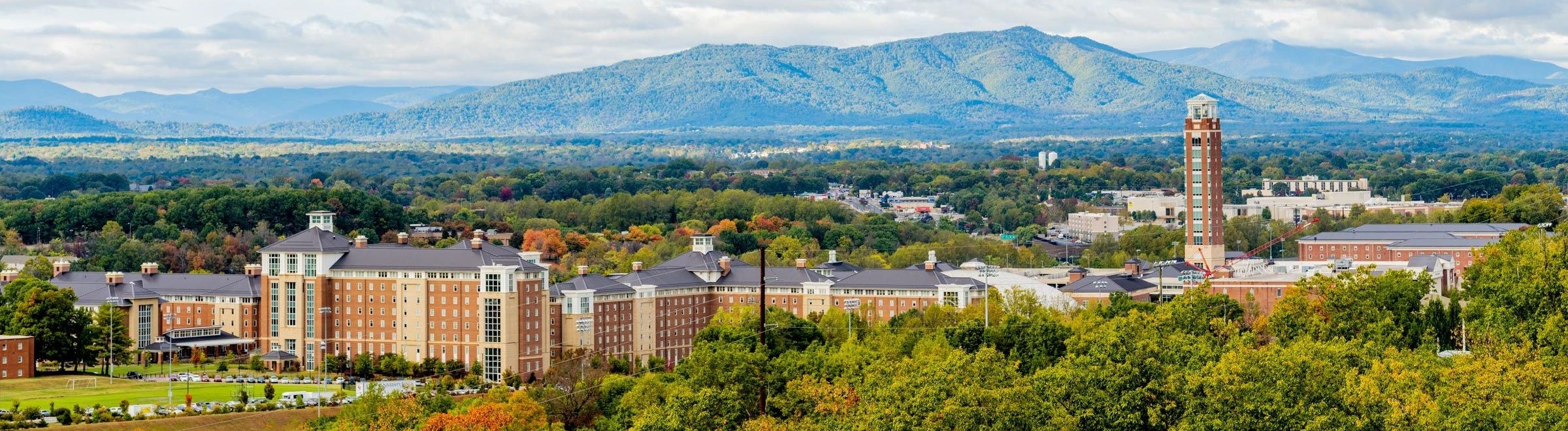
In a closely watched case currently in the 4th Circuit Court of Appeals, Zinski v. Liberty University, tests the Title VII exemption for religious colleges under Bostock v. Clayton, which includes “sexual orientation” and “gender identity” in the list of actions within the definition of sex discrimination. The Cardinal Newman Society joined an amicus brief with other like-minded organizations. The brief argues that Title VII of the Civil Rights Act of 1954 recognizes “a religious organization’s right to make religiously based employment decisions.”

Click here to read.

Youth Minister’s Plea to the Church

What role does a teenager’s college decision play in the salvation of their soul?

Recent studies have revealed that the Catholic Church is losing approximately 85 percent of its members who have received the Sacrament of Confirmation by the time they turn 23-24 years old. While 10 to 15 percent eventually return, this means that almost seven out of 10 fully initiated Catholics are abandoning their Faith by the time they finish college.

There should be no surprise at these dreary statistics, however. Today’s secular colleges and even many Catholic colleges, while somehow still prestigious in the eyes of the world, are completely devoid of authentic education. The academic depravity in college classrooms should already be enough for us to reevaluate our trust in these institutions, but the culture of vice and ensuing moral degeneracy on college campuses seals the coffin. Thousands of Catholic families are sending their teenagers away to these decadent campuses each year, with the oftentimes misled hope that, in the end, their child will still be practicing their Catholic faith. We willingly throw our young people into the fire and then lament the fact that they’re burned.

Thanks be to God, families and their teenagers do have a choice today. The Cardinal Newman Society evaluates and promotes colleges that stand as beacons of Catholic life, academic integrity, and moral virtue in the face of the disorder rampant in our society. Graduates of such colleges leave having received a degree, but, even more importantly, having come face to face with Jesus Christ. Thus, it is not hyperbole to suggest that, in choosing a college, a young person is making a choice that will quite literally affect their eternal salvation.

In order to see the gravity of the situation more clearly, it’s helpful to look at a few examples. In 2022, a professor at the purportedly most prestigious Catholic university in the country made news, because she bragged about assisting and helping students acquire abortifacient contraception as well as abortion services. Although this professor never redacted and renounced her obviously anti-Catholic behavior, she still remains employed and in good standing at the university. This same institution has also hosted pro-abortion politicians as commencement speakers and dignified guests.

Moreover, on the secular side, our nation’s most “prestigious” universities have become bulwarks of gender ideology, transgenderism, LGBT activism, and atheism. If the institutions themselves are blatantly promoting anti-Catholic values, what else would we expect the culture among the student body to look like? Students are being force-fed ideology that is altogether divorced from reality and truth. Should anyone speak out against such disordered ideology, they face punishment by grade depreciation, so-called cancellation by peers, or even expulsion from the institution. Additionally, it is evident that fraternity and sorority houses, rather than being places to cultivate authentic fraternity and sorority, have become nothing more than more private locations for excessive drinking, destructive drug use, and loathsome fornication. Parents might have the temptation to think back on their own days in a fraternity or sorority and say something along the lines of, “It can’t be all that bad. I had some crazy times in my own day, and I turned out fine.” One simply has to realize that the culture among young people in the 1970s or the 1980s was very different from youth culture in our day—in many ways, our young people are being formed in a culture more vicious than any we’ve seen before.

Parents and teenagers must collectively do the work of evaluating colleges and universities not simply for their seeming prestige in mainstream culture but also for their ability to draw young people to the Heart of Christ, and thus, to discover the great gift that it is to live an authentically human life. We must change the framework within which we understand college and its role in the life of the human person. It is not naïve to believe that a young person can go to a college where they will truly encounter Christ, come to know and love Him deeply, and have their hearts and minds transformed in the process. Even further, it is not naïve to believe that such a young person, having been formed by Christ in college, will also receive a useful degree by which they can find meaningful employment and an adequate salary. We know that this is happening every year at faithful Catholic colleges, specifically those recommended on The Newman Guide.

If parents and students have not had the opportunity to visit these campuses, I cannot recommend this enough. I can only address to them the words of Jesus Himself, “Come and see.” Notice a few important attributes on these campuses:

  • Poke your head into a daily Mass on an ordinary Tuesday, you will find many devout young people kneeling before the altar.
  • Go visit one of the Adoration chapels on campus (they’re oftentimes located steps away from where your child’s dorm room will be), you will find students worshiping the Eucharistic Lord throughout the day and even through all hours of the night.
  • Sit in on classes—from theology, to business, to biology, to politics—and notice the dedicated attention the professors give to each student as well as the respect the students have for their professors as teachers of the Truth.
  • Lastly, look around the campus itself. Notice what the students are doing. They sit together. They engage in meaningful conversations together. They play games together. They purposely put away their phones together. They study together. They pray together. They worship together. They live lives of joy and the abundance only Christ can give.

At this point in the conversation, many parents will interject with a rebuttal along the lines of, “But, what about the Catholic centers on secular campuses? Many of those are flourishing and provide great community for the students. Going to an entirely Catholic school isn’t necessary for my child to keep their Faith. Besides, [insert prestigious secular school here] will help them get [insert job here] or [insert sport scholarship here].”

Without demeaning the good work that some Catholic centers and groups on secular college campuses are doing, we must still recognize the fact that Catholicism is entirely compartmentalized at secular institutions—regardless of how good the Catholic center is. The practice of the Faith will always just be one “extracurricular” to choose from, simply due to the fact that the Faith is completely divorced from their academic curriculum and ordinary campus life altogether. Not to mention, the potential peer pressure from hundreds or thousands of fellow students can oftentimes completely outweigh the good influence of the Catholic center.

Aside from this, shouldn’t we want the very best education and formation for our young people? Why are we not desiring that the Faith be an integral part of every course, club, extracurricular, and student life event? Do we think this is altogether extreme? If we are not desiring that our young people be formed by a curriculum that presents to them a holistic picture of the Truth, then we are doing them a great disservice. We cannot fail to remember that Truth has a face and a name: Jesus Christ.

The advantages of attending an authentically Catholic school rather than a mere student center at a secular college should be rather obvious. We cannot plant seeds in unhealthy soil and a polluted environment and then become perplexed or frustrated when they do not grow. In fact, we’d be wise to expect the opposite. We must seek to plant seeds in greenhouses—the authentically Catholic universities—places where our young people will live in an environment in which they have the opportunity to grow and flourish into everything God has created them to be.

Message to youth ministers

At the forefront of the charge leading our young people to these authentically Catholic colleges ought to be our youth ministers, priests, and parishes. If young people never see these colleges for themselves, they’ll always succumb to the purported prestige and greater opportunity promised to them by secular schools. In my own experience as a youth minister in rural Maryland, I have personally witnessed the invaluable impact of taking high school students on visits to authentically Catholic universities. I have personally witnessed students who were not Catholic or who perhaps chose to attend these college visits simply to have the chance to take a trip with friends have a complete change of heart and decide to attend one of the colleges. I have had the great privilege to watch many of our youth attend these most worthy institutions and experience a conversion to the Catholic faith, find their Vocations in the Church, and grow exponentially in their relationship with Jesus Christ.

None of this happens, however, if there are not parishes, priests, and youth ministers who are actively working together to organize these opportunities for the youth to see these campuses in-person. Because we’ve invested so much of our efforts into bringing the young people from our area to these colleges, we’ve experienced upwards of 50 students from our small county at Newman Guide schools at one time. This fall, our small parish will have nine seminarians. Two of them attended Ave Maria University and readily admit that, without visiting AMU on our college tours, they likely would not be in seminary or even practicing their faith. This is a clear testament to the fact that our youth desire a place where they can grow in relationship with Christ and true friendships that lead them toward heaven. They simply must be taken there and shown what the world and mainstream media don’t have to offer.

I cannot exhort youth ministers and parishes enough in this. Be the reason why the youth in your town are graduating in droves from colleges where they fall in love with Christ and choose Him above all else!

Message to youth

Dear young people, consider your worth in the eyes of Almighty God. Consider the great adventure that Jesus calls you to take with Him. As a youth minister, I have personally witnessed the shriveled fruits of sending young people to secular campuses alongside the abundant harvest that takes place when we send our youth to authentically Catholic schools. I know that you desire deep friendships, meaningful learning, and the fulfillment that only Jesus offers you. Do not be afraid to be different from your peers in answering the call of Jesus to cast your nets deeply for an abundant catch.

I promise you that you’ll never regret having immersed yourself into everything that an authentically Catholic college has to offer. Many of you will find your vocations there—perhaps as married people, priests, or religious. You will also find friends who call you to the heights of heaven rather than to the drudgery of sin and vice. The Cardinal Newman Society has presented us with an invaluable resource. They have given you and I the list of the top faithful Catholic colleges in our country. Take it seriously and choose wisely.

You are called to be with Almighty God for all eternity in the paradise of heaven, and the world is against you in this. Go where you will be helped along this journey. Be not afraid!


A Family’s Journey with The Newman Guide

The Cardinal Newman Society has been hugely influential in my family’s life. As a mother of ten children, my main concern is the salvation of their souls.

I was a public-schooled kid, and my Catholic faith was one of ritual, not true understanding. We never missed Mass as children, Confession and Holy Days being de rigueur. However, my understanding was sorely lacking. I knew something was missing in my life. I did not delve into my Catholic faith until my husband, Andre, and I welcomed our first child, Elizabeth.

By the time she was school-aged, we made the decision to send her to a Catholic grade school. In filling out the forms, the question of “Why do you desire your child to have a Catholic education?” appeared with a couple of empty lines on which to write. Well, the words came forth in unbelievable speed. I quickly responded with over a page of prose of why our daughter should be a recipient of a Catholic education. I spoke of my lack of formation, understanding of the faith, and desiring much more for our child.

I envisioned our daughter being immersed into our Catholic faith, with Catholicism being woven into every subject. I expected the lay teachers to be expert theologians. My husband and I were left somewhat disappointed and disillusioned to learn this was not the case. It was a wake-up call for us as parents to learn that we were the primary educators of our children, and we were responsible to transmit the faith to our growing family. It was not enough to be what I call “ritual” Catholics.

Immersed in Catholicism

We spent two years at one Catholic grade school and two-and-a-half years at another, at which point we had six children. During those early years, we began to learn about our faith, reading Catholic books, listening to Immaculate Heart Radio, and having avid discussions with our pastor. We were busy building our domestic church: praying the family Rosary, praying as a couple, and also introducing other Catholic devotions into our growing family’s life. It became paramount to us parents that we must be able to explain our faith, encourage our young children’s questions, and rely on God’s providence in all areas of our lives. We attended Marian conferences, parish talks, read Church documents, and basically set out to school ourselves on our rich Catholic faith.

As we were immersing ourselves in Catholicism, a suggestion was made to my husband by our neighbor, who happened to be a public middle-school teacher. He suggested we try homeschooling. With much trepidation, prayer, tears, and familial support, we ultimately chose that path to educate our ten children.

We were acutely aware of what was being taught in public schools, as well as colleges and universities. We were concerned for our children’s future higher education choices. I fretted over how we could possibly navigate choosing a college. I tried to calm myself by reminding myself that God had always given us what we needed when we needed it. I questioned older parents and their college-aged offspring about how they approached discerning which colleges and universities were authentically Catholic. I got mixed answers, not all to my satisfaction, until I met a lovely, intelligent, pious woman named Maria Fran.

This dear woman told me about The Cardinal Newman Society and a book they had recently published that listed authentically Catholic colleges and universities. Immediately, I ordered and received a paperback book that listed all the authentically Catholic colleges and universities that existed in the U.S. My prayer had been answered. Soon, we began seeing some of these colleges being profiled in the National Catholic Register. We were thrilled to learn what each school offered and that they were true to Church teaching.

It was vitally important to us that our children learn in an environment that was not opposed to what they had been taught and believed. In August of 2009, our eldest daughter Elizabeth began her classics study at Ave Maria University, in part because of The Cardinal Newman Society. We then encouraged our other children to read through The Newman Guide and choose a college from the list. We have had children attend many authentically Catholic schools: Thomas More College of Liberal Arts, Benedictine College, University of Dallas, University of Mary, and Catholic International University. While there is no longer a paperback book being published, the online information is exceptionally thorough and up to date. I appreciate knowing schools are constantly being monitored and, if they can no longer check off the boxes of being authentically Catholic, they are removed from the list. This resource is incredibly helpful to parents who are committed to helping their children navigate higher education institutions.

Prepared for life

Personally, I could not be happier with the results of our children’s college educations. They have a deep and clear understanding of their Catholic faith and have made it their own. Most of the colleges on the Cardinal Newman list have a required core of classes. In addition, to their respective major courses, our kids were exposed to great literature, philosophy, and theology. This has prepared them for life. It is not enough to be successful at their chosen profession if they do not know how to live a Christian life. It has been a blessing for our children to learn in environments that do not attack Christianity, but bolster the one true Church that Christ established.

I was so pleased to learn the Cardinal Newman list now includes elementary, secondary, and graduate programs. It will make clear for parents exactly which schools are in line with Church teaching and which will not undermine their domestic church. Looking back, it would have been so helpful to know about the Catholicity of local elementary and high schools. My prayer is that all levels of Catholic education will strive to be on this coveted list.


Connecting Catholic Education

No one truly deserves to be called “educated.”

What I mean is, no human ever completes their education. It’s never accomplished, except in small part. Education is a lifelong journey that probably continues into eternity!

Nevertheless, we talk of high school graduation as a conclusion, college as the pinnacle of education, and doctorates as “terminal degrees.” We carve up education into a multi-step progression—from primary to secondary to higher education—and treat each level like a distinct program. Both students and teachers at each level are regarded as entirely different, and in most schools and colleges, there is minimal interaction across levels.

While there are reasons for this, The Cardinal Newman Society thinks Catholic education needs to unify. Next June, we’ll shatter convention with our Newman Guide Leaders Summit for administrators from all levels and types of Newman Guide Recommended education. And through our Newman Guide Network, we’re encouraging collaboration among peer groups but also across all Newman Guide Recommended institutions.

While Catholic schools, colleges, and other programs—and the grades and levels within them—are beautifully diverse in particular aspects, The Cardinal Newman Society strives to restore the common foundation and mission of all Catholic education. Our Newman Guide standards draw attention to the end toward which all Catholic education should stive: the full communion of every person with the Father, through Jesus Christ, guided by the Holy Spirit.

This is the meaning of the high red bar in the Cardinal Newman Society logo, typically running across the page. It symbolizes the high standards of faithful Catholic education, to which all Newman Guide Recommended institutions are committed. But it also is meant to remind us of the lifelong continuum of Catholic education, which begins with the parents’ baptismal promise to raise a child in the Faith and continues through the Christian life.

We think the practical divisions of Catholic education should not get in the way of ensuring faithful formation for every Catholic of every age. The divisions also need not prevent collaboration for the good of all. It’s time to unite and hold the center against the confusion, legal threats, and ideological distortions of our age, for the good of Catholic families.

Lifelong continuum

After nearly two decades of celebrating Catholic colleges in The Newman Guide, with rapidly growing numbers of recommended grade schools and graduate programs and soon also homeschooling, online, and hybrid options, we’re emphasizing the lifelong continuum of Catholic education for people of all ages.

Formation in faith and virtue isn’t just for children. And college isn’t the moment when young adults no longer need guidance—far from it! In fact, we need Catholic education throughout our lifetimes.

Of course, it’s a great blessing that educators today know so much more about the psychological development of their students and can ensure that curricula and pedagogy are age-appropriate. It helps to classify education by grade level, stage of formation (primary, secondary, and higher education), and educational approach. Some classical educators are embracing developmental stages called grammar, logic, and rhetoric, although others regard these as liberal arts that should not be strictly age-limited.

And yet, while broad age-related divisions are helpful, we must remember that they are conceptual and can be too rigidly enforced. We risk shackling students and preventing them from exploring the unity of all knowledge and ascending above it toward God. If we don’t serve every Catholic at every age, we risk excluding people who would benefit from Catholic education. If we don’t keep focus on the enduring mission of Catholic education across all levels, then we narrow our expectations to particulars and lose sight of the goal that lies beyond this life.

It doesn’t help that modern society is preoccupied with the diploma—a piece of paper signaling preparation for employment—instead of delighting in the daily encounter with truth. That encounter is no less fulfilling for the elderly as it is for children.

Mutual success

Moreover, just as Catholic education serves the good of the individual student as well as the good of the Church and society, so should every Catholic school, college, or other educational program be individually excellent yet also collaborate in its mission of evangelization with other educators.

We are excited to see leaders from the Newman Guide Recommended colleges already working in many ways to strengthen personnel policies, share costs, recruit students, etc.—always united in their shared mission. Now, as the number of recommended schools and other programs increases, our Newman Guide Network is forging ties among those faithful Catholic educators for mutual support.

The big task that remains is to build ties across levels. Our leaders summit in June will be a big step, with two cohorts—higher education leaders and leaders of grade-school, homeschool, and other programs—meeting separately for some time but then also gathering together for fellowship and attention to their shared mission. In addition, we are encouraging elementary and secondary education leaders to promote attendance at Newman Guide Recommended colleges, and we are encouraging colleges to forge relationships with Newman Guide Recommended schools and homeschool programs.

One key area of collaboration that is urgently needed is in the defense of faithful education from threats to religious freedom and from ideological activism. The Cardinal Newman Society has long been a vital conduit of information and advice from legal experts to educators. We also recommend actions to stand up and protect these precious institutions.

Heaven or hell

I’ll end with a brief reflection: At what stage of life do we become perfect?

It seems a ludicrous question, and yet I have heard it pronounced with great conviction by various Catholics that catechesis and formation in virtue is for the young, and it does not belong in college. Education in general is something that ends with high school or college graduation. The rest of life is just career and tending to families, perhaps with some private reading along the way.

So is it graduation, then, when we become perfect?

I ask this, because at the moment a Catholic decides education is no longer relevant to his or her life, that must be the moment when the intellect is without error, and the will and passions are perfectly aligned with reason. Only at that moment of perfection does the human have no need of learning and growing.

Until then, all our activity should still be striving for God, by growing in understanding and wisdom without ceasing.

Or maybe there’s an alternative. Perhaps, instead of perfection, we are on the opposite side of holiness when we lose our desire to learn. Perhaps we have lost our desire to know God.

Catholic education belongs in every stage of life. If we move from the liberal arts to specialized studies and skills needed for a particular career, all the more important is the Catholic worldview that situates the particular within the Whole. The alternative to striving for knowledge of God and His wisdom is to fall away from the very purpose for which man was created—and that doesn’t end well.

May faithful Newman Guide education thrive and grow at every level, and by every productive means, for the good of the student and the good of the Church.

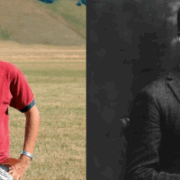
Ep. 42: What Sports, Saints, and Smartphones Reveal About the Soul – Catholic Formation at Belmont Abbey

In Part 2 of our interview with Dr. Bill Thierfelder, outgoing president of Belmont Abbey College, we dive into the deeper layers of Catholic education, sports, culture, and the soul. With stories from NFL training sessions to his own Olympic-level athletic career, Dr. Thierfelder unpacks what sport is really for and how it can form or deform the human person depending on its aim.

From Saint John Henry Newman’s vision of the university to Pope Pius XII’s theology of sport, this episode explores the radical claim that virtue, beauty, and discipline belong in both the classroom and the weight room. Dr. Thierfelder also warns of the spiritual cost of tech dependence and offers a moving reflection on what it means to be truly present, to God, to one another, and to the purpose He gives each life.

Whether you are a parent, athlete, or educator, this is a must-listen episode on Catholic formation, real presence, and human flourishing in a distracted age.

Click here to watch on YouTube

Ep. 41: How Dr. Bill Thierfelder Revived Belmont Abbey Through Faith, Love, & Benedictine Tradition

Dr. Bill Thierfelder’s path to Belmont Abbey was anything but predictable — from NCAA Division I athlete and Olympic-level sports psychologist to business executive and devoted father of ten children, his journey ultimately led him to a small Catholic college in crisis. But what followed was nothing short of providential.

Rooted in the Benedictine tradition and inspired by the monks who built the college brick by brick over 150 years ago, Dr. Thierfelder helped transform Belmont Abbey into a faithful Catholic institution that now thrives spiritually and academically.

With humility, conviction, and a deep love for Christ, he shares what it means to live “according to the Rule” — not just as a motto, but as a daily mission. In this conversation, he unpacks the true meaning of love, the spiritual battles of modern education, and the simple prayer that defines his life: “Thank you, Jesus.”

This is a powerful testimony of renewal, leadership, and the beauty of Catholic tradition in action.

Click here to watch on YouTube