
Sample Newman Society Resources to Strengthen, Defend Catholic Identity

Editor’s Note: The article below is included in the forthcoming spring 2021 edition of the Newman Society’s Our Catholic Mission magazine.

The time is now for Catholic educators to ensure that all policies are in order and all practices consistently uphold a strong Catholic identity. The Cardinal Newman Society wants to help.

For years, the Newman Society has been crafting strong Catholic standards and guidance related to policies in key aspects of Catholic education, from the classroom to the athletic field. Policies should clearly explain moral expectations for employees and students and show how they are rooted in Catholic teaching.

The Newman Society’s work draws directly from the many magisterial documents on Catholic education, and we rely on input from a large number of expert reviewers. Below are some of the New-man Society’s most popular resources. These can be found in their entirety online at NewmanSociety.org/OCM.

Protecting religious freedom

Catholic education nationwide faces serious threats from within and without, and too many schools and colleges are insufficiently prepared for the legal battles. Strong Catholic identity makes lawsuits less likely and allows for a vigorous defense of religious freedom in court. This topic is explored in these pieces:

When new and significant legal cases arise, the Newman Society keeps Catholic educators informed about their impact on Catholic education. Recently, we provided educators with insight about three Supreme Court rulings.

In Espinoza v. Montana Department of Revenue, the “Blaine amendments” in state constitutions were effectively nullified, ensuring that Catholic schools and colleges have equal access to public benefits. Caution is strongly urged to avoid entanglements that jeopardize the mission of Catholic education. More can be read in this piece:

In Our Lady of Guadalupe School v. Agnes Morrissey-Berru, it was decided that the “ministerial exception” can help protect Catholic education, but only if employee standards clearly require fidelity and religious duties for all positions and across the full curriculum. Institutions that compromise Catholic identity and have weak policies risk being left unprotected. There’s more information about which positions in Catholic schools might be covered under the “ministerial exception” here:

Finally, because of the potentially devastating ruling on sex discrimination in Bostock v. Clayton County, Georgia, we make several recommendations to Catholic schools and colleges, and point to their legal defenses in this piece:

At the end of the day, schools and colleges need to be prepared to go to court and demonstrate their uncompromised commitment to their Catholic mission.

Human sexuality policies

Increasingly, Catholic dioceses, schools and colleges are embroiled in controversy and conflict over sexual matters. To prevent such problems, these situations require pastoral sensitivity and the guidance of clear institutional policies that both uphold and explain the obligations of faithful Catholic education.

The following standards, one of the Newman Society’s most requested resources, can be applied to nearly every aspect of a Catholic school or college:

The following papers can be helpful in implementing human sexuality policies when it comes to the area of school admissions:

Finally, gender ideology poses a grave threat to sports, and Catholic schools and colleges should be prepared to oppose it and advance a Catholic understanding of athletics. This document can help:

Moral standards for employees

It is necessity to ensure that all employees faithfully serve the mission of Catholic education. Clear and consistent contracts and policies are the best means of upholding Catholic identity while avoiding employee disputes and lawsuits.

There should be no confusion about which faith and moral transgressions can result in disciplinary action or firing. The Newman Society provides Catholic educators with a review of moral standards for Catholic school employment documents and a compilation of sample policies from dioceses around the country:

Moral standards should apply to educators in every subject area, not just religion teachers, and to support staff, coaches and other employees. This is true especially in elementary and secondary education, when impressionable children rely on good role models and moral guides for their formation. You can read more about that in this paper:

The community in a school “is not simply a sociological grouping but also a formative and educative means for student development.” Our own Dr. Denise Donohue took to discussing the importance of community in a Catholic school, and how it can be nurtured and safeguarded in this piece:

Catholic school superintendents, principals, college presidents and other education leaders would do well to immediately dive more deeply into the areas highlighted above. By devoting some time to the task, Catholic educators can update their policies to reflect their Catholic mission more accurately.

The goal is for Catholic education to be clearly Catholic from the top to the bottom, inside and out. This is good for students in Catholic education and for a school or college’s defense of its religious freedom.

The resources listed here are just a small sample of the wealth of material available for education leaders from the Newman Society. You can view these resources and more at: NewmanSociety.org/OCM

Catholic Education Faces Serious Threats in 2021

Editor’s Note: The article below is included in the forthcoming spring 2021 edition of the Newman Society’s Our Catholic Mission magazine. A version of this piece was published at Crisis Magazine.

In just the first months of the Biden administration, Catholic educators have been confronted by serious threats to their freedom to teach and witness to the Catholic faith.

We knew the storm was coming. Over the last four years, schools and colleges enjoyed a brief respite before the anticipated return of Obama-era policies like the mandate for contraception coverage in healthcare plans and attempts to open bathrooms and locker rooms to students of the opposite sex.

The new threats loom even larger. We face radical attempts to erode protections for Catholic schools, colleges, homeschooling, and all models of Catholic education to fulfill their faith-based mission to uphold the moral law and other Catholic teaching. In particular, the Biden administration seems determined to force Catholic schools and colleges to embrace gender ideology or close their doors.

President Biden has promised to sign the dangerous Equality Act in his first 100 days. At the time this newsletter went to print, the Equality Act had passed the House and was awaiting a vote in the Senate, where its fate may depend on whether the Senate ends the filibuster and requires only a majority vote. Meanwhile, some Republicans have floated a false compromise—misnamed “Fairness for All”—that would only partly delay the collapse of religious freedom.

Should any of these policies become law, Catholic educators must be prepared to go to court to defend their rights. The Cardinal Newman Society is already working with Alliance Defending Freedom to identify litigants for certain cases. Catholics must insist that the courts uphold the First Amendment.

Meanwhile, Catholic educators can take steps quickly to ensure that courts recognize their religious sincerity and their consistency in upholding Catholic teachings. It is vitally important that Catholic schools, colleges, and other educational programs develop and implement policies that address a broad range of potential liabilities, clearly describe their moral expectations for students and employees, and explain why their policies are necessary to fulfill their Catholic mission.

The Newman Society is available to help. The policy standards and other resources on our website can help leaders develop internal policies and link them directly to Catholic teachings. We continue to develop new guidance.

There is no time to lose! The corruption and destruction of Catholic education is the big prize for those who oppose marriage and the family, because Catholic education teaches truth to the next generations.

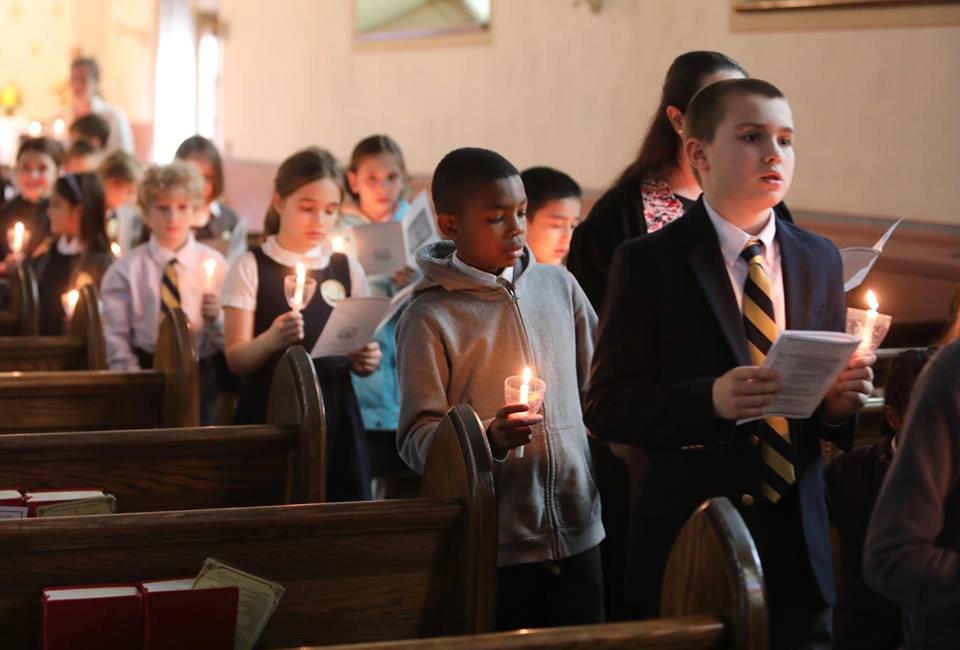
Photo via Regina Pacis Academy in Norwalk, CT.

Early executive actions

One way the Newman Society is striving to help Catholic educators prepare for the difficult months ahead is by sponsoring occasional webinars with legal experts. In February, we hosted a webinar for diocesan and Catholic school leaders with Eric Kniffin, legal advisor to the Newman Society and a former attorney for the Becket Fund and the U.S. Department of Justice. We also hosted a similar webinar for Catholic college leaders with Gregory Baylor, senior counsel and director of the Center for Religious Schools at Alliance Defending Freedom.

Both attorneys assessed the early actions of the Biden administration affecting Catholic education, including the President’s executive order on “Preventing and Combating Discrimination on the Basis of Gender Identity or Sexual Orientation.” Issued on his first day in office, January 20, the order opposes children being “denied access to the restroom, the locker room, or school sports” because of gender identity. It requires federal agencies to interpret Title IX (the federal law concerning sex discrimination in education) and other laws in accord with the “reasoning” of the Supreme Court’s Bostock ruling last summer, which forbids adverse employment actions on the basis of “gender identity” and “sexual orientation.” Another directive came in February from the Department of Housing and Urban Development, which announced that it would interpret the Fair Housing Act to include “sexual orientation” and “gender identity” within the scope of sex discrimination. While it may not seem that the Fair Housing Act should impact Catholic education, the new interpretation may be construed to require allowing biological males access to women’s residences at boarding schools and Catholic colleges, and vice versa.

On March 8, President Biden issued an executive order requiring the Education Department to conduct a 100-day review of regulations, policies and guidance and to rescind anything inconsistent with the view that Title IX covers “sexual orientation or gender identity” discrimination.

While these executive actions signal the Biden administration’s intention to press gender ideology under Title IX and other laws, they do not change the laws—that’s what the Equality Act and other Congressional efforts attempt to do. Ultimately federal courts will determine how the Bostock ruling’s reasoning applies to education and other areas, and what religious protections remain.

Equality Act

President Biden strongly supports the Equality Act, which was approved by the House of Representatives on February 25. This disastrous bill is a broad attack on religious freedom and, if passed, must be challenged in the courts as a violation of the First Amendment.

The bill would amend several civil rights laws concerning education, employment, housing, and more to ban discrimination related to “sexual orientation” and “gender identity.” It would expand the federal definition of “public accommodations” to include schools and colleges.

Alarmingly, the Equality Act also would exempt its provisions from the broad protections of the Religious Freedom Restoration Act (RFRA), which apply to every other federal law. RFRA sensibly requires that, for any law impeding on religious activity, Congress must show that it has a “compelling interest” as the basis for the law and that it could not find another way of meeting its objectives with less impact on religion. Clearly Congress could prevent discrimination in all secular activities without forcing Catholic educators to violate their beliefs, but the Equality Act insists on doing so—and prevents appeals to RFRA to demand religious protections.

And that’s not all. Educators hoping for protection under the rather strong religious exemption in Title IX, the law banning sex discrimination in education, would effectively lose that option if the Equality Act is approved. That’s because the bill adds “sexual orientation” and “gender identity” to the scope of Title VI of the Civil Rights Act, which broadly applies to all recipients of federal funds and has no exemption for religious education. In the wake of the Equality Act, Catholic schools and colleges could be sued by their employees or students under Title VI for simply following the Church’s teaching on the nature of the human person, and these institutions would not have recourse to any statutory protections for religious liberty.

Fairness for All Act

For several years, Mormons and some evangelical Christians have worried that changes to nondiscrimination law are unstoppable, and therefore they have advocated a compromise bill that would change federal laws to include “gender identity” and “sexual orientation” but would explicitly exempt religious institutions.

Under the threat of the Equality Act, such a compromise—deceptively dubbed the Fairness for All Act—can seem attractive. But the reality is that, once federal nondiscrimination laws are amended, activists are not going to allow religious exemptions to stand for very long. Here’s clear evidence: the strongest opposition to Fairness for All comes from the LGBT lobby, which has deemed Catholics to be bigots and demands that any law cover religious organizations. The lobby has so far been willing to forgo opportunities to pass some of its most desired provisions from the Equality Act, if religious protections are included.

Aside from tactical concerns regarding the fragility of Fairness for All protections, endorsing “gender identity” and “sexual orientation” as protected classes in the law would be a grave betrayal of Catholic values and the truth that is the foundation of Catholic education. Both labels are false and dangerous. They contradict Catholic teaching on sex and human nature, and there can be no faithful Catholic support for organizing society around such falsehoods.

Furthermore, this compromise would only preserve religious freedom within narrow limits. Fairness for All would not protect the conscience rights of individual Catholics, likely to suffer marginalization and persecution in employment and other social activities. The bill would not prevent state agencies, accreditors, athletic associations, and vendors from deeming Catholic education discriminatory and ineligible for services. Catholic homeschooling and online educational resources could be restricted or banned.

Photo via St. Theresa Catholic School in Sugar Land, TX.

Protecting Catholic education

Additional threats to Catholic education are expected in the coming months: efforts to require doctors to perform “gender reassignment” procedures and force insurers to cover such procedures, to mandate abortion coverage in employee benefit plans, to assert federal oversight of collective bargaining at Catholic colleges, and more. Regardless of federal action, private athletic and accrediting associations may pressure Catholic schools and colleges to compromise on LGBT issues. And struggles continue in the courts, especially to ensure the ministerial exception for all teachers and professors at faithful Catholic institutions.

It won’t be easy, but Catholic education must continue, as it is a key part of the Church’s work of evangelization. The Supreme Court has generally shown respect for religious freedom, but it is up to Catholic education leaders to defend their rights and ensure protection under the First Amendment by firmly grounding all policies in Catholic teaching. Make use of the Newman Society resources on our website and contact us for assistance.

God willing, together we will weather the storm, and Catholic education will come out of this stronger than ever!

The Happy and Successful Student: Sober and Chaste

Every high school student wonders what God has in store for your life: What are my specific gifts and talents? What exactly is my vocation, my calling in life? Will I be happy with my future? I want to be loved; is there anyone out there for me?

If you are going to college, you naturally also wonder what God has in store for the next few years. Hopefully it will be a joyful, fulfilling adventure!

Sadly it’s not unusual for college students to develop unhealthy relationships and engage in unhealthy behaviors. It will be up to you, with God’s help, to stay on the good path—the path of chastity, sobriety, and excellence.

At the Fellowship of Catholic University Students (FOCUS), we call these the “Big Three.” By no means are these the only things necessary for being a good Christian. First, we must have a relationship with God and communication through prayer. But we stress chastity, sobriety, and excellence because they are tough virtues to acquire on a typical college campus.

Chastity

God, in His great love for you, has made you for a reason. He has made you to love and to give love, and the only way you will know how to do this is by learning from the One who created you. Now is a good time to be learning, because if you are called to marriage, it’s not unusual to find your future spouse among the many friends that you will meet in college.

Since God is love, and we are made in God’s image and likeness, we are created to both receive love and to give love like God—like the Trinity, in a total gift of self. And because we are in God’s image and likeness, we have dignity. All of us are given this gift, and that is why each one of us has a God-given beauty and attractiveness.

Love is what completes us, what makes us human in God’s image. In order to love like God does within the Trinity, we must make a sincere gift of ourselves. Man and woman are created to give themselves entirely to each other in marriage.

In marriage, God unites the man and woman together in a sacrament—the two become one flesh. On the altar, the man and woman give their lives to each other; in marital union, they make that gift real and visible by giving their bodies to each other. Isn’t that beautiful and amazing? This is why fidelity in marriage—and chastity outside of marriage—is so important.

So why aren’t all relationships between men and women as perfect as the first marriage, if that’s what God had in mind from the start? The problem is sin. The love that should have existed between man and woman is still there, but often it’s mingled with a lot of selfishness and self–love. There is misunderstanding, tension, and the sad reality of men and women using each other selfishly.

Sometimes we’re afraid that the thing that we want most, real love, doesn’t exist. Sometimes, we settle for a little pleasure that seems like love, because we think that the life-long love we desire isn’t out there. The good news is that this love is available to us, and that we can have this true love by following God’s plan for our lives, specifically with the virtue of chastity.

Chastity is the power to love others in the right way. It is about so much more than not having sex before marriage. Chastity is about loving the way that God has called us to love, with a pure heart and mind, without selfishness or lust.

Even though we know the right thing to do in the area of chastity, it is still very difficult to love in the right way. That’s where the virtue of self-control comes in. A virtue is a good habit: the more that you practice it, the easier it is to do the right thing. Self-control is putting your physical desires under the control of reason. This is key in the practice of chastity.

And it’s as important to guard our hearts as it is to guard our bodies. Have you ever found yourself getting too serious too quickly in a relationship? Does it ever seem like you fall for a guy or a girl, but it turns out they just wanted to “hang out?”

Chastity is all about freedom. You are not free when your reason doesn’t control your desires. We have souls and intellect. Our desires are to be under the control of our minds—under the control of reason. Then, we will be free to follow our desires or not, based on what we know is best for us.

Make boundaries for yourself. Know exactly where your line is. Commit to being faithful to these boundaries. Also, talk to your boyfriend or girlfriend about them. Talk about how you can keep them together—you can’t do it alone! Get a friend to help you be accountable. Also, think about what you will do when your boundaries are being challenged.

We usually flirt because we are trying to get attention. We are trying to get love, and, attention sometimes feels like love. Heavy flirting is also selfish—it can lead someone on and hurt them. It also can get you into bad situations. We want attention—we try to get it by flirting. But, love is all about giving!

Sobriety

It is a reality that most college students drink, or, at least, they face enormous pressures to drink. There are many different opinions and beliefs about drinking: Is drinking at all permissible? Is it okay to get drunk? Is it okay to get drunk from time to time, if it helps relieve stress? Or, is it alright to get drunk every night if it makes you feel good?

People will give many different answers to each one of these questions. What do you think? Before heading to college, take some time to examine these questions under the light of the Scriptures and Church teaching.

Did you know that you could fill 3,500 Olympic–size swimming pools with the amount of beer, wine, and liquor consumed by American college students each year? Did you also know that 80 percent to 90 percent of campus violence is linked to alcohol abuse? And that 90 percent of all rapes on college campuses involve alcohol?

But there are plenty of Bible passages about drinking, and we know that Jesus Himself drank wine. If the Bible says that drinking is okay, then how are all of these bad things associated with alcohol? The key element is drunkenness. It’s fine to drink legally and in moderation (so that you still are in full possession of your mind and your senses, so that you can make good decisions), but getting drunk is a sin. It’s abusing our bodies, souls, and the gift of alcohol. Sobriety is enjoying the gift of alcohol in the way that God intended.

Our spirit directs our actions. You know what you want to do and your body obeys. The Holy Spirit will guide us to make good decisions if we allow Him. But when we get drunk, we allow the “spirits of alcohol” to make our decisions for us. It comes down to a simple choice: do you want to be led by “spirits” (alcohol) or by the Holy Spirit? If we choose the Holy Spirit, we will have a full and happy life. The Spirit brings a life of peace and joy. Can abusing alcohol promise this much?

When you drink too much, you don’t have the full use of your brain, and, therefore, your reason is impaired. You can’t make good decisions when drunk! Everyone, no matter how well they can “hold their liquor,” has a biological reaction to alcohol which affects their decision-making abilities.

It is tough to have moderation in drinking. How can you have the willpower to drink moderately? You need temperance to do this.

Temperance is the virtue that controls our appetites for basic sense things: food, drink, and sex. Another word for temperance is self–control. It isn’t about not doing things, it is about placing your desires in the right order. It means that you are not being controlled by your basic sense desires, but that you put them under the control of your mind. If you have this control, this self–mastery, then you are free to do the right thing.

For example, imagine a person who loves ice cream and craves it day and night. If that person gave into their desires whenever they craved ice cream, they would be very unhealthy. So, they don’t always give in. They have the self–control to say no when they need to. That’s what temperance is all about: putting our bodily desires under the control of our reason. This gives us the freedom to be fully human—we don’t have to follow our sense desires like the animals do!

How do you do this? Build good habits. First, try to build a habit of discipline and self–control in all areas of your life. The more that you act on what you know you should do, the easier it will be to say no to other things in your life that will not lead you to happiness, like drunkenness.

Excellence

We are called as Christians to imitate Christ. That’s what it means to be His followers. While we will not be perfect in what we do, we are to try to follow Jesus’s example and to do well what God has given us to do.

That is what excellence is: a superiority of virtue and a preeminence in accomplishment. We actually are able to be excellent with the help of God’s grace!

It’s easy to become a “human do–ing” instead of “human be–ing”. In order to see how we can do our best in everything, we must first look at how we can be our best, how we can be whom God has called us to be!

First of all, prayer. The most important thing is to work on your relationship with God, and don’t forget this if you go away to college. Daily prayer is so important. It cannot be over-emphasized!

Sacraments are also key. They are gifts that Jesus has given to us so that we may be closer to Him. Receive the Eucharist often, go to confession regularly. If you add the sacraments to an openness to be changed by Christ and spend time in daily prayer, God will do so much in your life!

God has a plan for each of us. It is a good plan that is going to lead us to happiness if we have patience and allow God to reveal it to us… in His own time. Right now, God has placed you in certain circumstances. He has entrusted you to a specific family, given you certain friends, and put you in a certain school. So He may lead you to college. Whatever your circumstances, God wants you to do everything to the best of your ability.

In addition to what God has called you to do now, there is a calling which God has for you in which to best live out your Christian life. This is called your “state in life.” You could be called to be a religious sister, to be married, or to be single. God already knows what your calling is. He’s known since “the foundation of the world.” Your

vocation is not something that you should worry about; it is God’s gift to you that He will reveal to you when the time is right.

Meanwhile, strive for excellence. At a faithful Catholic college, you’ll have plenty of help along the way.


This article was originally published in 2015.

FOCUS, the Fellowship of Catholic University Students, is a national outreach that meets college students where they are and invites them into a growing relationship with Jesus Christ and the Catholic faith. It was founded in 1998 at Newman Guide recommended Benedictine College.

Blessings and Pitfalls of Dorm Life

“You never open the door when there’s a shirt tied around the doorknob!”

So I learned when I went back to my dorm room one morning, in my freshman year at a Catholic college. Evidently sexual activity was so common that it had its own perverse sort of etiquette that every student was expected to know. I appeared the odd man out.

Many a recent graduate or current student of Catholic universities can tell similar stories.

Students deserve better—they deserve to be expected to be better.

Of course, stories like this have always been and will always be told. But it’s something to keep in mind as you choose a college, because there are better options available to Catholic families. The campus needn’t be monastic—and it shouldn’t be, this is college after all.

A Catholic campus should have single-sex dorms! (Or (at least!) single-sex wings.)

And do not overlook the importance of “visitation policies.” These are the hours when members of the opposite sex are officially permitted to be in others’ dorm rooms—their bedrooms. At many Catholic colleges, the time ranges from early morning until very late at night. What message does this send? The reality of Catholic campus life can be told by touring dorms on weekends. Before you choose a college, visit and then visit again, paying close attention to the atmosphere in the residence halls. You will learn a lot.

Choosing a college is an exciting and challenging process. An authentic Catholic education is a rich gift for students.

And while potential majors are frequently intensely deliberated during the decision-making, the moral environment of the whole campus is what may make the most lasting impact on the life of the college student. Most of a student’s college life will be spent in and around his dorm. And so, in choosing a college, you deserve an answer to this question:

Does the residence life at the college you will attend encourage virtue and chastity and help you grow in faith, or is it likely to be a four-year temptation to be a part of the same hook-up culture that has been the cause of so much heartache?


This article was originally published in 2015.

Kathryn Jean Lopez is a senior fellow at the National Review Institute and an editor-at-large of National Review.

Pro-Life Colleges Won’t Be Silenced

What an inspiration! Several Catholic colleges, undeterred by their inability to attend this year’s physical March for Life in Washington, D.C., have found new and exciting ways of witnessing to the gift of all human life.

Every year, huge numbers of students at faithful Catholic colleges make heroic efforts to travel across the country, brave cold temperatures, and bear with uncomfortable sleeping conditions to attend the annual demonstration in Washington, D.C.

This year, the March for Life rally is a virtual event, and the March itself is limited to a small group of pro-life leaders. But these changes have not stopped faithful Catholic colleges from finding creative ways to witness to life.

Throughout the month of January, they are remembering the anniversary of Roe v. Wade and peacefully protesting and praying for an end to abortion. Several Catholic colleges are taking part in local pro-life marches. The University of Mary in Bismark, North Dakota, is helping organize a march in which pro-lifers will walk to the steps of the state capitol.

A junior at the University of Mary and president of the Collegians for Life club, John Brule, says that while he would have “liked to be able to witness to life by attending the national March for Life” again this year, he thinks the local march will make a big impact. “It brings our minds closer to where the real fight for life takes place — in our local communities and families.”

Also, this Friday, Benedictine College will lead a pro-life march through its hometown of Atchison, Kansas, which will include a ceremony at the Memorial of the Unborn and Mass on campus. Students at Wyoming Catholic College attended a walk for life in Lander, Wyoming, and Franciscan University of Steubenville students will hold a Life Chain in Steubenville, Ohio.

Prayer for an end to abortion is at the focus of Christendom College in Front Royal, Virginia. The College was supposed to lead this year’s March for Life, but that honor has been postponed to 2022. Instead, the College’s schedule includes Mass, praying three mysteries of the Rosary in a procession around campus, and a Holy Hour for an end to abortion, followed by Adoration until midnight in the chapel.

Belmont Abbey College in Belmont, North Carolina, has organized a 40 Hours for Life campaign on campus, with perpetual Adoration running from Friday to Sunday. “I have always loved going to late-night Adoration, and in my time at the Abbey I have found that a lot of students share my love for it,” says Michaela Mosher, a sophomore at the Abbey who serves as the president of the Crusaders for Life club on campus.

“Even though we cannot physically be at the March, we want to show our support for the cause,” Mosher explained, “Everyone is involved! We have teachers, some of the monks, the FOCUS missionaries, and tons of students coming to fill those 80 slots!”

Thomas Aquinas College in Santa Paula, California, organized its own virtual events, with Dr. Janet Smith speaking to students about the connection between abortion and contraception, and Don Blythe tackling how to effectively sidewalk counsel outside of abortion clinics.

Some Catholic colleges are encouraging students to take part in the virtual March for Life events, including The Catholic University of America in Washington, D.C. At the University of St. Thomas in Houston, the campus ministry office plans to livestream the virtual March in their offices.

For faithful Catholic colleges, attending the annual March for Life or another local march is just part of their pro-life efforts. For example, the Crusaders for Life club at the University of Dallas in Irving, Texas, regularly prays and engages in sidewalk counseling on Saturdays at a local abortion clinic. In faithful Catholic education, the dignity of the human person from conception until natural death is upheld, inside and outside of the classroom. There are no referrals to Planned Parenthood from their health clinics, pro-abortion speakers, and pro-abortion clubs on campus, as at many wayward Catholic colleges that have sadly betrayed their mission.

Despite an unusual year, faithful Catholic colleges are again leaders in organizing pro-life witness across the country. These colleges are building up the next generation of pro-life leaders and spreading the message of life far and wide.

This article first appeared at the National Catholic Register.

College Search Timeline

Fall of Your Junior Year

  • Take the CLT/PSAT
  • Start making a list of colleges you are interested in, especially from those recommended as faithful Catholic colleges by The Cardinal Newman Society
  • Sign up for The Cardinal Newman Society’s “Recruit Me” program
  • Start coming up with a standardized testing plan
  • Begin looking at financial aid options

Winter and Spring of Your Junior Year

  • Continue to look for scholarships, ask colleges about special scholarship weekends or competitions
  • Narrow down your list of colleges and set dates to visit during the spring
  • Take the CLT/SAT/ACT

Summer Between Your Junior and Senior Years

  • Attend a summer “experience” at one or more colleges that you’re interested in

Fall of Your Senior Year

  • Re-take standardized tests if you need to raise your score
  • Get letters of recommendation
  • Application essays, recommendations and forms
  • Complete applications
  • Submit FAFSA form for aid as soon as possible after Oct. 1st

Winter and Spring of Your Senior Year

Athletics Should Uphold Truth of Body and Gender

Editor’s Note: The article below is included in the forthcoming winter 2021 edition of the Newman Society’s Our Catholic Mission magazine.

Seeking “a fair and safe playing field for all children and young adults,” the U.S. bishops in October backed federal legislation to prevent schools and colleges from allowing male athletes—including those who identify as transgender—to participate in female sports.

The bishops’ position should not be surprising. It reflects the Church’s clear teaching that gender is not divisible from biological sex, and that men and women should not be treated as identical despite sharing equal dignity and humanity. The Church has a long history of single-sex education and athletics programs, recognizing both physical and social differences between the sexes while protecting students’ safety, development and chastity.

But in athletics programs at many Catholic schools and colleges today, the Church’s teaching is less clear. Some participate in athletics conferences that allow students to declare their gender and compete against students of the opposite sex, while others have similar internal policies.

In Connecticut, three female high school athletes have filed a federal lawsuit claiming violation of the federal Title IX law, because biological males have been allowed to compete and win female titles in state track championships. The U.S. Department of Education has agreed that girls have the right to compete in all-female events. But since 2017, when the Connecticut Interscholastic Athletic Conference allowed students to choose teams according to a “preferred gender identity,” Catholic schools have continued to participate in the league.

Likewise many Catholic colleges belong to the National Collegiate Athletic Association (NCAA), which allows a biological male to compete on a women’s team after one year of testosterone suppression treatment. The NCAA hosted a summit on gender identity last October and is expected to expand its transgender policies and outreach.

Responding to the apparent need for clarity in Catholic education, the Newman Society is developing recommended standards for policies addressing all aspects of athletics programs—not only gender issues, but also the role of sports in virtue development and many practical concerns. These will be circulated for comment by athletics directors as well as diocesan leaders, school leaders and theologians.

But to specifically address the issue of gender, we have circulated and published a helpful advisory by veteran educator Dr. Dan Guernsey, titled “Protecting the Human Person: Gender Issues in Catholic School and College Sports.”

Body and Soul

When athletics are done well, it’s a great blessing for Catholic students, Guernsey writes.

Athletics serves the mission of Catholic education, which “entails the pursuit of truth, the integral formation of the human person, the sanctification of students, and service to the community,” he notes. Sports in Catholic schools and colleges “can be particularly effective in developing virtue, building community, and providing a powerful experience of the unity of body and soul.”

The Vatican teaches:

…in the context of the modern world, sport is perhaps the most striking example of the unity of body and soul. …neglecting the unity of body and soul results in an attitude that either entirely disregards the body or fosters a worldly materialism. Hence, all the dimensions have to be taken into account in order to understand what actually constitutes the human being.

Gender ideology is thus a danger to students and incompatible with a Catholic understanding of sport.

“Because athletics is such a powerful influence on both individuals and cultures, it can also pose a threat when it does not serve truth or does not serve to praise God,” writes Guernsey, recalling Pope St. John Paul II’s teaching that “self-denial and respect for the body as God’s gift are fundamental to a healthy athletic program.”

“Gender theory is a distortion of the full development of a person and attacks the integrity of the body,” writes Guernsey. “It works against a Catholic understanding of athletics and the good of the person and so has no claim on Catholic programing.”

The way forward

Guernsey recommends practical steps that Catholic schools and colleges should take to maintain a strong Catholic identity:

  • “Catholic educational institutions should publicly and explicitly affirm and seek to implement their faith-based mission and develop and consistently abide by policies in all programs that support this mission. They should assert religious freedom to uphold Catholic teaching and claim exemption from laws, regulations, athletic association rules, etc. that demand conformity to gender ideology.”
  • “Athletic programs should include in their goals the use of athletics as a means of inculcating virtue, especially justice and fair play, promoting the unity of body and soul, and protecting the human body not only from physical injury, but also from any attack on its integrity, exploitation, and idolatry.”
  • “Athletic policies should require that students participate on sport teams consistent with their biological sex.”
  • “Athletic personnel should be formed in a spirituality of athletics as part of their ongoing professional development. Such formation may include presentations by theologians on Christian anthropology, the role of sport and play in human well-being, and sports as a tool of evangelization and virtue development.”

By taking a leading role in local and national conversations about gender in sports and asserting the importance of single-sex competition, Catholic athletic directors and education leaders can find common ground with others. Some other Christian schools and colleges will share our moral perspective, while others will share our concerns for player safety, fair play, and justice. Advocates for women should be concerned about protecting single-sex athletics to ensure opportunities for girls.

“Catholic education is devoted to the sanctification of its students and integral formation by witnessing to Christ and all that is true and good,” Guernsey writes. “To lead the children in their care to God requires that they encounter the fullness of His truth and that they not foster situations in which students might be led astray in matters of basic human nature and morality.”

Mission Fit: Working with Nontraditional Families

Editor’s Note: The article below is included in the forthcoming winter 2021 edition of the Newman Society’s Our Catholic Mission magazine.

Last year, when the child of a same-sex couple was denied admission to St. Ann Catholic School in Prairie Village, Kan., the incident sparked public debate over Catholic school admissions policies.

It also revealed disagreement in dioceses across the country about standards for Catholic school enrollment, particularly when students’ family relationships are taken into account. Disagreement in the Church regarding nontraditional families—the growing variety of home situations beyond a faithfully Catholic family with a married mother and father—may leave schools more vulnerable to discrimination lawsuits and to vilification by the media, politicians and social activists.

Following the incident at St. Ann’s, the Archdiocese of Kansas City, Kan., issued a statement, which read in part:

The Church teaches that individuals with same-sex attraction should be treated with dignity. However, the challenge regarding same-sex couples and our Catholic schools is that same-sex parents cannot model behaviors and attitudes regarding marriage and sexual morality consistent with essential components of the Church’s teachings. This creates a conflict for their children between what they are taught in school and what is experienced at home. It also becomes a source of confusion for the other school children.

Critics pounced, accusing the Archdiocese of discriminating against homosexuals while admitting children whose parents are divorced and remarried. Other dioceses disregard parents’ sexuality when making admissions decisions. Some argue that Catholic schools should welcome students from any family situation, so that at least the children can be taught the Catholic faith.

What policies best serve the mission of Catholic education? While it may take some time to reach consensus, The Cardinal Newman Society, through its Catholic Identity Standards Project, is working with educators to develop guidance on this critical but complex issue.

Not Every Family

As a key means of evangelization, Catholic schools serve the Church’s mission to teach the nations about Christ and all truth. In principle, they should be eager to teach every young person who seeks admission, although that is not possible or wise in every situation.

In practice, it is rare for a Catholic school not to limit enrollment for practical reasons as well as concerns about a student’s behavior and impact on other students’ education.

Enrollment decisions should also look at a student’s family situation, not because it is a school’s primary mission to address the moral life of parents—although the school can do much to witness to moral truth and help parents get the pastoral care they need—but because family circumstances may make it impossible to fulfill the mission of Catholic education without conflict, confusion and scandal to the students who are enrolled in the school.

Denying admission because of family situations, often no fault of the child, is difficult. But it is critical to the mission of Catholic education to prevent situations that could unintentionally lead other impressionable students away from virtue and holiness, which directly contradicts a Catholic school’s purpose.

A Catholic school is more than a service; it is a community committed to the mission of Catholic education, and participating families need to be a part of that commitment. Enrolling Catholic families should be a school’s first priority, because of the right of baptized Catholics to formation in the faith and the Church’s obligation to serve this need.

Family Circumstances

In today’s culture, schools increasingly are faced with students whose parents or guardians are not Catholic, unwed and cohabiting, remarried outside the Church, in a same-sex union, or identify as transgender.

In many of these instances, families may be safely invited into a Catholic school if they agree to support the mission of educating and forming students in the truths of the Catholic faith and do not interfere with that mission. Every such family seeking a Catholic education should be addressed with compassion and a desire to help parents reconcile with Catholic teaching, usually by referring them to a priest or other parish ministries for pastoral care.

Still, with its purpose of teaching truth, a Catholic school must be prepared to delay admission or turn away or dismiss a student whose family situation causes moral confusion and scandal among other students in the school’s care. This requires courage. A Catholic school must have the conviction that upholding its mission, protecting its students from confusion and scandal, and guiding families to moral truth even by denying enrollment is true compassion.

In some cases, a school could attempt to help a family regularize a home situation, as long as the problems are not so publicly visible and confusing to other students that they conflict with the mission of Catholic education. A school must avoid appearing to condone parents’ immoral choices and compromising the school’s reputation for teaching truth.

It must also consider the potential damage when parents openly and strongly oppose the moral lessons at a Catholic school. Children naturally rely on their parents’ emotional and physical care, and in cases in which the parents are so strongly opposed to what a Catholic school teaches, a school could cause the child to become alienated from the parents or, more likely, alienated from the Church. In such cases, it may be imprudent to enroll the child in Catholic education until they have the maturity to sort through such painful and complex realities.

For Catholic educators today, the most difficult situation to handle may be when it is discovered that a current or prospective student’s parents or guardians are in a homosexual relationship. This is not identical to other irregular and immoral circumstances, because the Church teaches that same-sex unions are fundamentally in opposition to marriage and allow no possibility of regularization, as is possible in most male-female relationships. It is always the case that a public same-sex union brings moral confusion and scandal into the school community.

For deeper discussion of these issues, the Newman Society recommends two papers: “Not All Families Are a Good Fit for Catholic Schools” and “Working With Nontraditional Families in Catholic Schools,” both by Dr. Dan Guernsey. These were circulated among Catholic educators, diocesan leaders, and theologians for comment before publication.

Moral Witness at the Heart of Catholic Education

Editor’s Note: The article below is included in the forthcoming winter 2021 edition of the Newman Society’s Our Catholic Mission magazine.

Last summer, the U.S. Supreme Court confirmed that the “ministerial exception” applies to certain Catholic school teachers, a ruling hailed as protecting Catholic schools and colleges that uphold moral standards for employees.

While the ruling addresses serious questions of religious freedom, it also raises issues that many dioceses, schools and colleges have been wrestling with for several years: What moral standards should be expected of employees in Catholic education? The Church has repeatedly called on teachers to witness to the faith in both word and deed. But what about non-teaching employees?

Underlying these concerns is the necessity of ensuring that all employees faithfully serve the mission of Catholic education. Clear and consistent contracts and policies are the best means of upholding Catholic identity while avoiding employee disputes and lawsuits.

Ministerial exception

As explained in the Newman Society’s summary of the Supreme Court’s ruling in Our Lady of Guadalupe School, the Court explicitly forbade federal courts from interfering in Catholic school employment decisions concerning teachers of religion, because that would constitute a violate of the First Amendment’s Free Exercise Clause.

The Court also signaled that the ministerial exception covers other employees with substantial religious duties, but more litigation will be needed to determine how the exception applies to teachers of subjects other than religion, clerical and maintenance staff, and higher education employees.

Already lower courts are testing and even challenging the ministerial exception. A panel of judges for the 7th Circuit Court of Appeals determined that the exception only prevents lawsuits concerning hiring and firing decisions, so it allowed a former employee of a Chicago parish—fired because he entered into a same-sex union—to proceed with a lawsuit claiming a “hostile work environment.”

The Newman Society responded with the help of attorneys at Alliance Defending Freedom, filing an amicus brief urging the full 7th Circuit Court to overrule the panel decision and to apply the ministerial exception to all employment-related matters. In December the full court took the rare step of vacating the panel ruling and will soon reconsider whether to let the case move forward.

Morality expectations

In 2015, controversy erupted in the Archdiocese of San Francisco over morality clauses in teacher contracts, although the Church’s standards were in the end preserved. Many other dioceses have implemented similar employment guidelines both to protect Catholic schools and to provide clarity to employees.

Catholic school and college leaders should be clear about moral expectations when interviewing prospective employees, and there are a variety of ways of inserting faith and morals clauses into employment documents. These include morality, witness, and belief statements and language in pre-contract agreements, contracts, and employee handbooks.

Catholic schools and colleges can avoid disputes by clearly explaining to employees the fundamental religious nature of all their efforts and the Catholic principles that undergird employment policies. All employees should be made aware of their responsibility to advance the religious mission of Catholic education. There should be no confusion about which faith and moral transgressions can result in disciplinary action or firing.

The Newman Society provides Catholic educators with a review of moral standards for Catholic school employment documents and a compilation of sample policies from dioceses around the country.

All Employees Matter

Moral standards at most schools and colleges focus especially on teachers and professors, which is understandable. Many Church documents highlight the duty of teachers to be witnesses to the faith. They have a primary role in Catholic education and direct influence over their students.

Moral standards should apply to educators in every subject area, not just religion teachers or theology professors. This is true especially in elementary and secondary education, when impressionable children rely on good role models and moral guides for their formation.

“A teacher who is full of Christian wisdom, well prepared in his own subject, does more than convey the sense of what he is teaching to his pupils,” declares the Congregation for Catholic Education in The Catholic School (1977). “Over and above what he says, he guides his pupils beyond his mere words to the heart of total Truth.”

As even secular courts acknowledge by the ministerial exception, teachers in Catholic education are expected to display more than knowledge of a particular subject area—they are to be witnesses to the faith in word and action.

“Intimately linked in charity to one another and to their students and endowed with an apostolic spirit, may teachers by their life as much as by their instruction bear witness to Christ, the unique Teacher,” exhorted Pope Saint Paul VI in Gravissimum Educationis, the Vatican II Declaration on Christian Education.

Many non-teaching employees, too, have formational duties that are essential to Catholic education. These include coaches, counselors and others who are involved with student activities. They work closely with students and should be held to the same high moral standards.

What, then, of the receptionist and the librarian? Or the nurse? Or maintenance staff?

Such positions are often viewed as having primary secular functions and therefore not accountable to Catholic moral standards beyond the ethics of their particular tasks. Lawsuits against schools have increasingly concerned employees who were fired for civil same-sex unions—and many would question the need for a groundskeeper to witness to Catholic teachings on marriage.

Nevertheless, all employees should be held to high standards at a Catholic school, because every employee is a member of the school’s Catholic community that is committed to students’ formation. Although the extent of their interaction with students may differ, any employee of a school can have an impact on students’ outlook and behavior.

The Newman Society is developing standards to help Catholic educators develop policies and employment documents upholding moral expectations for employees. See also our recently published argument for applying such expectations broadly, in “All Employees Matter in the Mission of Catholic Education” by Dr. Dan Guernsey. He notes that even limited student contact by an employee has potential for good or ill, and every employee should serve the mission of Catholic education.

Consider a secular business: every employee serves the company’s objectives, and any action that undermines the company’s success is reason for discipline or dismissal. The purpose of Catholic education is to teach and form young people in the faith and lead them to God, and no employee should ever obstruct that mission.

Catholic College Scholarship Contest Invites Applications

The Cardinal Newman Society is pleased to announce its fifth annual Essay Scholarship Contest. The winning essay writer will be awarded $5,000 toward the cost of attending a faithful Catholic college recommended in The Newman Guide (see https://cardinalnewmansociety.org/the-newman-guide/) in the fall of 2021.

In addition, several Newman Guide colleges have agreed to supplement the Newman Society’s scholarship with additional $5,000 grants to the winner over three additional years, according to criteria established by each college.

All of the details about the Contest can be found at this link: https://newmansoc.org/EssayContest

The Newman Society scholarship is made possible thanks to the generosity of Joe and Ann Guiffre, strong advocates of faithful Catholic education.

The contest is open to high school seniors in the United States who sign up for the Newman Society’s Recruit Me program, explore the Newman Society’s tips for navigating the college search, and check out the recommended colleges in The Newman Guide during their college search.

The topic for this year’s contest is to reflect, in 500-700 words, on the following:

Christ promised, “I am with you always, until the end of the age.” The year 2020 was tumultuous and divisive for a variety of reasons, including the COVID-19 pandemic, the election, racial tensions, and violence. How has any of this strengthened your resolve to attend a faithful Catholic college?

Essays will be judged by how well they demonstrate appreciation for faithful Catholic education, as well as the quality of the writing.

Last year, the Newman Society announced Maria Schmidt of Providence Academy in La Crosse, Wisconsin as the winner of the Society’s fourth annual Essay Scholarship Contest. She received a $5,000 scholarship toward her education at Ave Maria University in Ave Maria, Florida. She may also be eligible for additional $5,000 grants from Ave Maria University.

In her winning essay, Schmidt reflected on a recent Pew Research study that found that only 26 percent of self-professed Catholics under the age of 40 believe in the Real Presence of Jesus Christ in the Eucharist. Catholics should face the crisis of faith “with a renewed commitment to strong Catholic education and faith formation,” Schmidt argued.

“A good education helps form the whole person, laying down proper philosophical principles necessary for the pursuit of truth in all its classes and activities,” Schmidt wrote.

Schmidt reminded us that the crisis of faith in our country and in the world is “not unprecedented.”

“Like the monks of Cluny Abbey who saved the faith of Europe in the tenth century, let us first reform ourselves through strong Catholic education and spiritual nourishment,” she wrote. “That is the first step towards the reform of the crisis, and another of many steps toward heaven.”

Schmidt’s entire essay can be read here.

Questions about this year’s Essay Scholarship Contest can be directed to Programs@CardinalNewmanSociety.org.