40,000 copies of The Newman Guide — thanks to you

Because of your generosity, 40,000 print copies of the 2025–2026 edition of The Newman Guide are now getting into the hands of high school students across America.

And many also received personal notes of encouragement from our supporters!  I’m so grateful for the inspiring words to young people discerning their future.  Those notes truly matter.

Thanks to your support, thousands of families have now downloaded the free eBook edition of the Guide, even as the Guide continues to grow.

We are adding new recommended elementary schools, secondary schools, colleges, graduate programs—and now also homeschool programs!  On Feb. 5, as I prepared to teach a class for my wife Rosario’s Aquinas Learning, our CNS team visited to celebrate the first Newman Guide Recommended homeschool curriculum.  More programs are also now recommended.

All of the new schools, colleges, and programs can be viewed on our website.  To see many more photos of students at Newman Guide Recommended schools and colleges celebrating this great achievement, see our pages on Facebook and Instagram.

Continue reading…

…Read the previous article.

View the entire Programs Report as a PDF.

Standing firm in a time of confusion

Lent has a way of stripping away distractions and reminding us of what truly matters.

The latest scandal at the University of Notre Dame is a prime example.  Its leaders insisted on promoting Prof. Susan Ostermann, despite her abortion advocacy and the pleas of many bishops and faithful Catholics, including The Cardinal Newman Society.

Meanwhile, Georgetown University has a new law dean: Liz Magill, the disgraced former president of the University of Pennsylvania, who resigned after defending radical antisemitic protests on her campus.  Her new boss is Georgetown President Eduardo Peñalver, who publicly stated, “I reject the Church’s teachings on homosexuality.”

These aren’t isolated incidents but symptoms of a culture that no longer knows what is true.  Even most Catholic colleges are dens of confusion.  Why should we be surprised, then, if 26 Catholic colleges in the last decade have announced their demise?

Your partnership in this mission matters so much!  You are shining a light on scandal, but even more, you are guiding families to schools and colleges that truly form students in wisdom, virtue, and fidelity.

This Lent, I will be praying for you and your family in gratitude for your commitment to the reform of Catholic education.  Together, we are not merely responding to scandal — you and I are building something faithful and enduring in its place, with God’s blessings!

Continue reading…

View the entire Programs Report as a PDF.

Faith, Reason, and the Mission of Catholic Higher Education with Dr. Sinda Vanderpool

Click here to watch on YouTube

Calling All High School Students: Don’t Miss These Newman Guide Summer Programs

What better way for a high school student to spend a week or two this summer than to enjoy a fun and spiritual program at a Newman Guide Recommended college!

A faithful Catholic education can prepare students not only for a career but for life. Whether or not you plan to attend a Catholic college, a summer program at one of the Newman Guide Recommended colleges can be enriching and gives you a taste of the benefits of a Catholic education.

Summer programs are a great opportunity for high school students to strengthen their academic and extracurricular skills, grow in their spiritual lives, get a head start on college visits, learn from distinguished professors, make lifelong friends, and experience what faithful Catholic education is all about. Here are some options:

Ave Maria University in Ave Maria, Fla., is offering its annual Summer Leadership Conferences for rising high school juniors and seniors to “discover your gifts, deepen your faith, and begin to see the leader God is calling you to be.” Running from June 14-19 or June 28-July 3, students from around the country will gather for a week of “formation and unforgettable fun” that includes attending classes, participating in activities, and joining in prayer and community.


Belmont Abbey College’s Schola program in Belmont, N.C., strives to cultivate a true life of leisure over a one-week session that runs July 5-11. According to the College, students will “build friendships together, through conversations with peers and professors; enjoy time to relax, join in the daily prayer life on campus, and pursue outdoor activities.” By the end of the week, students will have “grown in wisdom, critical thinking, and camaraderie.” Videos on the Schola program webpage show some of the highlights of previous years.

The Benedictine College Youth Conferences (BCYC) Immersion program in Atchison, Kan., offers four sessions for students to choose from more than 20 academic tracks, including computer science, engineering, nursing, pre-med, theology, philosophy, graphic design, voice, art, and many more.  Outside of class, students participate in Bible studies, attend Mass and engage in a variety of social activities from dances to sports to scavenger hunts. Participants report that they come away from the week with a deeper relationship with God and a better understanding of their vocation. There is also a weekend BCYC Encounter conference for parish and diocesan groups that focus on Benedictine spirituality. Finally, Benedictine College hosts a two-week Summer Intensive in Classical Architecture.

The Catholic Institute of Technology in Castel Gandolfo, Italy, one of the newest colleges to be provisionally recommended in The Newman Guide, is offering STEM high school summer programs for rising high school juniors and seniors. An Introduction to Computer Science runs from June 17 to July 15, and an Introduction to Space Sciences and Engineering runs from July 15 to August 12. Both programs will introduce students to scientific topics from a faithfully Catholic perspective while allowing students to experience all that Italy has to offer.

The Catholic University of America in Washington, D.C., offers a wide variety of fun and educational summer programs for high school students. Whether students are interested in engineering, writing, nursing, drama, architecture, or 3D Animation, there’s something for everyone! In Experiences in Architecture, students will explore the academic and professional sides of architecture. Drama lovers will be drawn to the High School Drama Institute, studying voice, movement, and acting with industry pros, while budding engineers can dive into Engineering New Frontiers. Other programs at Catholic University of America include the Nursing Intensive and the Young Writers’ Retreat. These programs are designed to provide an enriching educational experience in the nation’s capital.

Christendom College in Front Royal, Va., is offering “The Best Week Ever,” a choice of five different one-week sessions throughout June and July. Intended for rising high school seniors, the program instills in students “a deep appreciation for the liberal arts, Catholic culture, true friendship, and the beauty of God’s creation evidenced in the Shenandoah Valley of Virginia.” Participants attend daily classes in literature, philosophy, history and theology; hike in the mountains; canoe on the Shenandoah River; sing Irish songs; learn to swing dance and forge new friendships. As one student said afterward, “When I first heard about it, I honestly thought the ‘Best Week Ever’ was just an advertisement, but I truly did have the best week of my life and I have made memories I will treasure forever. Not only did I learn so much during my short time at Christendom this summer, but I’ve met the most amazing people and made friends I am still keeping up with. In learning so much about Christendom College and meeting such dedicated Catholics, I grew much closer to Christ and left the program with a desire to continue growing my relationship with God.” Summer program participants are eligible for an $8,000 scholarship if they apply and enroll in Christendom College.

Franciscan University’s summer Steubenville Conferences are popular with Catholic high school students across the country. The three-day Catholic conferences bring teens into a life-changing encounter with Jesus Christ. Conferences take place at multiple locations across the United States and Canada, including four conferences at Franciscan University’s campus in Steubenville, Ohio. The theme for the 2026 conferences is “Worthy”: “For the battle belongs to the Lord” (1 Samuel 17:47). Interested students must apply to attend a conference through a parish, high school or youth ministry group.

ITI Catholic University in Trumau, Austria, is hosting its second annual summer program. This program is geared toward current college students or adults because participants must be 17 years old. The two-week program runs from June 29 to July 10. The program aims to “explore life’s most profound questions: about the natural world, the human person, relationships, and ultimately, God Himself.” A typical day will include prayer, classes, Mass, and recreation time, with outings to Vienna, Salzburg and more. There is a scholarship discount for students who enroll at ITI following the summer program.

Our Lady Seat of Wisdom College in Barry’s Bay, Ontario, is offering Veritas Summer Programs for rising high school juniors, seniors, and recent graduates that will run from June 28 to July 4 or July 12-18. The program includes daily access to the sacraments, academic seminars in the morning, and fun activities like swimming, canoeing, and hiking in the afternoons and evenings. Situated in a beautiful setting in Canada, the program will conclude with an overnight camping excursion. The cost of the program will be applied as a tuition credit for any student who enrolls in the College after attending the program.

Once again, Thomas Aquinas College is offering its Summer Great Books Programs in two locations: its campus in Santa Paula, Calif., from July 5-18 and July 26 to August 2, and its second campus in Northfield, Mass., from June 23 to July 1 and July 12-25. On these one and two-week programs, students engage in Socratic seminars on Plato, Pascal, Boethius, St. Thomas Aquinas and Kierkegaard, among others. In addition to daily recreational and liturgical activities, the program also includes day trips to nearby cities. A detailed day-to-day picture of what the Great Books program is like can be found on the college’s blog. This program is offered to rising seniors.

Thomas More College of Liberal Arts in Merrimack, N.H., offers a Great Books program for high school-aged students. These two-week sessions, offered June 28–July 11 or July 19 – August 1, will immerse participants in a “healthy balance of prayer, work and play” as they read authors like St. Thomas More, Plato, and Aristotle. Along with academics, students will go on excursions throughout New England, including hiking mountains, visiting historic locations and traveling to the coast. Rising high school seniors also have the unique opportunity to attend the College’s Rome High School Summer Program, which runs from June 28 to July 8. The program gives students a taste of the College’s Rome Program, in which sophomores spend a semester abroad, and “traverse catacombs and cloisters, piazzas and palazzos, exploring the heart of the Christian West.”

The University of Dallas in Irving, Tex., offers several summer programs for high schoolers interested in classical texts, art and music. Rising juniors and seniors can experience life on campus during the two-week Arete: An Introduction to the Classics from June 7-20. The Arete program is about the “questions of what constitutes excellence and how one lives a noble life,” and students will earn three hours of college credit. Students as young as rising seventh graders can attend the Summer Art Academy or the Summer Music Academy to enhance their artistic potential. Both of these programs run for one week.

The University of Mary in Bismarck, N.D., offers a summer program for high school students. The Cor Christi Institute program runs for two sessions in July on the University’s campus. This program invites high school students of all grades to encounter Jesus and learn the foundational teachings and practices of the Catholic faith through serious study, good conversation and wholesome friendship.

The University of St. Thomas in Houston, Tex., is hosting a Summer Writers Institute for those who are 18 years of age or older. During this time, participants will hear from distinguished writers of poetry and fiction, and engage in seminars on art and beauty, Catholicism and literature, and the craft of writing.

Walsh University in North Canton, Ohio, is hosting a summer program for rising seniors in high school. The Ex Nihilo summer program is designed to encourage teens to better live out their Catholic faith in the modern world. The program will expose students to the liturgical, intellectual, and cultural life of the Catholic church, as well as allow students to experience the joy of an authentic Catholic community. Daily activities will consist of theology seminars, pilgrimages to local shrines, and experiencing all that Walsh’s campus has to offer. The dates of the program haven’t been set yet, but students can email campusministry@walsh.edu for more information.

Wyoming Catholic College’s PEAK program in Lander, Wyo., offers a unique experience for rising juniors and seniors with adventurous spirits and a love for the outdoors. With the choice of two different sessions, from June 6-19 or June 20 to July 3, students are given the opportunity to study the Great Books under the instruction of WCC faculty and to immerse themselves in the sacraments. Students are also engaged in a variety of outdoor activities, tailored to the experience and fitness of each participant, including rock climbing and a 4-day backpacking excursion. Students are encouraged to ask a WCC admissions counselor about travel credit.

Finally, for students looking for a taste of faithful Catholic education from home, many Newman Guide colleges offer online courses, including Catholic International University and Holy Apostles College and Seminary. Catholic International University offers an Early College Program that allows high school students to take faithfully Catholic 100 and 200-level 3-credit-hour courses. Most courses run for eight weeks and include courses like Latin 101, Foundations of Catholicism, and Intro to Catholic Health Care Ethics which is taught by Dr. Joe Zalot of the National Catholic Bioethics Center.

Holy Apostles College and Seminary offers a TakeCredit! program for high school students to take faithfully Catholic 100 and 200-level 3-credit-hour courses. Students can earn up to 36 credits before graduating from high school through Holy Apostles.  Popular offerings include Latin I, Catechism of the Catholic Church, Philosophy, Theology and Sacred Art. Online programs recommended in The Newman Guide, including Catholic International University and Holy Apostles College and Seminary, allow students to experience the best of the Catholic intellectual tradition from home, earn credits that may be able to transfer toward their future degree, saving both time and money.


CNS Joins Amicus Brief on Hiring Autonomy of Religious Organizations – Youth 71Five Ministries v Williams, U.S. Supreme Court

Click here to read.

Gender Ideology Threatens Catholic Formation

Recent headlines celebrated the “collapse” of gender ideology, the “fizzling out” of “transgender contagion,” and a “free fall” in number of students identifying as other than male or female.

Wonderful news, if only it were true. Reality, however, is more complicated—and less rosy. Gender ideology still represents a serious threat to children and families and should be firmly rejected by Catholic families and educators.

Remember that evil always masquerades as good, because human beings are hard-wired to search for truth and seek “the good” (God). Eve never would have reached for an obviously rotten apple. Decades ago, when gender ideology began seeping into our language, norms, and institutions, no sirens blared, no lights flashed, and few warnings were heard. Many families were blindsided, as children were seduced by gender ideology’s lies, seemingly overnight.

Gender ideology wears many masks:

  • On a philosophical level, it masquerades as a progressive, tolerant, and egalitarian belief system that deconstructs oppressive norms and upholds “identity” as “the choice of the individual.”
  • On a psychological level, the desire to reject one’s body or given sexual identity is packaged as perfectly “normal”—but paradoxically so compelling that others must affirm the chosen “identity,” lest denial drive the person to suicide.
  • On a political level, gender ideology purports to stand on the “right side of history,” honoring self-determination, diversity, equality, and “freedom” for “LGBTQ+ Americans.”
  • On a religious level, gender ideology presents as a “search for existential dignity,” a discovery of “authentic selves,” a Gospel mandate of “radical inclusion,” and a “celebration of belonging” for self-styled “LGBTQ Catholics.”

Don’t be fooled. Gender ideology is premised on a lie. It corrupts the good and devastates families.

In 2012, Pope Benedict XVI described gender ideology as an “anthropological revolution” built on “profound falsehood[s]” that reject human nature, sexual difference, and God as Creator. He warned of the consequences, particularly for human dignity and the family:

But if there is no pre-ordained duality of man and woman in creation, then neither is the family any longer a reality established by creation. Likewise, the child has lost the place he had occupied hitherto and the dignity pertaining to him…. the child has become an object to which people have a right and which they have a right to obtain. When the freedom to be creative becomes the freedom to create oneself, then necessarily the Maker Himself is denied and ultimately man too is stripped of his dignity as a creature of God, as the image of God at the core of his being. The defense of the family is about man himself. And it becomes clear that when God is denied, human dignity also disappears. (Address to the Roman Curia, December 21, 2012)

Targeting Youth

Although gender ideology is a set of false beliefs, it is not just a set of false beliefs. Gender ideology is a belief system meant to be lived out. The ripple effects are enormous. Research from the Institute for Family Studies, for example, shows that ideological beliefs are strongly linked to “cratering” rates of marriage and childbearing among young adults, women in particular. Three in four young adults (age 18-34) support same-sex “marriage” and endorse same-sex sexual relationships as moral (Gallup, 2025). Most Catholics (65 percent in 2023) agree.

“LGBTQ” identification has tripled in just over a decade, while “trans” identification has increased exponentially. In 2025, 23 percent of Gen Z self-identified as “LGBTQ+” (Gallup), and 4.7-6.7 percent of U.S. college students identified as “transgender” or “non-binary” (Society for Evidence-based Gender Medicine). These unprecedented numbers tell a sad story: so many young people—the future of our country and our Church—reject the truth that the body is a gift and that it reveals something true about who they are. Some reject their sexual identity as male or female, but many more fail to recognize the truth, written into the body’s design, that male and female are created one for another, and sexual complementarity is God’s design for the human family.

There is nothing organic about the unprecedented increase in youth “LGBTQ” self-identification. It is driven by culture. Despite some recent victories on the side of truth, gender ideology’s erroneous premises and ideological demands have become part of our cultural fabric. “Gender identity” laws and language mandates coerce compliance, while “LGBTQ” activism in corporate, educational, medical, media, judicial, and religious spheres intimidates and persuades, normalizing “emerging” sexual and “gender identities.”

The primary targets of gender ideology are children, adolescents, and young adults. Indoctrinating a substantial portion of America’s youth has proven to be shockingly easy and rapid, utilizing four primary channels: pornography, social media/gaming, healthcare, and schools.

Pornography

A 2025 report from the Institute for Family Studies found that rising:

…underage pornography use has been paralleled by a shift to more extreme and harmful types of pornography being available online. A growing body of research has consistently shown that a large portion of the sexual media available online is not only sexually explicit, but also regularly depicts rape, violence against women, [and] deviant sexual behaviors.

Nearly all boys and three in four girls have viewed pornography, and roughly half of all minors who have viewed pornography have watched “same-sex intercourse” and “group sex,” according to the report. (A popular saying—“If you can see it, you can be it”—delivers an ominous warning in this context.) Although it is unclear whether pornography exposure precedes or follows “LGBTQ” identification, a recent study (Thorn 2023) found that minors (age 13-17) who identify as “LGBTQ+” are twice as likely as “non-LGBTQ+ peers” to visit pornographic websites or to engage with “sexually explicit content or pornography.”

Social media

A 2025 study published by the American Psychological Association found that social media reflects the “explosion of diversity in gender and sexuality in America.” The study identified four dominant narratives in “social technologies,” including “gender as self-constructed,” “sexuality as plural, playful, flexible, and fluid,” “sexuality and monogamy as cultural compulsions,” and the centrality of “intersectionality.” These narratives reflect core beliefs of gender ideology. The APA study identified a fifth, less prominent narrative that they labeled “resurgent cisheteropatriarchal masculinity,” a likely online backlash to the dominant gender ideology.

ChatGPT and AI hold new dangers, exposing youth not only to gender ideology and sexual exploitation, but also to digital emotional manipulation that encourages self-harm and suicidality.

Given that 95 percent of teens have access to smart phones, and most use social media about five hours a day (sometimes “constantly”), parents and educators would do well to consider a “tech exit” and Wi-Fi filters. Catholic schools and colleges might reconsider procedures that require students to use social media or AI for class assignments, school announcements, and forms and registrations.

Healthcare

Every family needs healthcare for their children, and most schools and colleges provide medical services and counseling. But what happens when most pediatricians and counselors, and healthcare providers more broadly, promote gender ideology? Trustworthy, competent physicians in sync with Catholic teaching—or at least respectful of family religious beliefs—are hard to find. Most U.S. medical and psychological associations embrace gender ideology and endorse sex-rejecting procedures for minors (euphemistically known as “gender-affirming care” or “transgender” medicine)—despite medical ethics concerns, opposition from “rank and file” physicians, and “weak evidence” to support those procedures.

The American Academy of Pediatrics (AAP), for example, endorsed unproven, sex-rejecting interventions for minors in a 2018 policy riddled with errors.  Then, ignoring mounting evidence that these procedures cause irreparable harm, the AAP reaffirmed its support in 2023. Perhaps worse, the AAP’s “Bright Futures” clinical guidelines (Promoting Healthy Development of Sexuality and Gender Identity) explicitly endorse gender ideology and set expectations for all U.S. pediatricians to fuel the “transgender” pipeline by screening for “sexuality and gender identity” issues, from toddlers to teens. The “Bright Futures” guidelines instruct pediatricians to tell parents, before their child is a year old, about “assigned gender at birth and gender identity development.” Physicians should then “discuss and explore gender identity in a developmentally appropriate way with all children beginning at ages 4 to 5 years.” With children from 5 to 10 years, physicians are directed to “affirm the spectrum of gender identities” and to refer children to gender “specialists,” as “appropriate.”

The primary medical conduits for promoting gender ideology and facilitating sex-rejecting procedures are not only private physicians and counselors but also school-based health and counseling centers, where immigrant and low-income children are particularly vulnerable. What are Catholic educators doing to ensure they provide and refer only to professionals who uphold Catholic teaching?

Public schools and universities

For over a decade, gender ideology has saturated most public school and university environments, thanks to progressive government policies, “woke” curriculum producers, “LGBTQ” non-profits, activist teachers and professional organizations (including teacher unions and school counselor organizations), and school policies permitting gender ideology indoctrination from kindergarten on and permitting schools to secretly facilitate a child’s chosen (sex-rejecting) identity.

The Supreme Court has yet to review cases where schools “transitioned” a child without parental consent, but several petitions are pending. In a welcome development, the Supreme Court in 2025 upheld religious parents’ rights to opt their children out of compelled, “LGBTQ” curricula in public schools and considered two cases involving women’s sports and male athletes (decisions are pending).

Despite prohibitions on federal funding for gender ideology and numerous state laws limiting “LGBTQ” content in schools, the National Education Association and activist teachers and administrators openly flout these limits. In addition, school and college counselors face ethical obligations from their professional associations that require them to “affirm” “LGBTQ” identification.

Parents rightly worry about woke curriculum, but scrutinizing the culture of a school or college is also essential, as language, celebrations, artwork, social expectations, role models, and disciplinary rules prove formative over time. For example, a teacher or professor who describes students as “cisgender” normalizes a new binary—cisgender or transgender—instead of male or female. A homeroom teacher who habituates students into declaring their pronouns during daily social-emotional learning sessions teaches kids that identity is chosen and changeable. An annual events calendar that features monthly “LGBTQ”-themed celebrations (and zero religious holidays) conveys to students that “LGBTQ” beliefs enjoy privileged status.

Public schools and universities are unlikely to be free of gender ideology anytime soon, because the educational pipeline (including schools of education, unions, and professional development for teachers, staff, counselors, and administrators) remains committed to gender ideology.

Catholic schools: A haven?

Catholic education should be a safe haven from gender ideology. After all, Catholic teaching is clear: see Male and Female He Created Them, a 2019 Congregation for Catholic Education document on gender ideology; Dignitas Infinita, a 2024 document from the Dicastery for the Doctrine of the Faith; and “Doctrinal Note on the Moral Limits to Technological Manipulation of the Human Body,” a 2023 document from the U.S. Bishops’ Doctrine Committee.

Many U.S. dioceses do provide clear pastoral guidance, upholding Catholic teaching on the human person and opposing gender ideology. Bishop Thomas of Toledo, Ohio, for example, recently released an excellent pastoral letter, The Body Reveals the Person: A Catholic Response to the Challenges of Gender Ideology.

Even so, not all Catholic educators, and not all Catholic schools, oppose gender ideology. Some dioceses have given no guidance or encouragement to families (or their Catholic schools) on this issue—despite the devastating effects on a child, and the whole family, when a child is wooed and won by the lies of gender ideology. Worse, too many Catholic families I have met in my work have felt betrayed by Catholic schools that affirmed and encouraged their child’s newfound “LGBTQ” identification, often behind parents’ backs.

It is scandalous for Catholic formation events—like the annual Religious Education Congress in Los Angeles, which reaches thousands of educators—to platform speakers like Fr. James Martin who countenance “LGBTQ” self-identification, mischaracterize the medical facts of “gender transition,” and pretend that “welcome and inclusion” is the essence of pastoral care for persons experiencing same-sex attraction or identity issues. Catholic families deserve better.

Gender ideology will not be victorious. But we must respond to this challenging moment with truth and love, faithful to Jesus Christ and the teachings of the Catholic Church, for the sake of our children.

Mary Rice Hasson, J.D., is a Senior Fellow and Director of the Person and Identity Project at the Ethics and Public Policy Center in Washington, D.C. She is co-author with Theresa Farnan of Get Out Now: Why You Should Pull Your Child from Public School Before It’s Too Late.

The Newman Guide Now Available in Digest-Sized Print or Digital E-Book

LINK TO PRESS RELEASE

By popular demand, The Cardinal Newman Society is publishing the 2025-2026 edition of The Newman Guide in a handy, digest-sized print format for easier portability and a free digital e-book version. Both formats allow The Newman Guide to accompany families and students on their visits to schools and colleges while providing the information they need to evaluate their educational options.

“The Newman Guide is often given as a gift to a parent or student. The digest-sized print format has practical advantages as it fits in a purse, backpack, or glove compartment,” said Kelly Salomon, vice president of Newman Guide Programs at The Cardinal Newman Society. “Of course, the digital version is always an option for those who prefer to have the information on their phone or computer.”

For nearly two decades, Catholic families have relied on The Newman Guide to help navigate the college search and discover faithful colleges that begin with the truth of Christ in all subject matter and form the whole person for God.

However, the 2025-2026 edition recommends elementary schools, secondary schools, and graduate programs in addition to colleges. This gives families a seamless path of faithful Catholic education from kindergarten through graduate school, safely navigating the many educational options available today.

The 2025-2026 edition explains the importance of a Newman Guide Recommended education for the formation of young people in faith, virtue, and wisdom. It then recommends 28 elementary and secondary schools, 25 colleges, and 55 graduate programs for faithful Catholic formation.

Becoming a Newman Guide Recommended school, college, or graduate program requires a thorough review for compliance with Newman Guide policy and curriculum standards, ensuring fidelity to Catholic teaching and the mission of Catholic education.

Obtaining a copy of The 2025-2026 Newman Guide empowers Catholic families to review Catholic schools and colleges with confidence.

To order The Newman Guide in print or request the free e-book version, or to inquire about achieving Newman Guide Recommended status for a school, college, or graduate program, please visit CardinalNewmanSociety.org/Guide.

Increasing Access to Faithful Education

CNS Fights for Access to Faithful Education

New Accrediting Program for Newman Guide Recommended Schools

To help ensure Catholic families’ access to quality, faithful Catholic education, The Cardinal Newman Society has acquired a formal accrediting program for Newman Guide Recommended schools.

Every Catholic family deserves opportunities for Catholic education. The formation of the human person to know, love, and serve God is central to a Christian life.

Cost, however, is often a barrier to Catholic education. So is the lack of supply: many families today have difficulty finding quality education that serves their particular needs and is faithful to its Catholic mission.

The Cardinal Newman Society has long helped families find faithful schools and colleges. Now CNS will provide formal accreditation, giving families assurance of a Newman Guide Recommended school’s viability and quality while opening the door to school choice funding in many states.

CNS has acquired the National Association of Private Catholic and Independent Schools (NAPCIS), which for 30 years has served the growing number of independent, lay-run schools devoted to Catholic formation. NAPCIS has been a key leader in the renewal of Catholic education, contributing to the growing diversity of options for Catholic families.

Now, as a Cardinal Newman Society subsidiary, NAPCIS continues to provide low-cost, non-intrusive accreditation that is newly integrated with our Newman Guide review process. The 87 NAPCIS member schools, serving 12,800 students, will achieve both Newman Guide Recommended status and NAPCIS accreditation. Soon, all other Newman Guide Recommended schools will also have the option of NAPCIS accreditation, and any other school seeking accreditation will be required to also achieve Newman Guide recognition.

NAPCIS accreditation assures the general public, and Catholic families in particular, of the faithful Catholic formation, academic quality, and operational health of Newman Guide Recommended schools. While Newman Guide standards emphasize what is most important about Catholic education, accreditation also considers the practical aspects of a school’s operation and academic quality.

School choice opportunities

But how will NAPCIS improve families’ access to faithful education?

With regard to cost, 36 states now have some form of school choice program, and the Trump administration has championed a federal tax credit to support student scholarships. At least 14 states require accreditation for a school to receive school choice funds, and experts predict the accreditation mandate will soon spread to most states.

NAPCIS accreditation, then, will help ensure that families choosing faithful Newman Guide education will be able to afford it.

Moreover, NAPCIS accreditation will help strengthen Newman Guide Recommended schools, ensuring that faithful schools are available to Catholic families. Our unique program will never waver from The Cardinal Newman Society’s focus on Catholic formation.

Finally, NAPCIS accreditation will be a great benefit to faithful schools and an incentive to achieve Newman Guide recognition, thus helping CNS increase the number of faithful schools recommended to families in The Newman Guide. Usually, accreditation is an expensive, intrusive, and bureaucratic process, and it has prevented some schools from applying for Newman Guide recognition. Our low-cost, streamlined accreditation will be integrated with the Newman Guide evaluation.

Dr. Dan Guernsey, senior fellow of The Cardinal Newman Society for more than a decade and director of Ave Maria University’s Master’s in Catholic Educational Leadership, is the new executive director of NAPCIS. Dr. Denise Donohue, our vice president of educator resources and evaluation and also an 11-year employee of CNS, chairs the new NAPCIS board, which also includes attorney Quentin Fairchild and expert Catholic educator Michael Van Hecke.

“Our goal is to make faithful accreditation simpler, more affordable, and more impactful—helping schools live out their Catholic mission with confidence and joy,” Guernsey said in a press release announcing the program.

Trump Scholarship Tax Credits

The Cardinal Newman Society is also fighting to ensure that Catholic families have full access to school choice programs like the federal tax credits for scholarships included in President Trump’s One, Big, Beautiful Bill Act (OBBBA).

In the final law, the Senate removed language explicitly protecting the religious freedom of schools receiving scholarship funds. So when the Internal Revenue Service invited comments to help it develop regulations implementing the program, The Cardinal Newman Society responded strongly.

Bob Laird, senior counselor to the president of CNS and editor of our Newman Guide Defender e-newsletter on religious freedom matters, studied the new federal program, consulted with attorneys at the U.S. Conference of Catholic Bishops and allied organizations, and submitted the comment to the IRS just before Christmas.

“School choice is especially important to Catholic families and Catholic education,” we reminded the Administration. “…Public policy has effectively coerced Catholic families into public schools that reject truths of God and the Catholic faith.  This is not the religious freedom promised by the First Amendment.”

We urged the IRS to explicitly state in the regulations that scholarships must be available for religious education and must accommodate religious schools if any scholarship requirement conflicts with a school’s “religious beliefs, morals, practices, or heritage.” In addition, we urged the IRS to prevent States from imposing laws or regulations that interfere with the religious mission of schools receiving scholarship funds.

Moreover, we noted that the OBBBA does not define what it means by an eligible “public, private, or religious school.” This is a problem because many states refuse to include homeschooling and other options within their definition of “school.” We urged the IRS to clearly define “school” to include “any program of formal education that is legally permitted in the State in which it occurs.”

At the OBBBA signing ceremony, President Trump said, “This is about educational freedom. The money should follow the child—not be trapped in failing government schools.” CNS is fighting to ensure this principle is upheld for all Catholic families.

Fighting Social Media’s Grip

What issues are young people struggling with today?

According to one Catholic school principal, “loneliness, anxiety, identity confusion, and a loss of meaning and purpose.”

“They don’t know God nor seek Him, because they are bombarded with messages from social media that promise fulfillment, happiness, and self-worth,” said Christina Mehaffey, principal of Faustina Academy in Irving, Texas. “Many are growing up in a culture that normalizes sin, broken relationships, encourages self-indulgence, and often mocks faith, purity, and sacrifice.”

“They are also burdened by intense performance pressure—to achieve, impress, and align themselves with influencers—without a clear understanding of who they are before God,” Mehaffey continued.

“We also see a great deal of moral and spiritual confusion: about what love truly is, what the human person is made for, and what leads to real freedom and happiness. The result is often discouragement, restlessness, and a sense of being alone,” she said.

Faustina Academy limits screentime

In 2023, U.S. Surgeon General Dr. Vivek Murthy reported that up to 95 percent of young people ages 13-17 use a social media platform. For those using social media for more than the average three hours per day, their risk of symptoms of depression and anxiety doubles.

What will be the long-term effects of smartphones, social media, and screen time on the youth of our country? Faustina Academy isn’t waiting to find out.

Faustina Academy, a Newman Guide Recommended school focused on Catholic formation, is taking a proactive approach to technology. Students are not permitted to carry or access smartphones during the school day. They also may not have social media accounts on Instagram, Snapchat, TikTok, and other platforms.

This is a revolutionary approach, but Mehaffey believes it is critical to the mission of the school.

“We intentionally educate and inform families about the neurological, emotional, and spiritual effects of smartphone and social-media use, and parents commit—through the enrollment contract—to uphold these expectations consistently at home,” she explained.

“This issue is vital because it connects directly to our mission: leading souls to Heaven,” Mehaffey said. “If we are truly committed to this mission, then social media and digital addiction cannot be part of our students’ daily lives.”

“It is impossible for young people to consistently seek the Good, the True, and the Beautiful, while being bombarded—after school hours—with conflicting, confusing, and often harmful messages on screens. Such exposure can quickly unravel the formation, clarity, and virtue we work so intentionally to cultivate during the school day.”

The policy has had “a transformational impact” on the school culture, Mehaffey said.

“Without smartphones or social-media distractions, students are more present, focused, confident, and engaged. They form deeper friendships, participate more fully in academic and spiritual life, and experience noticeably reduced anxiety and comparison pressure,” explained Mehaffey.

“Teachers report richer discussions, stronger attention spans, and a more peaceful classroom environment, while parents express gratitude that their children are growing in a community grounded in real relationships and authentic formation.”

St. Rita School’s family pledge

Another Newman Guide Recommended school that is devoted to the Catholic, integral formation of students in a tech-obsessed world is St. Rita Catholic School in Alexandria, Virginia.

As at St. Faustina’s, there wasn’t a problem with technology use during school hours. It was what was happening with technology outside of school hours that was raising an alarm for the school’s principal and teachers.

Teachers “noticed how many students were discussing social media, spoke about cyberbullying,” explained Malia Busekrus, principal of St. Rita. Through her own research for her graduate school work, Busekrus learned more about the negative effects of smartphone use on young people—and how little parents are educated on the topic.

“Through my research, I discovered that the ‘gap in the literature’ was that parents didn’t understand the complexities of what their kids are dealing with when they are using devices.  What’s missing? Parent information, formation, and the role of parental guidance in managing device use,” Busekrus said.

Through the dedication of the school leadership, passionate teachers, and committed families, the school began educating families about the dangers of smartphone use and social media for young people:

  • The school hosted speakers like Peter Ryan, co-founder of the Center for Responsible Technology, to present to parents at back-to-school night.
  • Book clubs for parents of students in grades K-3 and 4-8 discussed books like The Anxious Generation: How the Great Rewiring of Childhood is Causing an Epidemic of Mental Illness.
  • The school community was invited to join the “Diocesan-Wide Day to Unplug” from devices.
  • The school also learned from national movements like the “Wait Until 8th” pledge, in which families delay smartphone use until at least the end of 8th

An entirely new initiative at St. Rita’s was born: “Real Presence Collective: An Incarnational Approach to Friendship, Family, and the Good Life.” The Collective is an optional community for St. Rita families who pledge that their children will not have smartphones or social media while a student at St. Rita School. The school pledges to continue guiding families on this topic and providing resources, activities, and events for the community. So far, 100 students and their families have pledged to the Real Presence Collective.

The Collective isn’t simply a “rejection of smartphones” but a “joyful affirmation of what it means to live the good life.” Activities for students through the collective include a fall festival, pumpkin carving, laser tag, trivia, and book club.

“This initiative responds to a pressing cultural challenge that threatens the social, emotional, and spiritual well-being of our children, a challenge which undermines their innocence and contributes to scientifically evidenced mental health issues and social struggles,” the philosophy statement states.

“By fostering a community of like-minded families committed to this goal, we aim to create an environment where students are free to develop authentic relationships with God and others, cultivate imagination, and focus on the pursuit of truth, goodness, and beauty.”

Colleges address technology issues

Newman Guide Recommended colleges also stand out for their courageous efforts to address modern challenges. For instance, many block pornography on campus wi-fi and provide resources to help students fight and heal from pornography addictions.

Wyoming Catholic College’s no cell-phone policy frees students from virtual distractions and offers them the freedom for real, in-person connections in the classroom, cafeteria, and dorm room.

Benedictine College in Atchison, Kan., recently launched a new Center for Technology and Human Dignity in response to Pope Leo XIV’s call to address the rise of artificial intelligence.

“The Center offers a Catholic lens through which to evaluate emerging technologies,” explained Dr. Mariele Courtois, the Center’s director.

“Our Catholic college is able to engage the unique resources of its faculty, staff, and programs to draw from the insights and rigor of various disciplines—from computer science, to engineering, to philosophy and theology—to grapple with how to direct technology to ethical practices while also determining when to limit technology use in light of higher goals for human life, namely to care for our relationships with God and other people,” Courtois said.

While educating students about artificial intelligence, Benedictine College is also helping students foster a healthy relationship with technology.

“Benedictine College values authentic human experiences: meaningful relationships, commitment to service, a pursuit of excellence, and a heart that seeks to love like Christ,” Courtois said. “These values help to form consciences and avoid distractions and manipulations from technology that can interfere with living one’s vocation.”

Teaching family values

Beyond the crisis of smartphone and technology addiction, Newman Guide Recommended colleges are addressing the collapse of a proper understanding of man, woman, marriage, family, and human sexuality.

For example, fewer high school girls than ever plan to marry and have children, according to the Pew Research Center. In 1993, 83 percent of 12th grade girls planned to get married someday, but today only 61 percent plan to do so. If they do get married, only about 50 percent of 12th grade girls and boys plan to have children.

Fortunately, there are efforts like the Institute for the Study of Man and Woman at Franciscan University of Steubenville, Ohio, which offers research and education from a Catholic perspective on the value of marriage and the blessing of children. The University of St. Thomas in Houston recently launched a Graduate Certificate in Sexuality and Gender that teaches the Catholic understanding of the human person for professionals in education, ministry, healthcare, and more.

Christendom College in Front Royal, Va., is offering a new free, online Theology of the Body course with Professor Mary Stanford in response to some of the most pressing cultural challenges, including gender ideology, sexual confusion, widespread loneliness, and moral uncertainty.

“A young person who takes this course and discovers the Catholic view of theology of the body will come away with a deeper understanding of themselves as a man or woman, along with the anthropological and spiritual insights that lead to healthy relationships,” explained Niall O’Donnell, the College’s vice president for communications and marketing. “They will grow in their ability to understand the opposite sex, cultivate authentic friendship, and prepare for their vocation—whether that is marriage, priesthood, or religious life. The wisdom of John Paul II is a gift for anyone seeking clarity, confidence, and direction in a confusing world.”

O’Donnell says free online courses and the College’s commitment to the Catholic faith and liberal education can help many people beyond campus: “The Catholic intellectual tradition, expressed through the timeless liberal arts, offers profound beauty and wisdom to those asking life’s deepest questions: Is there a better way to live? What is my purpose? Am I prepared for the future?”

For students on campus, the impact is even greater.

“Through the study of philosophy, theology, literature, and history, students receive the principles and formation that sustain them throughout life,” said O’Donnell. Students thrive “where a close-knit academic community and dedicated staff and faculty mentors walk with students during one of the most important stages of their growth.”

Here is the wisdom in St. John Henry Cardinal Newman’s insistence on education that embraces the truths of our Catholic faith. In faithful Catholic education, there is no separation between life and learning, morality and academics, or technology and humanity. Newman Guide Recommended education leads to greater joy in the hope of Christ and healthier lifestyles, changing the habits and priorities of its students.


Highlighting a few Newman Guide Recommended College Initiatives:

  • Wyoming Catholic College’s Technology Policy includes no cell phones or handheld devices with wireless or cellular data on campus
  • Benedictine College launches a new Center for Technology and Human Dignity
  • Franciscan University of Steubenville offers the Institute for the Study of Man and Woman
  • University of St. Thomas in Houston offers a Graduate Certificate in Sexuality and Gender
  • Christendom College offers a free, online Theology of the Body course

The Changing Catholic Family

Parents are the primary educators of their children, as is repeatedly asserted in Vatican documents. Parents are not only the first educators in a child’s lifetime, but they are also most important at every stage of a child’s formation.

Everything in Catholic education, then, depends on the health of the family. But tragically, the American family is not well, and Catholic children are suffering the consequences.

Restoring the family and rebuilding a culture that properly nurtures children requires at least a kernel of faithful Catholic education. Our patron, St. John Henry Newman, knew the importance of forming faithful, rational, and virtuous laypeople.

For this, we have the example of Newman Guide Recommended schools, homeschool programs, colleges, and graduate programs. Their leaders exhibit the dogged determination and faithful trust in Providence that sustained the 19th-century founders of parochial schools—St. John Neumann, St. Katharine Drexel, and many other heroes of Catholic education.

Family in crisis

One recent sign of trouble in the family is the plummeting number of Catholic baptisms of children. From 2010 to 2023, child baptisms dropped 37 percent, according to the Official Catholic Directory. Since 1970, when 1.09 million children were cleansed of original sin and welcomed into the Church, the number of baptisms has dropped by half.

This is a natural consequence of the marriage decline that likewise began in the 1970s. Catholic marriages declined 74 percent from 1970 to 2023.

Consider that for a moment! Only about one-fourth as many Catholics get married in the Church today, relative to 1970. To call it a “marriage crisis” seems an understatement.

Did you know that, without immigration, the Church in the U.S. would be disappearing quickly? It may seem a consolation that the number of adult Catholics in America has increased more than 40 percent since 1970 because of new immigrants, but it only puts the family crisis in a worse light. Adjusted for the total number of Catholics in 1970, the marriage rate has actually declined 82 percent and the baptism rate 64 percent in a little more than five decades.

Another factor is the shrinking size of those Catholic families that remain intact. In the 1970s, fewer than a third of Catholic women who had ever been married had one or two children, and 21 percent had five or more (General Social Survey). But in the last decade (2010-2019), only 6 percent of ever-married Catholic women had five or more children, and fully half had just one or two. There are many factors impacting this, including higher costs of child rearing, but surely contraceptive use, abortion, divorce, and cultural biases against large families are also to blame.

The total fertility rate for U.S. Catholics in 2024 was about 2.2, according to Pew Research—just under the rate for Evangelical Protestants and far below the rate needed for the Catholic Church to grow, given massive numbers of young Catholics leaving the Church every year.

Education of children

Amid fewer marriages, fewer children, and fewer baptisms, we also see fewer Catholics educated in the Faith.

More than half of Catholics born in the 1940s attended Catholic schools, The Pillar reports. But as of 2021, only 29 percent of Catholics born in the 2010s had ever enrolled in a Catholic school.

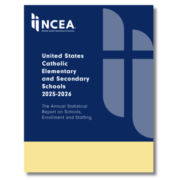
It’s astonishing: in the 40 years leading up to 1960, Catholic school enrollment nearly tripled to more than 5 million students (NCEA). Now, 65 years later, enrollment has dropped more than two-thirds to well below the count in 1920. All that work, all those prayers and donations have been erased, and young Catholics are further separated from the Church than they were before the rise of parochial education.

Fewer than 10 percent of Millennials (born 1982-2005) attend weekly Mass, compared to more than 55 percent of the Silent Generation (born 1925-1942), according to the Center for Applied Research in the Apostolate. Mass attendance declines to about 4 percent for Millennials who have never attended a Catholic school.

If there’s a lesson to learn from all this, it’s that the Church had it right all along. Yet today, few parents realize and even fewer pastors remind them that it’s their solemn duty to provide a truly Catholic education to their children.

“Parents are to entrust their children to those schools which provide a Catholic education. If they are unable to do this, they are obliged to take care that suitable Catholic education is provided for their children outside the schools” (Canon 798).

Clergy “have the duty of arranging everything so that all the faithful have a Catholic education” (Canon 794).

How, then, is it that the vast majority of Catholic children and young adults today attend secular schools and universities?

In 2024, 81 percent of Catholic families with children said they chose public schools, and another 5.4 percent had kids in secular private schools, according to the American National Election Studies. Just 18.4 percent chose private religious schools—hopefully, most of them Catholic schools. (School Choice Chart with this note: The portions add up to more than 100 percent, because some families have children in two or more types of schooling.)

On the other hand, how is it that many parents who are serious about Catholic education have difficulty finding schools and colleges that are both academically strong and faithful to their mission?

Increasingly, Catholic parents are finding their own solutions when Catholic schools don’t measure up. In 2024, 3.6 percent of Catholic families chose to homeschool—not nearly the rate of Protestants who homeschool (7.8 percent), but still a growing sector.

The Newman Guide Solution

Catholic homeschoolers and Catholic school students make up an outsized portion of students attending Newman Guide Recommended colleges. That’s good news! Amid the Church’s decline, The Newman Guide offers hope for a better future.

Even as parochial school enrollment slides, there is a revival of faithful Catholic education among many Mass-attending, traditional Catholic families. And even though many Catholic schools and colleges still strive to attract a population that has little interest in authentic Catholic formation, others are succeeding and growing by doubling down on their mission.

In 2024, The Cardinal Newman Society reported impressive rates of married alumni who met their spouses while attending Newman Guide institutions, including 30 percent at Wyoming Catholic College, 29 percent at Thomas Aquinas College, 28 percent at Christendom College, 25 percent at Our Lady Seat of Wisdom College in Canada, and 25 percent at ITI Catholic University in Austria.

“Attending a Newman Guide Recommended college—with its promotion of the sacramental life, faithfulness to the Magisterium, and flowering of Catholic culture—increases grace in one’s soul but also increases one’s odds to find a holy spouse,” argued Patrick O’Hearn, author of Courtship of the Saints: How the Saints Met their Spouses.

As we celebrated last month on the Feast of the Holy Family, even Jesus Christ was born of a mother and raised by a foster father. He was educated in the home and, probably, by a nearby rabbi, sanctifying the family and formation by an education deeply rooted in the truths of God.

Newman Guide education is a return to what is natural and right. May God continue to bless it for the good of the Church, of families, and of young Catholics who deserve faithful Catholic education.