
National Essay Contest Winner Seeks College That Helps, Not Hinders, Life of Faith

Most college-bound students are focused on preparing for a career, but Landis Lehman, a homeschooled student from Lucas, Texas, decided that she wants that and more. She searched for a college that “will prepare me not only for a career, but also for a life as a faithful follower of Christ.”

And rejecting the moral laxity that is typical of campus life, Lehman looked for a college that “helps me, not hinders me, towards my ultimate goal of Heaven.”

Her passion for Catholic education is what helped Lehman become this year’s winner of The Cardinal Newman Society’s third annual Essay Scholarship Contest on faithful Catholic education. She will receive a $5,000 scholarship toward her first year at Benedictine College in Atchison, Kansas, and is eligible for continuing aid from Benedictine in subsequent years.

“A college that boldly embraces its Catholic character stands out from the crowd,” Lehman opens her winning essay, titled “Prepared for Life.” Benedictine is one of several institutions that the Newman Society recommends for strong Catholic identity and fidelity in The Newman Guide, a free online publication including college profiles, in-depth questionnaires, statistics, photos and more. The scholarship must be used at a Newman Guide college.

The annual contest is open to high school seniors in the United States who participate in the Newman Society’s Recruit Me program and use The Newman Guide in their college search. The innovative Recruit Me program invites Newman Guide colleges to compete for students while providing information about faithful Catholic education. Rising high school seniors who wish to enter next year’s essay contest can sign up for Recruit Me online at https://cardinalnewmansociety.org/recruit-me/.

Lehman first learned about The Newman Guide while a high school sophomore in the Mother of Divine Grace program, because her older brother used the guide during his own college search. She says that she loves the way that The Newman Guide allowed her to “quickly and easily compare different aspects of authentically Catholic colleges.” After being accepted to a several of them, Lehman decided to join her brother at Benedictine College.

The topic for this year’s contest was to reflect, in 500-700 words, on the following question: “From academics to student activities to residence life, what makes a faithful Catholic college attractive to you?” Essays were judged by how well they demonstrate appreciation for faithful Catholic education, as well as the quality of the writing.

“We were impressed with Landis’s well-written essay,” said Kelly Salomon, director of Newman Guide programs for the Newman Society. “She identifies many of the key elements of an authentic education. Her essay will be helpful to high school students across the country because it makes a convincing case for attending a faithful Catholic college.”

Lehman relates how a faithful Catholic education will form her in mind, body and soul.  She writes:

The education I will receive will cultivate in me a love of truth that will stay with me long after graduation. Likewise, the godly relationships that I will forge with the inspiring students around me will become an integral part of my adult life. Most importantly, at a college where every aspect of life is pervaded by a devoutly Catholic culture, I will be provided with a foundation that will inspire me to strive for holiness every day.

Ultimately, Lehman believes that “choosing to attend a faithful Catholic college is a decision that will affect more than my next four years—it will influence me for life.”

Lehman’s entire essay can be read here.

Her $5,000 scholarship is made possible thanks to the generosity of Joseph and Ann Guiffre, supporters of The Cardinal Newman Society and faithful Catholic education.

“We are grateful to Mr. and Mrs. Guiffre for enabling this scholarship,” said Newman Society President Patrick Reilly. “They understand the unique value of a truly Catholic education, and they are thrilled to help a student experience all that a Newman Guide-recommended college can provide.”

New this year is the opportunity for the winner to receive an additional $15,000 from participating colleges over the course of their college education. Seventeen of the Newman Guide colleges, including Benedictine College, have agreed to supplement the Newman Society’s scholarship with additional $5,000 grants over three additional years, under certain conditions including full-time enrollment and academic progress.

Essays were submitted from students in 44 states, who together have applied to every U.S. residential college that is recommended in The Newman Guide.
Prepared for Life: Why Choose a Faithful Catholic College

Editor’s Note: The Cardinal Newman Society recently announced Landis Lehman, a homeschooled student from Lucas, Texas, as the winner of the Society’s third annual Essay Scholarship Contest on faithful Catholic education. She will receive a $5,000 scholarship toward her first year at Benedictine College in Atchison, Kansas, and is eligible for continuing aid from Benedictine in subsequent years. Below is the full text of Lehman’s winning essay. More information about the Contest can be obtained here.

A college that boldly embraces its Catholic character stands out from the crowd. The education I will receive at this type of college will prepare me not only for a career, but also for a life as a faithful follower of Christ. In addition, I will become part of a close-knit community that is passionate about helping its students live healthy, holy lives. Overall, the college climate in which I will spend my critical developing years will be one that helps me, not hinders me, towards my ultimate goal of heaven.

The pursuit of truth—this will be the object of my education at a faithful Catholic college. Science and math will teach me about creation’s marvelous design, while history and literature will increase my understanding of the human person and society as seen in the light of Catholic teaching. Most importantly, through the study of theology, my mind will be enlightened by the divine truths that have been revealed to man by God Himself. Furthermore, I will develop critical thinking and reasoning skills, allowing me to continue distinguishing truth from falsehood as I move forward in life. In addition, I will gain the ability to clearly and persuasively express the truth through both the written word and oral communication. After four years of authentic Catholic education, my mind will be illuminated by truth, and I will be well prepared to continue in the lifelong pursuit of discovering truth and helping others do the same.

Not only will a truly Catholic college transform my mind, but it will also nurture my body and spirit. I will have the opportunity to develop my spiritual life by listening to prominent Catholic speakers, participating in Bible studies, and living out Catholic social justice teachings through service work. At the same time, I will be able to participate in athletics and other activities that promote a healthy lifestyle. What I look forward to the most, however, is the community and companionship that the college will foster through these and other events. Understanding the human need for fellowship, a devoutly Catholic college will ensure that it has activities that encourage students to spend their free time on campus, interacting with fellow students and forming deep, genuine friendships. Thus, a college that is truly passionate about its Catholic faith will not fail to provide me with opportunities to gain strength of body and soul and become an active member of its community.

The most important aspect, however, of attending a college that lives out its Catholic identity is the overall environment in which I will live—an environment that will guide me towards virtue during my most crucial formative years. Only at this type of college will the Mass be treated as an integral part of student life. Here alone, the sacraments will be available to me daily, and an Adoration chapel will never be more than a few steps away. I will be surrounded by students who have a passion for their faith, and their example will inspire me to pursue goodness in my own life. In addition, as I discern my vocation, I will find myself in a college atmosphere that promotes pure relationships through its policies. In short, as I mature into an adult and discover my calling, nothing could be more beneficial than to live in an environment where virtue and holiness are so much encouraged.

Choosing to attend a faithful Catholic college is a decision that will affect more than my next four years—it will influence me for life. The education I will receive will cultivate in me a love of truth that will stay with me long after graduation. Likewise, the godly relationships that I will forge with the inspiring students around me will become an integral part of my adult life. Most importantly, at a college where every aspect of life is pervaded by a devoutly Catholic culture, I will be provided with a foundation that will inspire me to strive for holiness every day of my life. A faithful Catholic college truly will make me prepared for life—not only for this earthly life, but also for the eternal life of heaven.

The Trouble with Charter Schools

In the last few decades, many alternatives to public schooling have become popular, including charter schools of a “classical” framework. However, despite their impressive results in many important areas, we cannot forget what can only be accomplished at an authentic Catholic school – one that embraces its identity and mission with gusto.

At The Catholic World Report, Dr. Dan Guernsey writes:

As principal of a “classical” Catholic school and a lifelong advocate for the liberal arts, I am excited by the growing classical school movement—which now has reached even many public charter schools. Catholic families are understandably attracted to charter schools’ free tuition and classical schools’ commitment to established curricula, teaching methods and virtue development.

But a secular school can never be a worthy substitute for authentic Catholic education and some parents seem to be either unaware or unconvinced of the Church’s reasons for requiring them to choose Catholic education if it is available.

Continue reading at The Catholic World Report…

Pride on Full Display in ‘Hesburgh’ Documentary

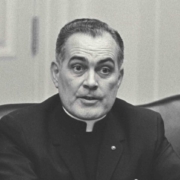
The mere fact that the laudatory, even triumphal, documentary Hesburgh will enjoy a limited release in theaters beginning today would no doubt have been deeply satisfying to the late Holy Cross Father Theodore Hesburgh, who led the University of Notre Dame (1952-1987) to enormous growth and prestige.

From beginning to end, the film makes the obvious point that Father Hesburgh was important and accomplished much on a human scale. Notre Dame’s enrollment, public reputation, academic standing, physical campus and donor support all improved considerably under his leadership.

He was also an influential leader on some of the most important issues of his time, especially civil rights for African Americans. The film’s images include a myriad of leaders — popes, U.S. presidents, celebrities and others — with whom Father Hesburgh associated, collaborated and sometimes clashed.

But the documentary largely glosses over important questions about Father Hesburgh’s thinking and impact and his conflicts with Church leaders, doctrine and the mission of Catholic education. It simply reports — without any real analysis and in a decidedly favorable way — his leadership in crafting the Land O’ Lakes Statement that declared the independence of Catholic colleges from the bishops and magisterium of the Church, his legal separation of the university from the Holy Cross order (thus increasing his own independence from religious superiors), his embrace of a radicalized “academic freedom” in the manner of modern research universities, and his delight in Notre Dame’s 2009 commencement honors for pro-abortion President Barack Obama.

Even while the film champions Father Hesburgh’s determination to engage with all viewpoints, the filmmakers shy away from any serious examination of charges that he had in some ways betrayed the Church and the mission of Catholic education. It’s not even acknowledged that 83 Catholic bishops publicly opposed the Obama honors.

The film also fails to address the morally serious concern that Father Hesburgh, through his work with the Rockefeller Foundation, and together with his Notre Dame colleagues, quietly advanced a population control and family planning agenda. Or that he relied on Father Richard McBrien to reform the Notre Dame theology department as a center of liberal theology. Or that, when Cardinal John O’Connor of New York publicly scolded New York politicians, Gov. Mario Cuomo and congresswoman Geraldine Ferraro, both Catholics, for their public advocacy of abortion rights, Father Hesburgh welcomed the New York governor to Notre Dame for a landmark speech that claimed a “latitude in judgment” within Catholic teaching that permits a Catholic to privately hold that abortion is unjust killing while publicly championing laws that keep it legal, out of respect for others who disagree with our beliefs. These facts, highly relevant to Father Hesburgh’s pursuit of a “great Catholic university,” are simply ignored in more than two hours of film.

Rather, the documentary features multiple tributes from mostly “progressive Catholics” who include former students and colleagues at Notre Dame, writers from the National Catholic Reporter, and even House Speaker Nancy Pelosi. It all has the feel and the gloss of an episode of Lifestyles of the Rich and Famous. Viewers are invited to indulge in awe and envy.

‘A Great Catholic University’

A deeper and more honest assessment would have acknowledged that Father Hesburgh’s legacy is complicated and has in fact done significant damage to the university that he strove to build and to the Church in the United States to which he gave his life in service.

Father Hesburgh was driven to transform Notre Dame into a “great Catholic university” built on human “excellence,” as the film mentions briefly. But how that pursuit evolved over his 35 years at the helm of Notre Dame — and influenced subsequent University leaders — is far better explained in the new biography, American Priest: The Ambitious Life and Conflicted Legacy of Notre Dame’s Father Ted Hesburgh (Image, 2019) by Holy Cross Father Wilson Miscamble. Father Miscamble has taught at Notre Dame for more than 30 years and is a vocal advocate for restoring what he and many perceive as Notre Dame’s lost Catholic identity, and so he searches for clues to why that identity slipped under Father Hesburgh’s leadership. But as a serious historian, he also is careful to report facts objectively and thoroughly.

For instance, Father Miscamble provides the surprising revelation that during Father Hesburgh’s first term in the 1950s, he publicly embraced a vision of Catholic higher education that resembled Blessed John Henry Newman’s Idea of a University. Nevertheless, Father Hesburgh’s actual emphasis in building up Notre Dame was on raising funds, building Notre Dame’s reputation through association with prominent academic and public figures, and transforming the university in the image of the secular research institution.

According to Father Miscamble, Father Hesburgh gave very little attention to ensuring an integrated Catholic curriculum and a faithfully Catholic faculty — resulting in a dramatic slide toward secular education that continues today.

Father Miscamble’s biography portrays a priest who had incredible natural leadership abilities but failed to rely on God’s grace and the Church’s timeless wisdom. It would have been a truly remarkable witness for Father Hesburgh to have brought Notre Dame to greater acclaim while also amplifying the university’s Catholic identity. After all, if the Catholic faith really is transcendental — true, beautiful and good — then doesn’t it have the power to attract?

Instead, Father Hesburgh’s career as president appears to have been an exercise of misplaced pride in human achievement, especially his own capabilities, and greater faith in state and secular institutions than the goodness of the Church.

Father Hesburgh was a prayerful priest who celebrated Mass daily and had a devotion to Mary, yet in his presidency he had this air of “going it alone” and failing to appreciate Catholic education as fundamentally an encounter with Christ.

In Hesburgh, he states plainly, “There had to be a way to balance faith and academics” — as if the two are in conflict. Again, he asks: “Was it possible to be both a great university and Catholic? I believed it was as long as there was balance.”

Because of his failure to acknowledge the Catholic faith as truth that is fundamental, not opposed, to the academic enterprise, Father Hesburgh’s impressive human achievements have today resulted in the sort of unintended confusion and lack of structural integrity that befell the builders at Babel.

Perhaps without intending to, director Patrick Creadon highlights Father Hesburgh’s unsettling certainty of the wisdom of his actions and opinions — even those in opposition to the Church — by including a voice-over by actor Maurice LaMarche, who pretends to be Father Hesburgh recounting his own tale using actual quotes from Hesburgh’s writings and recordings. The device is awkward for a film that is something of a congratulatory eulogy for the priest, who died in 2015. Right or wrong, LaMarche’s tone makes Father Hesburgh seem rather smug.

I am rather sure the makers of Hesburgh would not agree with Father Miscamble’s assessment of Father Hesburgh’s legacy, but at least an assessment is made in American Priest. In the documentary, there is no movement beyond the Hesburgh “hagiography” (a term suggested by Father Miscamble) that seems to prevail within the Notre Dame community.

Clearly Father Theodore Hesburgh had enormous influence across the Church and U.S. society. His choices had real consequences for Notre Dame and Catholic education nationwide.

While Hesburgh presents an intriguing look at the many important activities of an important man, his legacy is left to more serious biographers like Father Miscamble to straighten out.

This article was first published at The National Catholic Register.

Scandal Persists at Mount St. Mary’s University, President Defies Own Speaker Policy

The Cardinal Newman Society is deeply saddened by the apparent decision of Mount St. Mary’s University President Timothy Trainor to violate the University’s own “Speaker Policy” and its Catholic mission by honoring Mark Shriver, a public advocate for abortion and contraception, as its 2019 commencement speaker. 

For details, see the Newman Society’s prior statement, dated April 5. 

President Trainor this week notified the Mount community by email that Shriver has “graciously declined” the Mount’s “offer to award him an honorary degree.” Not only is this not the principled decision that we had prayed for—Shriver declined the honorary degree, but the University took no action to uphold its Catholic identity and protect others from scandal—but it also leaves in place the invitation for Shriver to deliver the commencement address. 

Moreover, President Trainor again identifies Shriver’s illicit leadership at Save the Children, which actively promotes “family planning” to disadvantaged people, as the University’s reason for honoring Shriver and presenting him as a model for graduating students. 

“Mark Shriver was selected as our commencement speaker because of his groundbreaking work with Save the Children for the last sixteen years and his well-regarded biographies of his father, Sargent Shriver, and His Holiness, Pope Francis. We are looking forward to his remarks,” Trainor wrote in his email to students. 

The choice of Shriver as commencement speaker violates the Mount’s own “Speaker Policy,” found in the University’s governing documents. The policy reads, in part (boldface added, not in original): 

Occasionally the university invites a guest to campus for the purpose of honoring that guest. In addition to the considerations outlined above, the decision to honor a person must take into account his or her character as reflected in the actions he or she performs and supports. Mount St. Mary’s affirms the position, articulated by the United States Conference of Catholic Bishops, that “Catholic institutions should not honor those who act in defiance of our fundamental moral principles;” especially those moral principles concerning the sanctity and dignity of all human life. Those whose actions show disregard for such fundamental principles “should not be given awards, honors or platforms which would suggest support for their actions” (“Catholics in Political Life,” USCCB, 2004). The president of the university will seek counsel from the Archbishop of Baltimore, whenever there is a question about the appropriateness of honoring someone. 

Selection to deliver a commencement address is unmistakably an honor. It would insult the intelligence of the Mount community, were the University to claim that only an honorary degree is an honor, because it contains the word “honor.” A commencement address is a much-prized, highly publicized, ceremonial address holding up the speaker as an example to graduates. Rarely does it contain anything of academic merit, but instead draws upon the speaker’s character and accomplishments to give advice to students. In this respect, inviting Shriver to deliver the commencement address may be even more offensive and less consistent with Catholic education than bestowing an honorary degree. 

President Trainor seems to be aware that the invitation to Shriver is a mistake and violates the University’s policy. According to the Mount’s student newspaper, “Trainor apologized for the division and stress this issue has created for the Mount community, particularly the seniors. He also acknowledged that the research into the selection of a commencement speaker was not as thorough as it should have been. The Board and Trainor are working to refine the process to prevent this from occurring again.” 

The Newman Society has long recognized Mount St. Mary’s University as one of America’s most faithful Catholic colleges, and each year the Mount assures the Newman Society in writing that it complies with the U.S. bishops’ ban on honors and platforms for public opponents of Catholic teaching. That assurance, too, is violated by the invitation to Shriver. 

We are eager to know how the University will prevent such scandals in the future, when a policy is already enshrined in the governing documents. More urgently, we look to Mount St. Mary’s University to uphold its Catholic identity in the present and rescind the invitation to Mark Shriver to speak at commencement. 

Prayers for Fr. Sean Sheridan and Franciscan University

For several years, The Cardinal Newman Society has had the honor and privilege of working closely with Father Sean Sheridan, TOR, president of Franciscan University of Steubenville, Ohio. We ask Catholics to join us in prayer for Father Sheridan, who today announced his resignation, and for an outstanding successor to lead Franciscan University, which we are proud to recommend in The Newman Guide as one of America’s best Catholic colleges.

An expert in canon law and Ex corde Ecclesiae, the Vatican constitution on Catholic higher education, Father Sheridan has been steadfastly devoted to the Catholic mission of Franciscan University. Earlier this year, he invited all of the university’s faculty and staff to join in the Oath of Fidelity as an outward sign of their fidelity and commitment to faithful Catholic education.

Looking forward, we hope that the next president—whether another priest or one of the lay men and women whom Franciscan University has served so well—will continue to uphold the vision of Blessed John Henry Cardinal Newman and Pope St. John Paul II for the Catholic university. We trust that Franciscan University will continue to unite faith and reason in the teaching and pursuit of truth, and that it will continue to hire mission-fit professors and staff who are role models for students inside and outside of the classroom.

May God bless Father Sheridan in his next steps, and may God bless Franciscan University as it continues to provide students a thoroughly Catholic education and formation.

Mount St. Mary’s University Urged to Rescind Commencement Honors Invitation

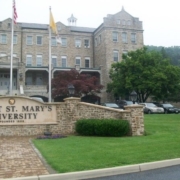
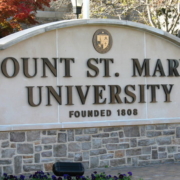
The Cardinal Newman Society is shocked and dismayed to learn that Mount St. Mary’s University in Emmitsburg, Md.—an institution recommended in our Newman Guide for its faithful Catholic identity—plans to honor Mark Shriver as its 2019 commencement speaker and award him an honorary doctorate of humane letters.

The Newman Society has expressed our deep concern to Mount President Dr. Timothy Trainor, noting the possibility of scandal and the apparent violation of the U.S. bishops’ policy against such honors in the statement, “Catholics in Political Life.” We have urged that the University reconsider and rescind its invitation and stand strong in its Catholic identity, as it has done so well in recent years.

Nevertheless, President Trainor has responded that the honors will occur on May 11. We have therefore shared our concerns with Archbishop William Lori of Baltimore and Bishop Emeritus Paul Loverde of Arlington, who sit on the Mount’s board of trustees. We will also continue to express these concerns publicly, with our members, and with others in the Mount community.

The Newman Society urges all faithful Catholics to pray for a change of heart at Mount St. Mary’s University and the avoidance of scandal, which contradicts and undermines the purpose of Catholic education.

Cooperation in Abortion

The Mount’s press release notes that Mark Shriver is CEO of Save the Children Action Network and vice president for advocacy at Save the Children, and he will speak about “leading an ethical purpose-driven life.” Save the Children promotes “family planning” in coordination with the pro-abortion Bill & Melinda Gates Foundation and sponsors “sexuality education” that is directly opposed to Catholic moral teaching on sexuality, marriage, and the dignity of human life.

Shriver was a pro-abortion rights politician who served in the Maryland House of Delegates from 1995 to 2003 and failed a bid for the U.S. House of Representatives in 2002. Shriver garnered a 100 percent rating by NARAL Pro-Choice Maryland. In a 2002 Washington Post interview, Shriver stated, “Women’s issues are critically important and I will continue to fight for a women’s right to choose; family planning funds; maternal and child health funding and education for girls both here and abroad.”

Aside from these failings, Shriver has done good and admirable work which the Mount wishes to recognize and honor. But Shriver’s public actions and positions cannot simply be ignored, especially as they are fully integrated with his work at Save the Children and his public notoriety. Mount St. Mary’s would cause scandal by honoring Mr. Shriver, both among the Mount’s students and in the general public.

Apparent Violation of Bishops’ Policy

In honoring Mr. Shriver, the Mount would seem to violate the U.S. bishops’ policy in “Catholics in Political Life,” which reads:

“It is the teaching of the Catholic Church from the very beginning, founded on her understanding of her Lord’s own witness to the sacredness of human life, that the killing of an unborn child is always intrinsically evil and can never be justified. If those who perform an abortion and those who cooperate willingly in the action are fully aware of the objective evil of what they do, they are guilty of grave sin and thereby separate themselves from God’s grace. This is the constant and received teaching of the Church. It is, as well, the conviction of many other people of good will.

“To make such intrinsically evil actions legal is itself wrong. This is the point most recently highlighted in official Catholic teaching. The legal system as such can be said to cooperate in evil when it fails to protect the lives of those who have no protection except the law. In the United States of America, abortion on demand has been made a constitutional right by a decision of the Supreme Court. Failing to protect the lives of innocent and defenseless members of the human race is to sin against justice. Those who formulate law therefore have an obligation in conscience to work toward correcting morally defective laws, lest they be guilty of cooperating in evil and in sinning against the common good.

“…The Catholic community and Catholic institutions should not honor those who act in defiance of our fundamental moral principles. They should not be given awards, honors or platforms which would suggest support for their actions.” [Emphasis added.]

Further information on Church teaching related to Catholic honors and platforms can be found in this report on the Newman Society’s website.

Pivotal Moment for Mount St. Mary’s

What should we make of this? Tragically, we see cases like this too often at Jesuit and other Catholic colleges. Commencement honors are a public display of a University’s priorities. We would hope that a Catholic university that is committed to the truth of Catholic teaching would strongly prefer to invite good role models who conform to Catholic moral teaching.

Often when we raise concerns about honors and speaking platforms at Catholic colleges, there is an understandable reaction against restricting academic freedom. While we note that a commencement ceremony is not an academic forum open to dialogue, rarely is a commencement address an academic lecture, and never is an honorary degree an academic exercise; nevertheless, we appreciate the concern for freedom. We respond with this question: given the opportunity to choose a speaker and honoree that reflects upon the college, why would a Catholic institution ever freely and knowingly choose someone whose public actions and statements are in conflict with Catholic teaching on grave moral issues, thereby risking scandal and diminishing the character of the institution? What is Catholic education, if it chooses knowingly to confuse its students and the public on the Church’s clear moral teachings? It is not Catholic education.

The Mount would do well to remember its deep Catholic roots: it was founded in 1808 by French missionary Father John DuBois, a refugee of religious persecution, and sits on land once frequented by Saint Elizabeth Ann Seton, the first American-born saint and founder of the Sisters of Charity.

Today the Mount includes a University, a seminary, and the National Shrine Grotto of Our Lady of Lourdes, the oldest American replica of the shrine in France. The Newman Society has been proud to highlight the Mount’s strong core curriculum, abundance of spiritual life opportunities, competitive Division I athletics with team chaplains for every sport, and wholesome student life activities.

It was at Mount St. Mary’s that the Newman Society’s former Center for the Advancement of Catholic Higher Education was housed for several years. It was led by Monsignor Stuart Swetland, former vice president for Catholic identity and mission, and strongly supported by Dr. Thomas Powell, former president of the University. The Center studied and promoted best practices for colleges to strengthen their Catholic identity.

We hope and pray that the University continues to be a model Catholic university by rescinding its commencement honor invitation to Mr. Shriver. We pray that the deep Catholic heritage of the Mount will be remembered, protected, and promoted.

The fact is that every Catholic college today faces a strong pull from the culture to compromise Catholic identity and secularize. Only those Catholic colleges that are intentional about remaining faithful to their Catholic mission will be able to avoid the temptation of compromise and hypocrisy.

A final note on The Newman Guide: Our recommendations in The Newman Guide are not written in stone, and we reevaluate every college in the Guide before every new edition is published at NewmanGuide.org. The Newman Society’s first priorities are to serve the needs of Catholic families and to promote the authentic mission of Catholic education, wherever and however it may be provided to our precious young people, who deserve genuine Catholic formation.

Catholics Should Be Wary of ‘Elite’ Colleges

Lately we’ve been hearing about a college admissions scandal and FBI raids of parents’ homes. But Catholic families may be being cheated by an even bigger fraud.

The news is abuzz about indicted celebrities who abused the power of their wealth to get children into prestigious colleges, ahead of deserving students. It’s a classic American scandal, pitting the wealthy against the little guy.

But there’s more to it than that. “If education is what the beast says it is, a mere means to the end of greater wealth and prestige, then what these parents did makes perfect sense,” writes scholar Benjamin Myers at First Things. “…Many of those outraged by the behavior of these celebrity parents share the foundational assumptions that make sense of such actions—that the point of education is not to ‘get wisdom,’ in the words of Proverbs, but to gain prestige. The parents who bribed their kids’ way into college were just feeding the beast, the same as everybody else.”

In other words, Catholic families who aspire for their children to attend college to obtain a ticket to success instead of forming their minds, hearts and spirits are missing the point of college—at least what the Church deems worthy of young Catholic students.

More than the bribery scandal, the greater fraud in American academia is the pretense that “elite” colleges still have the value they had just a lifetime ago, let alone the value that the great universities had centuries ago. For many big-name universities today, their reputations were built in another time and on another sort of education.

Modern secular education

To be sure, elite universities offer many advantages to their students. They are able to hire brilliant professors, sometimes including prominent Catholics like Robert George at Princeton and Mary Ann Glendon at Harvard. They often have vast resources for research, facilities, libraries, etc. And a diploma from an elite institution can be a ticket to wealth, success and distinction.

These are valuable in their own right, and there are many factors in choosing a college that may lead a student to attend a secular institution—or worse, a corrupted and highly secularized Catholic institution. But Catholics need to be aware and highly cautious about the rest of the baggage that comes with most of modern higher education—especially our “prestigious” universities.

Today many are dominated by identity politics and political correctness, instead of rational dialogue and reasoned argument. Studies tend to be either career-centered, with an emphasis on practical training, or narrow and biased distortions of the liberal arts. The campus life is morally toxic and frequently corrupts the souls of students.

Most important, they lack Christianity. In our secular age, it’s understandable that most students don’t value the insights of Christianity on science, history, the arts and humanity. But Catholic families should value them above all.

Newman’s vision

Blessed John Henry Newman, the 19th-century theologian and educator who will be canonized later this year, argued rightly that the only complete college is a faithfully Catholic one. That’s because higher education should be open to all truth and committed to integrating all truth—thus the word “university.”

At a faithfully Catholic college, the knowledge that is revealed to us by Christ and His Church rightly informs every other branch of study, makes it richer, and opens our eyes to greater understanding. A college that rejects and excludes Christian truth is a lesser college.

Higher education should not be focused primarily on accumulating facts and skills, although that’s the emphasis of most college learning today. Newman said he didn’t care much what subjects a student studied, as long as he learned to reason well, organized and prioritized knowledge, solved problems, and acquired wisdom.

And a higher education is not just about academics—it’s about forming young people to fulfill everything that God desires for them, to become more fully human. A faithful Catholic college like those recommended in The Newman Guide teach not only wisdom but also virtue, and they form students in the Faith and the Sacraments. They attend to campus life outside the classroom and lead students on the path to holiness. This is not contrary to learning, but central to it.

Sadly, many of the elite Catholic colleges like those involved in the admissions scandals—Georgetown University and the University of San Diego—have moved away from this sort of valuable education, even while resting their reputations on the excellent education that they once provided.

Even the Ivy League institutions once understood the value of a faithful, integrated education. Did you know that most Ivy League universities began as Christian institutions? For decades now, they have compromised their original mission, yet they retain their prestige in the eyes of the world.

A faithful Catholic college… now that’s an education worth reaching for! But don’t try bribing admissions officials to get in.

This article was originally published at the National Catholic Register.

Catholic Lessons From the College Admissions Scandal

The college admissions fraud that was revealed last week brings up an important topic for Catholic families: what should be our priorities in the college search?

Actresses, wealthy business owners and others are accused of acting desperately to secure the “big school name” for their son or daughter. The parents allegedly found ways for their student to cheat on the SAT or ACT, paid off coaches to list their son or daughter as a recruited athlete, and utilized a variety of other methods to cheat their way into the university.

And for what? So that their student could attend an “elite” college, list that alma mater on their resume, and the parents could earn bragging rights with friends?

It’s a sad reflection on the state of higher education today, but our culture tells all of us that a prestigious college degree is a ticket to wealth and success. Catholic families know that there are more important priorities, yet we too are susceptible to college marketing and neglecting the higher things.

“Many today are so concerned about getting into this or that elite college, but unfortunately, for many, they are not really seeking a true education – just a ‘brand name’ to go on their resume to assist them with future career plans,” explained Tom McFadden, vice president of enrollment at Christendom College in Front Royal, Virginia.

College should prepare students for a career, but also for the rest of their lives. College can be a time for students to grow in mind, body and soul; discern their vocation; grow in their faith; and so much more—but that means choosing a college that is serious about Christian formation and devoted to all truth, including absolute fidelity to the Catholic faith.

There’s an “irony in this scandal,” according to Michael McMahon, vice president for enrollment management at the University of Mary in Bismarck, North Dakota. “We have parents exercising vice while trying to get their kids into college, the very institution that Blessed John Henry Newman writes is for ‘the formation of character, intellectual and moral.’”

Thankfully, we have a number of faithful Catholic colleges that haven’t forgotten Newman’s vision for Catholic education. When navigating the college search, parents would do well to consider the impact on this life and the one to come.

Families should “avoid getting caught up in the quest for prestige” and instead “put a lot of thought into their child’s particular personality and strengths, as well as their priorities for the child’s formation,” advises Lizzie Griffin Smith, assistant vice president of enrollment at the University of Dallas in Irving, Texas.

The college admissions fraud revealed last week certainly isn’t the first or the last of its kind. But Catholic families can set an important example by putting the focus back on the most important things in the college search.

This article was first published at the National Catholic Register.

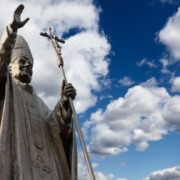
Saint John Paul II: His Legacy of Renewal in Faithful Catholic Education

Throughout his pontificate (1978-2005), Pope John Paul II was a champion of fidelity and authentic Catholic identity in education. Within his first six months, he signaled his intention to rein in dissent with Sapientia Christiana, the apostolic constitution defining discipline for ecclesiastical universities and faculties. He later approved the 1983 Code of Canon Law, which for the first time in Church history included canons specifically governing Catholic colleges, including the mandatum for theologians.

With Cardinal Joseph Ratzinger at the Congregation for the Doctrine of the Faith, Saint John Paul II squelched the “liberation theology” movement and silenced several dissident theologians. In 1986, the Vatican forbade dissident Rev. Charles Curran from teaching theology at The Catholic University of America—and the next year, the Holy Father visited Catholic University to deliver an address urging fidelity and reform throughout Catholic education.

His Congregation for Catholic Education issued important guidance in “The Religious Dimension of Education in a Catholic School” (1988) and “The Catholic School on the Threshold of the Third Millennium” (1997). Pope John Paul II gave us the Catechism of the Catholic Church, with great influence over Catholic education and school textbooks. And in 1990, he issued Ex corde Ecclesiae, requiring every Catholic college to demonstrate an “institutional commitment” to the faith, regardless of lay or Church ownership.

With two key encyclicals—Veritatis Splendor (1993) and Fides et Ratio (1998)—Pope John Paul II restored appreciation for what lies at the heart of Catholic education: the absolute compatibility and unity of faith and reason. The first encyclical included a strong message to Catholic educators:

A particular responsibility is incumbent upon Bishops with regard to Catholic institutions. … It falls to them, in communion with the Holy See, both to grant the title “Catholic” to Church-related schools, universities, health-care facilities, and counseling services, and, in cases of a serious failure to live up to that title, to take it away.

Many of John Paul II’s teachings were met with strong resistance from those opposed to strengthening Catholic identity. But inspired by this saintly professor-pope, the Newman Society set out to promote and defend his vision for faithful education. Today, thanks to the Grace of God, the prayers and support of our dedicated members, and a new generation of faithful educators, there is a much needed renewal of Catholic education underway.