Posts

With Second Miracle, Will Newman Be Canonized Soon?

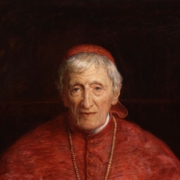
Deo gratias! The Vatican reportedly has recognized a second miracle through the intercession of Blessed John Henry Newman, paving the way to a possible canonization next year.

Newman—a champion of both fidelity and reason, both of which are sorely lacking in the Church today—could be the perfect saint for our times!

In his sermon, “The Infidelity of the Future,” delivered to seminarians preparing for the priesthood, Newman seemed almost to foresee the great damage that scandals among our priests would cause the faithful, especially in a secular society that is eager to destroy religious faith altogether.

As Newman told the seminarians:

I think that the trials which lie before us are such as would appall and make dizzy even such courageous hearts as St. Athanasius, St. Gregory I, or St. Gregory VII. And they would confess that, dark as the prospect of their own day was to them severally, ours has a darkness different in kind from any that has been before it.

His concern?

The special peril of the time before us is the spread of that plague of infidelity, that the Apostles and our Lord Himself have predicted as the worst calamity of the last times of the Church. …I do not mean to presume to say that this is the last time, but that it has had the evil prerogative of being like that more terrible season, when it is said that the elect themselves will be in danger of falling away.

Already in the 19th century, Newman saw the radical turn against religion by intellectuals and social leaders. He expressed concern that Catholics “shall become more and more objects of distrust to the nation at large,” and perhaps “we may suffer disadvantages which have not weighed upon the Catholic Church since the age of Constantine.”

A special danger to the Church would be the sins of its priests.

With a whole population able to read, with cheap newspapers day by day conveying the news of every court, great and small to every home or even cottage, it is plain that we are at the mercy of even one unworthy member or false brother. …There is an immense store of curiosity directed upon us in this country, and in great measure an unkind, a malicious curiosity. If there ever was a time when one priest will be a spectacle to men and angels it is in the age now opening upon us.

How appropriate to these dark days of scandal, cover-up and denial, reaching to the very highest ranks of our priests and bishops!

But if Blessed Newman only foresaw the problems ahead, he would not be so important a model and sage for our present day, without also leading us to reform and renewal. This he did, especially in his devotion to faithful Catholic education—a key means of evangelization in a highly secular age.

In The Idea of a University and his other writings, Newman shows his conviction that authentic education ultimately leads one to the fount of Truth, the Creator, and therefore has the same object as theology in each of the ways it teaches knowledge.

Blessed Newman’s very first sermon in his university church in Dublin is particularly helpful. He recalled mankind’s creation, when by grace all the human faculties acted “in common towards one end.” But because of the fall of Adam and Eve, Newman argued, the young person has “all these separate powers warring in his own breast—appetite, passion, secular ambition, intellect, and conscience, and trying severally to get possession of him.”

The object of the Church in promoting Catholic education, then, “it is to reunite things which were in the beginning joined together by God, and have been put asunder by man.”

How much today has been put asunder, causing great confusion and even dissent among our young people?

Newman is often wrongly portrayed as emphasizing the intellectual purposes of education over the religious aspects. Quite the contrary, Newman viewed his role as rector of a Catholic university, above all, as a pastoral duty. He wrote in his journal this prayer for his students:

May I engage in them, remembering that I am a minister of Christ… remembering the worth of souls and that I shall have to answer for the opportunities given me of benefitting those who are under my care.

It is this sort of educator, this sort of education, this sort of pastoral care, that offers the promise of improving and correcting a society that neglects Truth and has turned against Faith.

Newman was certainly correct about the immense challenges facing the Church in a secular society. Nevertheless, he also knew how the battle ends. We know, too.

We look with hope to Blessed John Henry Newman’s eventual canonization, knowing that he can be a powerful patron for the renewal of Catholic education and the whole Church.

This article was first published at The National Catholic Register.

3 Eye-Opening Lessons for Catholics under Common Core

It’s been five years since controversy peaked over the Common Core State Standards and their use in Catholic schools. What have we learned?

By 2013 the Common Core was being adopted rapidly by Catholic schools and dioceses across the country, prompting deep concern among Catholic families. The Cardinal Newman Society launched its Catholic Is Our Core initiative to press for authentically Catholic standards. Urgent meetings with Catholic education leaders and bishops were convened to explain why the Common Core was the wrong approach for Catholic schools.

Thanks be to God, shortly thereafter the U.S. bishops’ conference advised dioceses to “review, study, consultation, discussion and caution,” noting that the Common Core was “incomplete” and not designed for Catholic schools.

Today, many dioceses have moved toward genuinely Catholic standards for their schools, but the Common Core has never been fully rooted out of Catholic education. It continues to impact testing, curriculum, and textbooks in many dioceses—although the impact varies and is never quite clear.

While the experience has been messy, hopefully it has given new insight to Catholics and Church leaders and reminded educators of the primary mission of Catholic education. Here are three key lessons that have emerged:

1. The Common Core seems unable to live up to its promises.

National test data suggest that the Common Core has failed thus far to live up to its promise of strengthening student achievement in math and language arts, even in public schools.

In an analysis of the National Assessment of Educational Progress (NAEP) published this week by Denise Donohue, deputy director of K-12 education programs for the Cardinal Newman Society, she finds, “Neither public nor Catholic schools experienced the upswing that was promised by the authors of the Common Core Standards.”

Public school scores from 2009 (pre-CCSS) to 2017 (post-CCSS) are relatively the same and are categorized in the “basic” range on the academic standards scale for the NAEP, whereas Catholic school 8th grade math scores have slid three points in the pre-test/post-test scenario (297 in 2009 to 294 in 2017). Interestingly, the cut-off for “proficient” according to the NAEP literature is a score of 299, leaving Catholic schools that much more to attain before reaching the mark. Meanwhile, the opportunity costs are unknown. Perhaps Catholic schools’ 8th grade math and reading scores might have continued their positive upward trend before the onset of the CCSS.

The U.S. Education Department’s NAEP, Donohue observes, has never been re-aligned to the Common Core like many state tests, so it is a good measure of pre- and post-Common Core achievement. International benchmarking tests also indicate that American students have not made any substantial progress relative to other nations, Donohue finds.

2. Catholic education needs Catholic standards.

Aside from the impact of the Common Core on secular education, the standards are simply wrong for Catholic schools. As the U.S. bishops conference declared in 2014:

Catholic schools must consider standards that support the mission and purpose of the school as a Catholic institution. Attempts to compartmentalize the religious and the secular in Catholic schools reflect a relativistic perspective by suggesting that faith is merely a private matter and does not have a significant bearing on how reality as a whole should be understood. Such attempts are at odds with the integral approach to education that is a hallmark of Catholic schools. Standards that support an appropriate integration should be encouraged.

The Common Core controversy helped many Catholics become aware that dioceses around the country had been relying heavily on secular state standards for many years. That is how the Common Core was initially adopted by Catholic schools without due caution and analysis. When the standards were adopted by states, dioceses quickly and voluntarily followed suit.

Now there is a greater realization that authentically Catholic standards are needed. Many dioceses have made great progress in this direction, such as the Diocese of Grand Rapids and the Diocese of Venice, which both work from the faithful Catholic Curriculum Standards published in 2016 to provide Catholic schools with an alternative.

3. Parents are the primary educators.

Many national, state and local organizations produced important analyses of the Common Core that ultimately halted its spread in Catholic schools. But it was parents who had the most important and influential voice—some voting with their feet and turning to independent Catholic schools and homeschooling.

The Common Core experience has helped remind Catholic bishops, educators and even families that parents are the first educators of their children. Catholic education serves the needs of families in educating and forming children, or it is not Catholic education at all.

Canon law states, “Catholic parents also have the duty and right of choosing those means and institutions through which they can provide more suitably for the Catholic education of their children, according to local circumstances.” If local Catholic schools aren’t enthusiastically and fully providing a truly Catholic education, parents are fully within their rights, and may have a duty, to find better, more faithful options for their children.

As Catholic school enrollment continues to decline, the Church urgently needs to renew the Catholic identity of Catholic schools to support only those that serve parents and the mission of the Church well.

For their part, parents should continue to find their voice and explain to their pastors what genuinely helps them form children for sainthood. This does not include secular fads such as the Common Core.

T This article first appeared at The National Catholic Register.

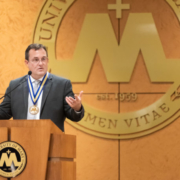
On Receipt of the Lumen Vitae Medal

Address to Award Dinner at University of Mary, Bismarck, N.D.
Given October 23, 2018

One of the many reasons I appreciate this award is that it provides a welcome opportunity to consider all of God’s blessings to me and The Cardinal Newman Society over 25 years. Although it’s the Newman Society’s 25th anniversary, we haven’t had much time to celebrate. So, this is our celebration.

And I can’t think of a better way to celebrate than with our good friends at the University of Mary. What the University of Mary has achieved in recent years is incredible, and the Newman Society has been compelled not only to recognize this success but to promote it to Catholic families across the country. The University of Mary today is an inspiring example for the renewal of faithful Catholic education and a beacon of light in the otherwise dark landscape of Catholic higher education that has been largely secularized.

Our patron, Blessed John Henry Newman, was ultimately unable to see his splendid “idea” of an authentic Catholic university come to fruition in Dublin. But Msgr. Shea, leaders, and faculty of the University of Mary, you are truly building it right here in Bismarck!

In my 25 years with The Cardinal Newman Society, I have seen God bring about wonderful improvements in Catholic education. It’s so exciting! Several of the colleges that we recommend in our Newman Guide today weren’t in the initial guide more than a decade ago. Today the Newman Guide colleges are the gold standard for families seeking faithful Catholic education, and many Newman Guide colleges enjoyed record enrollment numbers this year, despite the fact that other private colleges around the country had a very tough year.

There is good news also in Catholic elementary and secondary education. While many parochial and diocesan schools are still closing, many of the schools that have a strong focus on mission and intentionally form saints have done very well. You’ll find many of these schools on our Catholic Education Honor Roll. Catholic homeschoolers and lay-led independent schools continue to increase. Their devotion to Christian formation and their ability to test both classical and innovative methods of teaching have been a boon to the Church. The widespread adoption of the Common Core in Catholic schools, which the Newman Society opposed, opened many eyes to the flawed practice of simply adopting secular state standards to guide Catholic education. Now the Newman Society’s Catholic Curriculum Standards are being used by 20 dioceses and other Catholic schools serving more than a quarter million students.

So in the past 25 years, God has truly blessed the renewal of Catholic education. And for The Cardinal Newman Society specifically, I am so grateful for all the marvelous ways God has brought such good out of our humble work.

I am sure that Monsignor Shea can attest to the many times a new idea or program begins with a stumble, and then God does such incredible things with it. It’s happened to the Newman Society so many times. And that, to me, is what this Lumen Vitae Award most importantly honors: the Grace of God, and what He has wrought through our service to Him.

That service depends heavily on some quite amazing people who advise me on our board of directors and those on my staff who do the work I’m not qualified to do. Two of them—Tom Mead and Cindy Laird—have been with me for well over a decade and during the Newman Society’s most productive years. Two of my other staff heroes are here tonight: our Vice President Bob Laird and his wife Gerri Laird, both of whom have done enormous work for the Newman Society in a variety of roles—and they have done so much for the Church in other ways as well. There are others back in Virginia, Florida, North Carolina, and elsewhere,  who helped carry the Newman Society through these 25 years and also have been great inspirations to me because of their personal example.

Our donors, too, have been such a blessing, and not only for the obvious reason that their generosity is incredibly important to the Newman Society’s success. Even more, I’ve met many of them from all walks of life, and universally they have impressed me by their extraordinary goodness and devotion to the Church. They have been role models for my own personal and spiritual growth. That couldn’t be more true than it is of Deacon George and Marilyn Loegering, whose presence here tonight is yet one more demonstration of their kindness and friendship for so many years. Thank you!

It is also certainly true of the many educators with whom we work closely, including Monsignor Shea and several others among you here at the University of Mary. These are some of the most impressive people I know. I thank God for raising up such devoted and faithful educators.

Last but most, there are some people here who made a long trip because they love me and care for me so much, and I have depended on them for strength every day. My mother Mary Kay is here, and I know that my dad is here also in spirit. They gave so much of themselves for my own formation, and they were and always will be my models of Catholic education.

And my wife Rosario, teacher to my children and the light in my crazy life: her extraordinary insight about Catholic education and her example in founding and persevering with the Aquinas Learning hybrid program shapes my work with the Newman Society in every way. God has also wrought great things from her work. She has been with me and the Newman Society since its earliest days.

And my kids—Ana, Daniel, Nicholas, Joseph, and one more, Ian, who couldn’t be here—I am so proud of them and what they have taught me and their mom, even as we have tried to teach them.

So, you can see that God has surrounded me with magnificent people, which makes it difficult to fail. When Monsignor Shea offered me the Lumen Vitae award for my work with The Cardinal Newman Society, I was overwhelmed as always by the generosity and encouragement that he and the University of Mary have shown for our work to renew faithful Catholic education. But I asked his permission if I might at least verbally share this award with all those by whom God has brought about The Cardinal Newman Society’s 25 years of success.

And so I do want all those I mentioned to share in it, because you are such an important part of this work.

I don’t want to speak too long, but given these times we live in, I want to just add some brief observations concerning scandal and Catholic education’s response to it.

Jesus said that His own generation was an “evil generation.” But we too have come through such an awful year for the Church. I have found myself at times having difficulty working, because the bad news was flooding in so fast, and the betrayal by many of our priests and bishops is so depressing.

The Youth Synod this month was also disappointing. It exposed an astonishing lack of confidence among some Church leaders in the ability of the Church to teach the Faith to our young people. This lack of confidence in the teaching mission of the Church among perhaps most Catholic adults today is, in itself, a scandal to the young.

Scandal, of course, is nothing new to The Cardinal Newman Society. I founded the organization based on my own experience at a large Jesuit university. As editor of the student newspaper, I wrote about the scandals, eventually getting the attention of the local Cardinal. When a university official locked me out of the student newspaper office, I sent letters to top alumni donors, forcing the university to end its support of two radical student organizations.

A few years later, in Washington, D.C., I met several other young Catholics who felt the same anger and betrayal that I experienced, because of similar scandals at their Catholic colleges. But we didn’t lack confidence or hope in the Church, and we weren’t content to leave other young people in harm’s way. Instead, we worked together to establish The Cardinal Newman Society.

My point is that scandal deserves a bold and confident response. I was raised in the Saint John Paul II generation, and I take to heart his reminder of Jesus’ words, “Be not afraid!” Today’s scandals in the Church may be different in kind from what we experienced at wayward Catholic colleges. But still, I believe the response must be the same: a strong show of confidence in the Church that Christ established, and a renewed effort to propose and defend her teachings. A faithful Catholic university like the University of Mary can play a significant role in that.

Indeed, I would say that faithful Catholic education is the key solution to the challenges facing the Church. We need new generations of wise and virtuous Catholics who know and love Jesus in the Faith and traditions of His Church.  We need them to renew the priesthood, renew the Church, and renew the culture.

But to get there, we adults can’t lack confidence in the truth of Christ’s teaching.

We can’t lack confidence in the role of parents as primary educators of their children.

We can’t lack confidence in Christ’s promise that the Church will prevail.

And we can’t lack confidence that God will reward those who stand firmly in the Faith.

On the other hand, we can’t doubt Christ’s words, that he who scandalizes young people would be better off “if a great millstone were put around his neck and he were thrown into the sea.” Believe it! And if we believe it, then we will stand as adults should and protect our young people from the harm that seems to await them on all sides.

Faithful Catholic education is the strength and the shield that we need to provide them. Forming them in both truth and love – in the skills of reasoning and the knowledge of Christ – is what young people need today to resist temptation to hopelessness and relativism.

If young Catholics cannot think reasonably, they will be unable to withstand the lies that our secular culture feeds them. Catholic education must return to its emphasis on forming the minds of young people, not just filling their heads with information.

But even more, Catholic education must lead young people to Christ. We must understand formation in the Catholic school or college as guiding young people into sainthood.

I am reminded of the 12th-century dispute between St. Bernard of Clairvaux and Peter Abelard, just as the first modern universities were on the rise. St. Bernard championed a “theology of the heart” that sought understanding of God not by reason but by prayer and adoration. Peter Abelard was an early scholastic who sought understanding of God by using reason to study the truths of the Faith. It was Abelard’s approach and the wisdom of scholastics like Thomas Aquinas that gave prominence to the great Catholic universities.

But can we claim that reason remains truly central to education today at many universities? Are young people prepared to recognize and understand truth? A Catholic school or college that truly forms young people in reason is a gift that our Church and culture sorely need today.

Still, Pope Benedict XVI warned American Catholic educators in 2008 that the “contemporary crisis of truth” which so deeply affects our young people is, at its heart, a “crisis of faith.”[1] In the 12th century, St. Bernard warned that there is “grave danger” in becoming too focused on reason in matters of faith. The result, he said, would be “intellectualism, the relativizing of truth, and the questioning of the truths of faith themselves.”[2]

Isn’t that an apt description of much of what ails Catholic education today? The irony is that while we do suffer these consequences, it can’t be because there is too much emphasis on rationality in our Catholic schools and colleges; if anything, reason is lacking. Instead, we find ourselves in an odd time when universities still lay claim to being the intellectual centers of our culture—and indeed there may still be valuable and reasoned dialogue among bright lights on college faculties—but young people are not being formed to carry on the conversation. At the same time, under the guise of rationality, God Himself is excluded.

Saint John Paul II said that “a Catholic university’s privileged task is ‘to unite existentially by intellectual effort two orders of reality that too frequently tend to be placed in opposition as though they were antithetical: the search for truth, and the certainty of already knowing the fount of truth’.”[3] Rediscovering the fount or source of truth in God, as well as recommitting to the scholastic ideal of rational exploration of our Faith with skilled reasoning and complete fidelity to the Church, are essential to the renewal of Catholic education.

Seeing this renewal play out at exceptional institutions like the University of Mary is, for me, the greatest gift after 25 years of promoting and defending faithful Catholic education. I see in the University’s leaders true love and devotion for God, and understanding that He is the source of wisdom and all reality. From that foundation, a great Catholic university is built.

I was thrilled to see on the University of Mary website a quote from Blessed John Henry Newman that I have cited many times, and it is as fitting now as ever to conclude with this thought:

“This is our hour, whatever be its duration: the hour for great hopes, great schemes, great efforts, great beginnings. We may live indeed to see but little built, but we shall see much founded. A new era seems to be at hand, and a bolder policy is showing itself… to recommence the Age of Universities.”[4]

[1] Pope Benedict XVI, “Address to Catholic Educators at The Catholic University of America” (Washington, D.C., April 17, 2008); retrieved from http://w2.vatican.va/content/benedict-xvi/en/speeches/2008/april/documents/hf_ben-xvi_spe_20080417_cath-univ-washington.html

[2] Pope Benedict XVI, General Audience (Vatican, Nov. 4, 2009); retrieved from https://w2.vatican.va/content/benedict-xvi/en/audiences/2009/documents/hf_ben-xvi_aud_20091104.html

[3] Pope Saint John Paul II, Ex corde Ecclesiae (Vatican, 1990), 1; retrieved from http://w2.vatican.va/content/john-paul-ii/en/apost_constitutions/documents/hf_jp-ii_apc_15081990_ex-corde-ecclesiae.html

[4] Newman, Historical Sketches: Volume III, 251.

Arlington Bishop to Homeschooling Families: “Thank You”

An American bishop stood strong last week in support of Catholic homeschoolers, just days after some bishops at the Youth Synod in Rome reported comments that were offensive to homeschool parents.

On Friday, Bishop Michael Burbidge of the Diocese of Arlington celebrated his second annual Mass for homeschooling families. The Diocese reported “hundreds” in attendance.

“Dear parents thank you so much for taking seriously that responsibility of being the first teachers of the faith,” Bishop Burbidge said during his homily at Holy Trinity Church in Gainesville, Virginia, according to the Arlington Catholic Herald.

His words were especially welcome, after an unnamed group of English-speaking bishops at the Youth Synod questioned in their interim report on Oct. 9 whether parents are “qualified” to teach their children. The bishops claimed an “ideological basis” to homeschooling and noted that the U.S. bishops are “not united” in support of the practice.

Bishop Burbidge, however, clearly sees how important homeschooling has been to Catholic families in his diocese. More from Saturday’s article in the Herald:

“You may not always see the visible and immediate results that you want as homeschool teachers, but you can be assured that the seeds you are planting God will use miraculously. Thank you for the gift you are to the diocese and to our church,” Bishop Burbidge said.

Throughout the day, organizers of the event and parents expressed their gratitude for his presence.

“It really shows the commitment of the bishop to Catholic education. Whether it is in the schools or in recognizing the importance of the homeschooling community, in both ways he supports parents as the primary educators of their children,” said Diocesan Superintendent of Schools Jennifer Bigelow.

Mary Beth Balint, a homeschooling parent of six children, was thrilled about the Mass, too.

“I was so excited that Bishop Burbidge wanted to offer a Mass for homeschoolers,” said Balint, a key organizer for this year’s event as well as last year’s. “It is just great to have the support and prayers from him. I was eager to jump in and help organize the outdoor activities for the kids after the Mass.”

The support shown by Bishop Burbidge and other bishops holding similar events is a great encouragement to Catholic homeschoolers, who can feel disconnected and even disliked by priests and fellow parishioners. Bishop Burbidge also celebrated an annual homeschool Mass while bishop of Raleigh, North Carolina.

Hopefully such expressions of support are just the beginning of a healthier perspective on Catholic education. While the renewal of faithful parochial and diocesan schools should be among the highest priorities for the Church, so should the growth of Catholic homeschooling and lay-run independent schools that teach the Catholic faith. A corporate mindset that sees these alternatives as competition with the diocesan “brand” is not looking out for the needs of all Catholic families.

When every bishop and diocesan education office actively supports all forms of faithful Catholic education and withdraws support and recognition from institutions that fail to form young people in virtue and faith, we can expect a renewal of Catholic education, the family and the Church.

“Parents are the first and most important educators of their own children, and they also possess a fundamental competence in this area: they are educators because they are parents,” affirmed Saint John Paul II in his Letter to Families. God has blessed homeschooling in many ways, and I pray that it continues to gain the support of the Church’s shepherds.

This article was first posted at The National Catholic Register.

Synod Report Displays Ignorance About Homeschooling

At the Youth Synod in Rome this week, one of the bishops’ discussion groups made some disappointing and ignorant comments about Catholic homeschoolers.

It’s a sad reminder that, while homeschooling seems to be gaining support from many bishops in the United States, other bishops here and abroad have yet to embrace one of the most promising developments in the Church today. Earnest and faithful homeschooling parents deserve encouragement and not derision from their shepherds.

The report from the English-language Group C bishops—whose names have not been published—reads:

  • USA has many home schoolers – bishops in USA are not united, as homeschooling can have an ideological basis – kids may have special needs
  • are parents qualified to homeschool them?

It is certainly true that the American bishops are not united in supporting homeschooling, and that is a shame. But what’s the “ideological basis” for homeschooling? Do the bishops perceive some absolute opposition to organized education? It’s not true; many homeschooled students have, at one time or another, attended schools or participated in collaborative programs.

More likely, Group C’s “ideological” comment means something else. It’s what faithful Catholic homeschoolers endure frequently from fellow Catholics, priests and even bishops—the charge that they are too “conservative” and too “moralistic.”

In my experience, those are code words for simply being faithful—for practicing the “old” ways of prayer, sacrament and moral discipline.

As a father of five homeschooled children, teacher at a weekly hybrid Catholic program for homeschoolers that is directed by my wife, and full-time advocate of faithful Catholic education, I have come to know hundreds of Catholic homeschooling families. They are trying to be faithfully Catholic in all that they do. And a key reason for not attending local Catholic schools, aside from the cost, is that too many of the schools lack strong moral and religious formation.

That’s not ideological. It’s responsible Catholic parenting.

In my homeschool community—and in the growing number of parochial, diocesan and lay-run, independent Catholic schools that have embraced the Church’s vision for Catholic education—I see primarily parents who are deeply concerned for the Christian formation of their children. They make great sacrifices to provide the education that their children deserve. And they do so, despite the often demoralizing sneers and snickers of too many in the Church.

As for the Synod bishops’ question whether parents are “qualified to homeschool” their children, it’s not clear whether the question refers to all children or only those with “special needs.” Regardless, the question shows disrespect toward parents. Every parent who is faithfully Catholic and truly loves their child is “qualified” to homeschool by the grace of God. If they lack certain skills or expertise, a loving parent will get the help their child needs, without yielding parental authority and oversight.

Trusting parents to form and care for their children is Catholic teaching! It is inherent to matrimony, reinforced during child baptism, and follows from the Fourth Commandment. And it can be made easier if parishes and dioceses actively support—not control or direct, but support—parents who choose to homeschool.

God has clearly blessed Catholic homeschooling with extraordinary results for children, families and the Church. The academic, financial, and social benefits of homeschooling have been well-documented in many studies. Moreover, homeschooled families are often represented at daily Mass, regular Sunday Mass, Confession, Eucharistic adoration and many parish activities. One recent study found that homeschooled students account for about 10 percent of priestly vocations today.

This isn’t a well-kept secret! But some of the Synod bishops have some learning to do.

Meanwhile, if America’s bishops and other Catholics are truly divided over homeschooling, then they ought to get over their discomfort. The Church should embrace faithful Catholic education in whatever form successfully leads young people to Christ and helps them become fully human—whether at home, online or in a brick-and-mortar school.

Support for homeschooling and for lay-run schools may be new to dioceses that have historically relied on schools owned and directed by priests and bishops. But we can’t confuse method for mission, which is amply served by the growing alternatives in Catholic education. All we need is to trust parents to do the job that God has already entrusted to them.

This article first appeared at The National Catholic Register.

Editorial: Infidelity, Dissent and Scandal—from McCarrick to Catholic Education

In light of the terrible scandals confronting the Church in recent days, may we (once again) propose a key part of the solution to widespread infidelity, dissent and scandal?

We propose the renewal of faithful Catholic education.

The Church has been repeatedly wounded by the predatory, criminal and obscene abuse of innocent boys and men by trusted leaders, including former Cardinal McCarrick and those who enabled him.

How can we still be in this situation? After the 2002 scandals, the faithful stood with the bishops and trusted them to end not just the sex abuse scandals—which we were assured were all in the past—but also to work to rebuild and strengthen Catholic identity across the Church’s institutions.

But here we are 16 years later. Church attendance is plummeting, young people are abandoning the faith, and heterodox Catholic colleges, leaders and organizations have persisted in dissent and scandal without consequence or public correction.

If you wonder how we got here, Anthony Esolen’s article on the McCarrick scandals at the Newman Society’s website is a must-read. McCarrick, he points out, was one of the signers of the infamous “Land O’ Lakes Statement” in 1967, which paved the way to outright dissent and academic opposition to Humanae Vitae a year later.

Esolen rightly finds that the Cardinal’s behavior—and the apparent tolerance for that behavior by other bishops—had much the same cause as the decline of Catholic education.

And it can be corrected, if all of us in the Church demand fidelity and true Catholic formation in our homes, our schools, our colleges, and our seminaries.

But this will be easier said than done. In many corners of the institutional Church, we seem to be rushing to meet the (fallen) world where it is, instead of boldly and confidently proclaiming that true happiness is found in Truth, in the Way of Christ. Just look at the agendas, marketing materials and speaking lineups of the upcoming World Meeting of Families and the Synod on Young People.

More than ever, what our families need… what the Church needs… what all the world needs, is a revitalization of truly faithful Catholic education.

Still, in too many Catholic elementary and secondary schools, we find the influence of the utilitarian Common Core and secular textbooks and curricula, often embraced by well-meaning but apparently poorly catechized educators. The Newman Society’s Catholic Is Our Core project exposed the inadequacy of the Common Core, and thankfully many dioceses have abandoned it. A number of them have embraced our faithful Catholic Curriculum Standards. But there is still so much more to be done.

With regard to Catholic colleges, it is well past time for the Church—the bishops, the clergy and religious, and parents—to publicly reject those that undermine fundamental Church teachings while claiming a Catholic identity! This scandal has done enormous damage to souls.

The most heterodox of the Catholic colleges serve as incubators for practically every bad idea in the Church today. Dissident educators and their college leaders bear direct responsibility for leading young people astray—and yet we cannot ignore the painful fact that the Church’s continued endorsement of these institutions leads many Catholic families to send their sons and daughters to be corrupted by sin and relativism.

More than a quarter of Catholic colleges allow overnight, opposite-sex visitation in student bedrooms! What effect do you suppose that has on students and their faith? Where are Church leaders and Catholic parents on this? Why are they not demanding that it stop?

This is just one example of how the Church’s silence on public scandal and the collapse of Catholic moral formation have fostered infidelity and dissent.

The good news is that there is a renewal of Catholic education underway: at Newman Guide colleges; at Catholic Education Honor Roll schools, including lay-run independent Catholic schools that get too little support and attention from the Church; in the exploding Catholic homeschool community that also gets too little support and attention from the Church; and in lay Catholic organizations like the Newman Society, FOCUS, ICLE, the Augustine Institute, and so many others.

Thanks be to God for this!

And thanks also for those orthodox and holy priests and bishops who faithfully live their vocations and proclaim the Truth of Christ. We have met and worked closely with many of them, and they need our prayers and support more than ever.

We need the entire Church, both clergy and laity, to demand fidelity from every Catholic and every institution which claims a Catholic identity. It’s an expression of the greatest love to uphold Truth, Beauty and Goodness in Catholic education and throughout the Church. May we love our young people and fellow Catholics more deeply and fervently in these times of dissent and confusion.

Founder of Catholic Magazines Reflects on Faithful Catholic Education

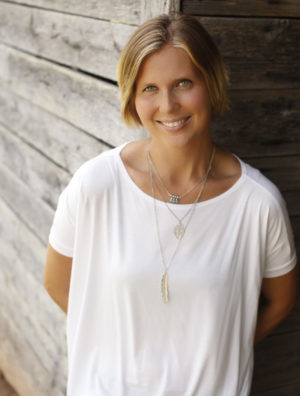
Graduates of Newman Guide colleges are making a difference for the Church and the world, and Rose Rea is no exception!  A graduate of Franciscan University in Ohio, Rose is the founder of Radiant and Valiant magazines for young Catholic women and men, respectively.  Readers can subscribe to Radiant and Valiant magazines, which are owned by Our Sunday Visitor, at this link.  We thank Rose for taking the time to share with us about how her Catholic education prepared her to share the Faith through these magazines.

Photo of Rose Rea by Lisa Wahl.

Rose, how did Franciscan University of Steubenville prepare you to serve the Church and achieve professional success?

Franciscan has a way of bringing people to campus who are not afraid to live out their faith in a beautiful and vibrant way. I had never seen anything like it in my high school years, so when I visited my older sister attending Steubenville, I knew immediately that this was the place I wanted to be. I made life-long friends there, studied abroad and traveled all over Europe learning about the history of our Catholic Church and most importantly, I was educated and formed in a Catholic environment by people who wanted me to succeed in whatever I felt called to do. Having Fr. Michael Scanlan as a spiritual advisor was also the biggest blessing. What a holy man he was!

How has your Catholic college education helped you communicate with young men and women in Radiant and Valiant magazines?

It sounds cliché, but to be around people who were cool and Catholic resonated deeply within my heart. So many adolescents and young adults feel very alone in their faith, because most of their peers around them are not living out a faith-filled life. At Franciscan University, we connected with people from all walks of life who were very great examples of people living in the world doing very normal things, but who were not “of the world”. That definitely motivated me to want to bring that mentality to young women and men everywhere. I felt that if I could just inspire one young lady to save herself for marriage because she is worth it or one young man to step up to make a decision God wanted him to make, even if it was difficult and hard, it would be valuable! The world is in desperate need of courageous men and women who are ready to answer God’s often difficult calling in their lives and we want them to understand that a small yes to God can lead to making a huge difference in the world! Every fire starts with a spark, right?!

What kind of articles can readers, including college students and graduates, find in these magazines?

Readers will find so many different topics covered! For the ladies, we cover topics like dating and relationships, include modest fashion in each issue, and highlight in-depth interviews and personal stories from well-known speakers and authors. We feature artists and photographers, as well as fantastic organizations, who are making a difference in their respective vocations. Overall, women will find all kinds of stories that will uplift and inspire them to grow deeper in their faith and allow them to connect with women just like them.

For the men, we share stories of courage, conviction and determination by guys just like our readers who were not afraid to answer God’s call in their own lives. We feature authors, bloggers, musicians, priests, military men and national speakers who are making a difference. It is so incredibly fun and rewarding to work with these talented young, Catholic men and women. Their stories are phenomenal!

This October, the Vatican will host a Synod on Young People. Some have suggested that the Church needs to back away from certain teachings and traditions to appeal to young people, but to the contrary, your readers and the students at Newman Guide colleges are attracted to the Church. How can the Church communicate Truth, Goodness and Beauty to today’s young people?

I completely agree with the latter; the doctrine and teachings of our Catholic Faith do not need to be updated or changed for our modern times. The teachings only need to be communicated in a more appealing and effective way to reach today’s young in the modern language that they speak. God’s gift to us, the teachings of the Catholic Church and the beautiful examples of the Saints and the martyrs need to be reheard and retaught to the new generation; so many of them are already responding in a positive way! There is much more work to be done, but I see the fruits of the sacrifices our parents and those before us have made. This is a difficult but special time to be Catholic, and our own happiness and the salvation of many souls depend on our complete abandonment to God. When that happens, then we’ll find peace! That is the goal of Radiant and Valiant magazines—to bring our readers to this peace—which we strive to do, led by our most blessed mother, the Virgin Mary.

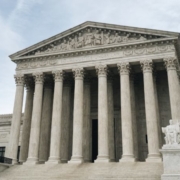
What Would A Justice Kavanaugh Mean for Catholic Education?

The nomination of Judge Brett Kavanaugh to the Supreme Court Justice has ignited storms of protests from the left, mostly centered around the issue of abortion. But another issue promises to be the focus of some harsh questioning in the near future — Catholic schools.

I’ve long believed that the fate of this country is tied to the strength of our faithful Catholic schools. For one to survive, the other must thrive. And let’s be honest, many many Catholic schools are currently operating on a sub-thrive basis. Why? There are many reasons including a cultural shift that not only inspires apathy about the faith but anger and ridicule. Another has been the mass exodus of nuns from Catholic schools, which forced the schools to allocate significant funds toward paying teachers which led to huge increases in tuition, thus pricing them out of many well-intentioned people’s lives. This has been a calamity for Catholic education and this country. But one of the remedies to this situation that would help families afford a Catholic education has been essentially barred by the odious anti-Catholic Blaine Amendments that exist throughout our country, preventing voucher plans from taking effect.

Here’s a very brief history: In the mid 19th century, anti-Catholic bigotry escalated in reaction to a wave of Catholic immigrants coming to America and establishing Catholic schools which requested public funding. At the time, the public school system was largely seen as protestant strongholds where children recited prayers and read the Bible. In reaction to the Catholic immigrants, many in the country became aligned with the Know Nothing movement which made one of its top priorities barring Catholic schools from receiving public funding. In 1875, President Ulysses S. Grant urged Congress to adopt a constitutional amendment to prohibit public funding of what they called “sectarian schools.” To be clear, they were talking about Catholic schools. Blaine, then a member of the U.S. House of Representatives, complied vigorously with President Grant’s request by introducing an amendment to the U.S. Constitution to do just that. Thankfully, his efforts fell just short in the Senate.

But the ball was rolling downhill and it only picked up speed. Supporters of the Blaine Amendment went local, promoting their anti-Catholic agenda in state legislatures to great effect. As of right now, something akin to Blaine Amendments exist in over three dozen state constitutions which bar public aid to religious organizations, including Catholic schools.

Blaine himself rode a tide of popularity to win a Senate seat and even was the Republican nominee for the presidency where he lost one of the narrowest elections our country has seen (mainly because he alienated Catholics). But his impact continues with the amendments still acting as barriers against vouchers for education. Those who most loudly support the Blaine Amendments no longer are affiliated with the Know Nothing movement and they don’t typically concern themselves with conspiracies of the papacy staging a coup on the country. Nowadays, supporters of the Blaine Amendments express concerns about the separation of church and state as well as those who fear that vouchers would harm public schools as many parents would inevitably opt out of public schools if given the chance. Mind you, there is also a not insignificant number of anti-Christian secularists and atheists who would simply like to see religious schools starved out of existence.

But after years of court battles, there is currently a great deal of pushback concerning the constitutionality of the Blaine Amendments and the issue could end up being decided by the courts in the near future. They argue that it is the proper role of government to be neutral on religion, not discriminating against it precisely because of its religious mission.

In fact, the Supreme Court in a 7-2 decision, ruled last year that Trinity Lutheran, a church in Missouri, could receive state funding to pave its playground with recycled tires even after the state said they weren’t able to because of their state’s constitution.

While the victory was cheered by religious liberty advocates, it was ridiculously narrower than many wanted. The high court did say that “denying a generally available benefit solely on account of religious identity imposes a penalty on the free exercise of religion” but expressly added that the case was about “express discrimination based on religious identity with respect to playground resurfacing.” Thank goodness our long national nightmare over the constitutionality of the resurfacing of Christian playgrounds is finally over!Supporters of school vouchers had hoped at the time that the Supreme Court was ready to put an end to Blaine Amendments. But they didn’t take on the wider issue at all. They punted. Some believe it’s because the conservative judges on the court didn’t think they had enough votes to go ahead on the wider issue.

Enter Judge Kavanaugh.

President Donald Trump’s nominee, Brett Kavanaugh, is a product of Catholic schools who has spoken out on this very issue in favor of religious schools. In fact, before becoming a federal judge, Kavanaugh had served for a time as the co-chair of the School Choice Practice Group of the Federalist Society.

At the American Enterprise Institute in December of last year, Kavanaugh reportedly complimented Chief Justice William Rehnquist’s efforts to ensure that “religious schools and religious institutions could participate as equals in society and in state benefits programs.” He also correctly praised Rehnquist’s criticism of the modern understanding of the separation between church and state as “based on bad history.”

Vouchers have the potential to change the fate of religious schools throughout the country at a time when many are struggling financially. They can help parents whose children are trapped in underperforming schools find a way out. And finally, with Justice Kavanaugh on the bench, this country may finally cut its ties to this awful legacy of anti-Catholic bigotry.

Matt Archbold is a fellow of the Cardinal Newman Society. This article was cross-posted at The National Catholic Register.

Choosing a Catholic School Begins with Mission

With Catholic Schools Week upon us (Jan. 28-Feb. 3), families are invited to recommit to Catholic education and register their children for the upcoming school year. Others who are exploring Catholic schools may benefit from a new Parents Guide to understanding the nature and benefits of a faithful, excellent Catholic education.

The higher graduation rates and college acceptance rates of students in Catholic schools are well-documented — but as impressive as these statistics are, they are of secondary importance. The real value of Catholic schools is not what they prepare students to do (go to college, earn high paying wages) but what they prepare them to be — a leaven to society and saints!

Because of this higher and broader horizon, parents should look not only at test scores and college admission rates but also at the strength and wholesomeness of the school’s Catholic culture and how explicitly it accomplishes its Catholic mission.

How is a parent to begin this daunting task? The Cardinal Newman Society has articulated the Church’s expectations as Principles of Catholic Identity in Education, and it has issued a Parents Guide to help families gauge the particular strengths and weaknesses of a Catholic school in key areas: curriculum, community, leadership, faculty and student outcomes. These are some highlights:


Curriculum

The curriculum should advance the mission of Catholic education, with abundant evidence that the faith informs all academic disciplines.

Is there evidence that the Catechism of the Catholic Church and Scripture are frequently referenced? Are textbooks supplemented with resources to help ground them in the Catholic faith and reflect a Catholic worldview?

Are students exposed to the best of Western civilization and culture, and do they understand the harmony which exists between faith and reason, especially in the study of the sciences?

Do literature selections assist the genuine development of the human person by using examples of virtue and vice, which allow students the opportunity to enter into the lives of others so as to learn examples of nobility and courage?

Does the social studies curriculum help students understand and commit to the common good, the needs of the poor, human rights and human dignity?

If human sexuality classes are taught, are they fully transparent, in line with Church teaching and respectful of parents as the primary educators?


Community

In Catholic education, parents are partners with the school. They participate in school liturgies and academic and extra-curricular events.

The school climate reproduces the warm and intimate atmosphere of family life, which is not only nurturing but genuinely positive and supportive.

Is an evangelical spirit of freedom and charity evident within the school? Are students challenged to strive for excellence in both human and Christian formation? Are virtues such as magnanimity, honor and modesty taught and evident? Are there opportunities and requirements for service?

Catholic education is in full communion with the Catholic Church and helps grow the Church. Are there activities, clubs and events that invite a deeper understanding of the Catholic teachings and traditions? Does the school display a concern for the life and problems of the Church, both local and universal? Are Catholic students helped to become active members of their parish communities? Is prayer a norm, and are Masses and Reconciliation frequent and reverent?


Leadership

Opportunities for students to encounter the living God in a Catholic school depend heavily on a faith-filled leader who sets the tone and brings the community together under a common vision and mission.

Do leaders accept and promote the teachings of the Church and moral demands of the Gospel? Do they actively participate in the liturgical and sacramental life of the school and provide an example to others who find in them nourishment for Christian living? Do they see their position as a vocation rather than a profession and attempt to fully integrate their faith life with their daily decision-making?


Faculty

Because a school depends chiefly on teachers to achieve its purpose, parents should give careful attention to the teachers and their effectiveness at imitating Christ, the true teacher, not only in their work but in the entirety of their lives and actions.

Are the faculty exemplary apostolic witnesses to the Catholic faith, and do they live their lives according to the teachings of the Church? Are they present at school Masses and other religious activities, and are they active in their parishes and local communities? Are they alert for opportunities to integrate culture and academic content with faith to create a synthesis of faith and life for their students?


Student Outcomes

Catholic education provides for the integral formation of students in body, mind and spirit. Students, once individually formed, can advance the Christian formation of the world and ultimately take their place in the eternal Kingdom.

With this dual outcome of securing both the common and individual good, parents can ask: In what ways are graduates using their formation to aid society as a whole, to assist in the building up of impoverished communities, helping the poor or in other ways facilitating the efforts of the universal Church?


Guiding Models of Catholic Education

It may seem daunting for parents to assess these areas on their own when selecting a Catholic school. Fortunately, some schools have proactively taken up the challenge of answering such questions related to strong Catholic identity by seeking recognition from the National Catholic Honor Roll.

The Honor Roll schools complete an extensive battery of questions after spending many hours of reflection on how effectively they are fulfilling the Church’s expectations for Catholic education. Parents may want to spend some time on these schools’ websites to get a sense of what a strong Catholic school looks like and compare them to their local schools.

The Church grows when parents and schools find and support each other in the quest for excellence in Catholic education, which starts and ends with Christ and is sustained by truth and by love.

During this Catholic Schools Week, all are encouraged to renew their commitment to authentic Catholic education wherever it is found.

This article was originally published at the National Catholic Register.

Why We Teach Catholics the Truth

The argument for faithful Catholic education is most apparent in humanity’s worst moments.

It’s then that we realize how greatly our culture needs men and women full of virtue, wisdom, and reverence to help lead us to God. And we need Catholic homes, schools, and colleges that form young people for that task.

The terrible events this August in Charlottesville, Va., certainly stir yearning for a renewed culture. Observers worldwide saw an absurd display of racism, political theater, moral vacancy, and tragic violence that left dozens injured and three dead.

The protests and counter-protests, disputing the future of a statue of Confederate General Robert E. Lee, occurred on and around the campus of the University of Virginia—
a rather typical secular university, in the sense that it’s been compromised by political correctness and relativism. But UVA is also the sort of institution that many Catholic colleges and universities try to emulate, because of its impressive resources, commitment to faculty research, and social prestige.

What this respected university cannot do, apparently, is fulfill its basic mission! It cannot teach truth when it is needed most, as it was last month.

During the Charlottesville violence, UVA President Theresa Sullivan issued public statements declaring that the “ideologies and beliefs” of the protesters contradicted the University’s values of “diversity, inclusion, and mutual respect.” Critics wondered why she didn’t show greater moral outrage against racism and violence.

That prompted UVA professor Chad Wellmon to take to the pages of the Chronicle of Higher Education with a candid defense of Sullivan and the modern research university. In most of American education, morality and divine revelation are formally excluded as unworthy of academic consideration. Why should anyone, he asked, look to a public university for “moral clarity”?

The university has moral limitations. Universities cannot impart comprehensive visions of the good. They cannot provide ultimate moral ends. Their goods are proximate. Faculty members, myself included, need to acknowledge that most university leaders lack the language and moral imagination to confront evils such as white supremacy. They lack those things not because of who they are, but… because of what the modern research university has become.

What that is, according to Wellmon, is “a health center, a federal contractor, a sports franchise, an event venue, and, almost incidentally, a university devoted to education and knowledge.”

Because moral truth is excluded from the modern secular university, Wellmon has acknowledged and accepted that in the wake of the Charlottesville protests, he needs to severely limit what he can discuss in the classroom:

When I welcome my students [back to school]… I will discuss white supremacy and the march, but I will use language different than the one my wife and I used with our three children. To them we spoke in the language of our faith tradition—in terms of the image of God, the church, and Christian love. When I speak to my students, I will do so in the language of the university and its traditions—in terms of open debate, critique, and a love of knowledge.

How awful! Wellmon’s students need the very same truths that he taught his children. But the modern university—which by definition should be dedicated to all truth—restricts what its professors can teach.

Not so in faithful Catholic higher education. As Pope Saint John Paul II explained in Ex corde Ecclesiae:

It is the honor and responsibility of a Catholic University to consecrate itself without reserve to the cause of truth. …[A] Catholic University is distinguished by its free search for the whole truth about nature, man, and God. The present age is in urgent need of this kind of disinterested service, namely of proclaiming the meaning of truth, that fundamental value without which freedom, justice, and human dignity are extinguished.

Catholic education does not reject the limited “values” of modern higher education: “diversity, inclusion, and mutual respect,” as Sullivan described them. Respectful dialogue is quite helpful to human discovery and understanding, and at a Catholic college, it’s a matter of respecting the dignity of each person as a child of God.

But for dialogue to be fruitful, it requires a commitment to reason and truth. That’s increasingly rare outside the faithful Catholic colleges recommended in our Newman Guide. A university that questions truth and fails to recognize God, the “fount of truth,” is subject to academic imperialism: the most politically correct conformists, the loudest activists, or the most powerful experts determine what is “true.”

This state of academia undermines even the possibility for respectful dialogue. Thus we find that campus debate too often turns to protest, shouting, and even mob-enforced censorship instead of rational discussion.

Moreover, in today’s secular university, too often the most important ideas—those relating to God, morality, and purpose—are treated as relatively equal in value. Academia places greater value on a diversity of viewpoints, instead of identifying those that are correct. Wellmon is honest about the modern university’s inability to teach students “visions of the good” and “ultimate moral ends;” these must be learned from God’s revelation, which the secular university rejects.

The Catholic educator, however, can teach these and more. The scope and capacity for teaching, learning, and understanding is vastly greater at a faithful Catholic college, because reality is embraced fully and without limitation. This is why our patron, Cardinal Blessed John Henry Newman, argued that a true “university”—embracing the entirety of knowledge—must be Catholic.

At the faithful Catholic college, every discipline has a firm foundation in reality. Theology is not only taught but bears upon every study. Artists and writers appreciate the human experience, full of meaning and hope in the reality of Christ. Science and medical students learn the ethics of caring for God’s creation and wonder at the intentionality of every living thing and process. Math and engineering students embrace the divine order on which every rule and formula depends.

Questions of morality are not excluded but are central to a Catholic education. Catholic educators face sin and redemption honestly, for the good of their students. They draw lessons from those tragedies that result from our fallen nature—like the events in Charlottesville—without hiding truth within the privacy of their homes.

Hopefully, the events in Charlottesville have inspired Catholic families to talk about the sin of racism, respect for human dignity, and the sometimes blurry distinctions between preserving and celebrating history. As students begin the school year, we need that conversation to continue in the classroom.

We need educators who teach and witness to Catholic morality and assent to God’s authority, as given to us through the Catholic Church. We need the same truths—all truth—to be embraced, sought, and reverenced in our homes, schools, and colleges.

Anything less deprives young people of a complete formation. Anything less deprives them of truth.