Contest Winner Seeks ‘Abundantly Joy-Filled Life’ at Faithful Catholic College

Editor’s Note: The Cardinal Newman Society, a nonprofit organization based in Virginia that promotes and defends faithful Catholic education, recently announced that Jacob Kristine, a homeschooled student from Pennsylvania, is the winner of the Society’s 2023 Essay Scholarship Contest for Catholic college-bound students. Kristine received a $5,000 scholarship toward his education at Christendom College in Front Royal, Va., this fall. Below is the full text of his winning essay. More information about the contest can be found here, and rising high school seniors who would like to compete in next year’s contest can sign up for our Recruit Me program here.  

I have had the blessed opportunity to see the value of a truly Catholic college education played out in the lives of four of my older siblings. My older brothers and sister have attended a school that is not just Catholic in name, but fosters an environment that allows one to “breathe Catholic” in all aspects during the most crucial formative years for a young man or woman. They are now living lives imbued with the True, the Good, and the Beautiful in their chosen vocations.

Their quest for higher learning led them to an institution which encourages and provides the tools necessary for gaining the wisdom needed to seek out and live out the Truth. They were treated to professors who infused every lecture with the life of Christ and His Church. The core curriculum’s bedrock, founded upon theology, philosophy, and the other liberal arts, allowed them to not just learn facts and statistics, but to actively and prayerfully think and engage in conversations to further illuminate the topic.

College life is more than the fifteen to twenty hours spent in a classroom each week. Being at a Catholic college brings the opportunity to meet and develop friendships that will bring out the Good in each individual. The friendships my siblings forged throughout their four years among like-minded followers of Christ have challenged them to grow in wisdom, remain faithful to God through worship and devotional practices, and encouraged virtuous living without sacrificing fun, laughter, and an abundantly joy-filled life—then and now.

But what good is an education that teaches Truth and promotes the Good unless it allows one to appreciate and seek the Beautiful? True beauty not only pleases the eye but stirs the intellect and feeds the soul. The divine liturgy is celebrated at their alma mater with deep reverence and with utmost care in order to solidify the reality of the True Presence of Christ in the Eucharist. Likewise, outside of the Holy Mass, each student’s spiritual formation has every opportunity to flourish and grow by making devotional life accessible and desirable.

My siblings have bestowed upon me the great riches of understanding what gifts a truly Catholic college can impart to a young person. I have seen firsthand how this pursuit of Truth leads to a life that is Good and wholesome and sincerely promotes seeking the Creator of Beauty. I want to be immersed in that experience. In the fall of 2023, I will embark upon the path forged by my brothers and sister in seeking the True, embracing the Good, and drinking in the richness of the Beauty of a Catholic education.

Teresa Tomeo: Faithful Catholic Parents, Education ‘Key’ to Formation

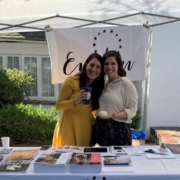
Popular Catholic commentator Teresa Tomeo celebrates her Catholic upbringing and education amid heartwarming stories, good laughs and practical tips for raising children in her new book, Everything’s Coming Up Rosie: 10 Things My Feisty Italian-American Mom Taught Me About Living a Godly Life.

Tomeo is a well-known Catholic author, syndicated Catholic radio talk show host, and motivational speaker. The Cardinal Newman Society recently caught up with Tomeo to discuss her new book and the role of Catholic parents and Catholic education in forming young people today.

“I fell away from the faith for many years but my Mom and my Dad, plus a really good Catholic grade school education, planted the seeds,” Tomeo explained.  “When push came to shove, I looked in the mirror and slowly came back to my senses.  I don’t think I could have done that without those seeds being planted by a loving Catholic family and good solid lay and religious teachers.”

CNS: In your new book, you share the wit and wisdom of your Italian-American mom, Rosie, through storytelling and practical advice. What do you hope readers come away with after reading the book?

Teresa Tomeo: That we need to get back to the basics; the Golden Rule, the Ten Commandments, loving one another as Christ and our Catholic faith teaches us.  It’s not all that complicated, except we make it so because we just refuse in this world to put God first.  My mother knew this as did her mother.  It’s common sense but, as I say in the book, that’s something that is not so common anymore.

CNS: Since parents are the first and primary educators of their children, how can Rosie serve as an encouragement to Catholic parents in their role?

Teresa Tomeo: I think she serves as a great reminder to parents to never give up on your children.  I fell away from the faith for many years but my Mom and my Dad, plus a really good Catholic grade school education, planted the seeds.  When push came to shove, I looked in the mirror and slowly came back to my senses.  I don’t think I could have done that without those seeds being planted by a loving Catholic family and good solid lay and religious teachers.

CNS: Your mom provided you with a strong Catholic foundation, including the importance of relying on our Blessed Mother’s intercession, such as when your family escaped unharmed from a gas explosion at your apartment complex. Can you comment on how your mom provided a Catholic witness in both word and example?

Teresa Tomeo: Well she never gave up and she never lost her joy.  She persevered through many a trial and I saw how she grew stronger from those trials and even more importantly I saw how she prayed, went to Mass, and called on the intercession of Our Lady and the saints regularly and she taught me and my sisters to do the same.  We didn’t always listen, at least at first but eventually, her witness made a major difference and still does in my life even though she passed away three years ago.  The phrases in the book, the ten things Mom taught me, were among the most memorable. But she had a lot of other funny but profound sayings as well, so many I could probably write a few volumes worth.

CNS: Another lesson your mom shared with you was “Nevva get too big for those britches” or “humility.” You discuss how social media is one factor contributing to a self-centered society. What are some of the other challenges young Catholics face today?

Teresa Tomeo: Young people are not immune to the epidemic of loneliness as outlined in the special Surgeon General advisory that came out a few weeks ago. And the Surgeon General just released a follow up report to the loneliness advisory raising his great concerns about teens and social media. He says it’s adding to the problems already experienced—so again, families really need to get a handle on media usage. In addition to social media, young people spend far too much time with media in general, which causes them to focus on themselves.  Most importantly church attendance is down overall. That combined with broken families, and families who no longer consider faith or church attendance important, it’s a recipe for disaster.

CNS: How can they grow in humility and virtue?

Teresa Tomeo: Pope Francis spoke about this problem on his recent trip to Hungary telling young people not to be “couch potatoes.” He went on to tell them to aim high and to focus on doing great things for God.  You can’t do this while staring at a phone or laptop. However, young people need to see and hear from and about great witnesses of the faith and to be reminded of so many saints, even their age, such as Blessed Carol Acutis or Blessed Pier Giorgio Frassati, who always looked to Jesus.  They loved life, they had fun, but at the end of the day they had their priorities straight. They need to learn about these and other wonderful examples.  As St, Paul says in Romans 10:17 “faith comes through hearing.” I heard Rosie talk about the Blessed Mother, St. Teresa, and other favorite saints of hers growing up and it eventually made a big difference in my life.  I absolutely love the great cloud of witnesses we have in the ten thousand plus saints in our Church.

CNS: For years, you’ve been a big supporter of The Cardinal Newman Society and faithful Catholic education. Why do you think it’s so important for Catholic parents to seek out faithful Catholic education for their children? What role do you see faithful Catholic schools, homeschool programs & colleges playing in the future of our Church and country? 
Teresa Tomeo: Well again, I credit the solid Catholic education I received for eight years in grade school as key in my formation.  I was growing up in turbulent times back in the late 60’s and 70’s.  But it’s not nearly as turbulent as it is today. We have to be able to know who we are and why we are here.  We have to have a compass and a solid Catholic education is going to help steer one in the right direction.  The religious sisters and lay instructors not only taught us the faith, they taught us the importance of a vocation.  That’s where I discovered my communications vocation.  By the time I was in the third grade, thanks in part to the encouragement of my teachers, I knew that I would be in the communications field.  I didn’t know exactly what that meant at the time but my teachers were the ones who recognized my gift of gab and my interest in writing, and they encouraged me along the way.  I also had a very profound experience when I made my First Holy Communion and that’s what eventually brought me back to the Church.

CNS: Anything else you’d like to add?

Teresa Tomeo: I would just like to end where I began; reminding parents, older siblings, others who work with young people keep planting those seeds.  Keep working hard at looking for good Catholic schools that are true to the faith.  And even if your child does stray, know that you did what the Lord called you to do in terms of bringing them up in the faith to the best of your ability. Keep praying. Keep loving them and keep reminding them when the opportunity arises that God loves them too and that there is always a place for them in your home and God’s house, the Catholic Church. Oh, and as I say throughout the book, a little dose of old fashion Catholic guilt doesn’t hurt either.

National Essay Contest Winner Saw ‘Firsthand’ the ‘Great Riches’ of Faithful Catholic Education

While many students go off to college and lose their faith and joy, one college-bound student saw how his older siblings’ faith was strengthened and lives were enriched by attending a faithful Catholic college—and now he, too, will be attending a faithful college with a $5,000 scholarship.

Jacob Kristine, a homeschooled student from Pennsylvania, is the winner of The Cardinal Newman Society’s 2023 Essay Scholarship Contest. His $5,000 scholarship will be applied toward his first year at Christendom College in Front Royal, Va., and he is eligible for continuing scholarships from Christendom in subsequent years.

“My siblings have bestowed upon me the great riches of understanding what gifts a truly Catholic college can impart to a young person. I have seen firsthand how this pursuit of Truth leads to a life that is Good and wholesome and sincerely promotes seeking the Creator of Beauty,” explained Kristine in his award-winning essay, which can be read in its entirety here.

“The friendships my siblings forged throughout their four years among like-minded followers of Christ have challenged them to grow in wisdom, remain faithful to God through worship and devotional practices, and encouraged virtuous living without sacrificing fun, laughter, and an abundantly joy-filled life—then and now,” Kristine continued.

The topic for this year’s contest was to reflect on the following question: “The Cardinal Newman Society recently released a 7-minute video on the advantages of choosing a faithful Catholic college. Pick a key point(s) or theme(s) from the video and explain why attending a Newman Guide college will have special value for you.” Essays were judged by how well they demonstrated appreciation for faithful Catholic education, as well as the quality of the writing.

The judges were thoroughly impressed with Kristine’s essay, which emphasized the academic, spiritual, and social life at faithful Catholic colleges. Kristine is the fifth of eight children in his family and has been homeschooled his entire life. Since third grade, he has served as an altar server at his Catholic parish and worked at the church cemetery as a groundskeeper. He has also enjoyed competing in sports, especially cross country and track and field, which he hopes to continue next year at Christendom.

Kristine explained how The Newman Guide and The Cardinal Newman Society’s “Recruit Me” program proved helpful in his college search:

Without the Newman Guide, I am not so sure that my college search would have been as comprehensive and complete as it turned out. The “Recruit Me” program was a fantastic blessing, as it allowed so many colleges to reach out to me and provide information that I could digest and review. I would then turn to the Newman Guide to further enlighten me about the most vital and important aspects of a truly Catholic college education. With your fantastic resources, I was able to confidently find a home for the next four years that would equip me to become the man of God that this world so desperately needs.

The annual contest is open to high school seniors in the United States who participate in the Newman Society’s Recruit Me program and use The Newman Guide in their college search. The innovative Recruit Me program invites Newman Guide colleges to compete for students while providing information about faithful Catholic education. Rising high school seniors who wish to enter next year’s essay contest can sign up for Recruit Me online here.

Kristine’s $5,000 scholarship is made possible by the generosity of Joseph and Ann Guiffre, supporters of The Cardinal Newman Society and faithful Catholic education.
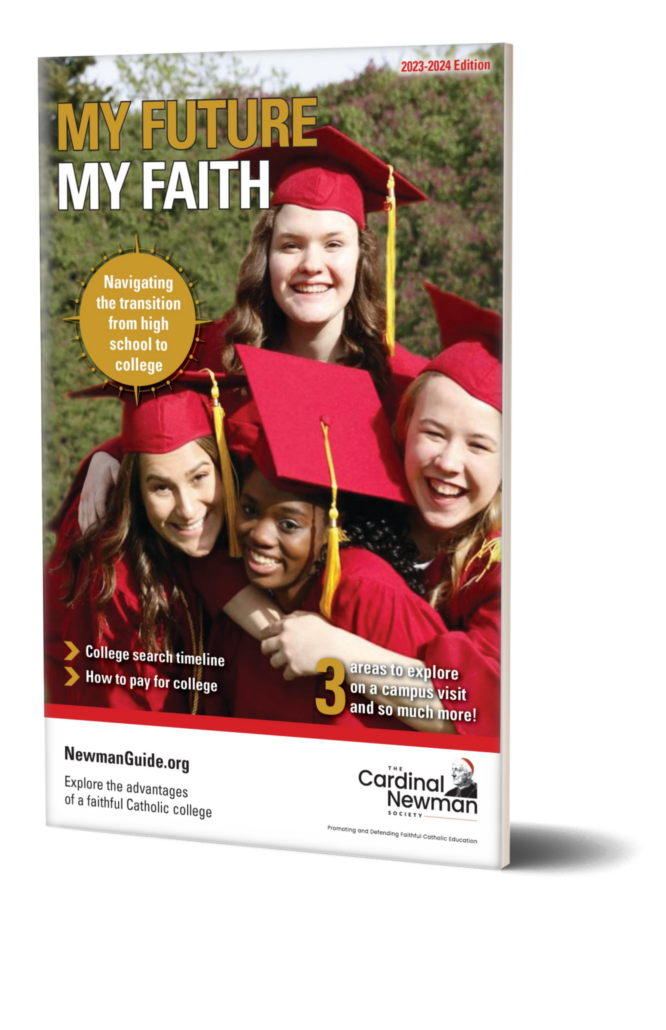
“We are grateful to Mr. and Mrs. Guiffre for enabling this scholarship,” said Newman Society President Patrick Reilly. “They understand the unique value of a truly Catholic education, and they are thrilled to help a student experience all that a Newman Guide-recommended college can provide.”

Each year’s winner of the contest also has the opportunity to receive an additional $15,000 from participating colleges over the course of their college education. Sixteen of the Newman Guide colleges, including Christendom College, have agreed to supplement the Newman Society’s scholarship with additional $5,000 grants over three additional years, under certain conditions including full-time enrollment and academic progress.

Newman Guide Colleges Prepare Students for Happiness, Says African Missionary

A graduate of Wyoming Catholic College who now serves as a teacher and missionary in Africa says that there’s “no better option” than faithful Catholic colleges for “being formed as a whole person for happiness and flourishing.”

“Any college can provide job training, but Newman Guide colleges are looking at students as a person created in the image of God, so yes, providing the skills and education needed to work in this life, but also to be happy, both in this life and the next,” says Hannah Graves.

Currently serving as a teacher and missionary in Malawi, Africa, Graves credits her faithful Catholic education with giving her the “perspective” she needs to continue her service. “While there is a lot that is beautiful here in Malawi, there are also lots of major problems. Corruption and destitution are ubiquitous.”

After graduating from WCC, Graves worked for a parish in Washington state that wanted to set-up a sister relationship with a parish in Malawi. Inspired to share the joys of her Catholic faith and support the sister parish, Graves took a trip to visit St. Mary’s in Ntaja. During her visit, Graves discovered, “there was a lot about the life in Malawi that appealed to me.” She was drawn to a life of simplicity.

“I have wanted to live so as to ‘tread lightly on the earth,’ and in Malawi I saw the possibility of stepping out of the materialist consumerist culture that has dominated America and to learn to live without ‘essentials’ like refrigeration, air conditioning, dishwashers, and washing machines,” Graves said.

After Graves returned from that trip, she explored the opportunity to share her faithful Catholic education and teach in Malawi full-time.  She contacted the Sacramentine Sisters and moved to Malawi in July 2022. She currently teaches high school students in a Sacramentine school, but she also volunteers regularly at a local orphanage run by Franciscan sisters.

Hannah Graves volunteers at an orphanage run by Franciscan sisters.

Living in Malawi, Graves has noticed that “so much poverty is caused by poor agricultural practices and broken family units.” Despite the poverty, Graves admires the joy she sees. “The women are always so thrilled that I am there… They take such joy in the simplest gestures and so frequently break into song.”

“My neighbor is an Italian nurse who runs physical therapy centers for disabled children (cerebral palsy, hydrocephalus, osteogenesis, club foot). On my days off, I go with her out to the villages for the PT sessions. The monthly gatherings at the centers always end with a simple meal. I love ‘helping’ the women in the kitchen and trying to communicate.”

Graves is striving to live a life detached from worldly things, a life of prayer and service for the Catholic Church and the people of Malawi. She plans to stay in Africa for the length of her work permit which is two years, but is “open to considering a longer stay depending on what God seems to want.”

Editor-in-chief of Magnificat Magazine Developed ‘Habits of Prayer’ at Faithful Catholic College

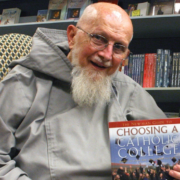
Fr. Sebastian White, O.P.

The editor-in-chief of the popular Magnificat magazine says that a faithful Catholic college is where he “began to develop daily Catholic habits of prayer and a whole Catholic outlook on the world.” Now Fr. Sebastian White, O.P., helps Catholics across the globe strengthen their prayer lives through the monthly Magnificat prayer companion, which reaches more than 300,000 subscribers in English and Spanish through the U.S. edition alone.

Fr. White is a Dominican priest and convert to Catholicism who earned his Master of Theological Studies from the International Theological Institute Catholic University in Trumau, Austria, which is recognized in The Newman Guide. He oversees the monthly publication of Magnificat, which includes the readings for daily Mass, meditations, essays on saints and sacred art, his own editorial, and more.

The Cardinal Newman Society recently asked Fr. White to share how attending a faithful Catholic college influenced him personally and prepared him for his current role with Magnificat.
CNS: What is it that drew you to attend ITI Catholic University? 

Fr. White: In early 2004 I had just returned to the Catholic Church and been confirmed as a Catholic, shortly after graduating from college. (I had been baptized Catholic as an infant, but then raised in a protestant church.) Thomas Howard, a beloved writer and convert who had been a visiting professor at ITI Catholic University in his retirement, became a close friend and mentor. I was spending much of my time reading Catholic books and talking to Tom, and he suggested that I consider going to study at ITI. When I read about the richness of ITI’s international community, the unity of the intellectual and devotional life that it offers, and the beauty and history of Austria, I became more excited at the prospect of living there and studying there. When I applied and was accepted, I knew that it would be a great blessing and would help to deepen my Catholic faith.

CNS: Could you share how your faith was deepened through your studies at ITI Catholic University?

Fr. White: ITI Catholic University is really the place where I began to develop daily Catholic habits of prayer and a whole Catholic outlook on the world. I have always felt that, had I been living in suburban Boston and working for a bank, for example, struggling to find time for daily Mass and daily prayer, I would have had a much harder time maturing as a Catholic. At ITI I was surrounded by other young, intellectually motivated Catholics and formed great friendships that last until this day. Additionally, Adoration of the Blessed Sacrament, daily Mass in both the Roman Rite and the Byzantine Divine Liturgy, hikes and excursions to other beautiful Catholic sites, all supported what I was I learning in the classroom. At ITI, the Catholic faith is the air you breathe!

CNS: How did your time at ITI Catholic University help prepare you for your role as editor-in-chief of Magnificat?

Fr. White: At ITI I had to read a lot and write a lot. That was an important formation that helped me, first of all, when I returned to the United States to enter the Dominican Order and in my studies for the priesthood. At Magnificat, I continue to have to read and write regularly. Additionally, ITI gave me a familiarity with the breadth of the Catholic tradition. As the editor, for example, I am responsible for choosing the daily meditations that are a beloved feature of Magnificat. I am better equipped to select those wonderful texts because of my time at ITI.

CNS: What is something about Magnificat that you look forward to sharing with its readers each month?

Fr. White: The most challenging part of Magnificat for me has always been writing the editorial because it is completely open-ended. Whereas the meditations, for example, are essentially a work of selecting and curating great texts from our Catholic tradition, when it comes to the editorial each month, I am, so to speak, starting from scratch. But ITI helped me to grow in the discipline of writing regularly. Consequently, I am less intimidated by the task. Often, I write about my own life and experiences from my upbringing. Readers have seemed to enjoy these stories and feel a personal connection to the editor. I see the editorial as an opportunity for readers to get to know the editor a bit. So over time I have begun to look forward to the opportunity to share some personal story or experience. The Catholic Church is often described as a big family. I think of Magnificat as a family, too.

CNS: What advice would you give to those who are discerning where to go to college?

Fr. White: I think young people ought to consider where they will truly get a good education. After all, college isn’t simply a religious camp. On the other hand, college is a place where a person’s moral and spiritual life can either grow and mature or suffer tremendously. Ideally, young people can find a place that offers both a high quality of academic learning and a milieu in which they can deepen their faith and develop good habits. In college, we are laying the groundwork for the person we will be for the rest of our lives. A good Catholic institution such as ITI Catholic University helps us to grow and mature in faith even while we are learning other natural disciplines.

Faithful Catholic Colleges ‘Vitally Important,’ says Senior Director at Word on Fire

Sean Lee

A leader in an apostolate that is reaching millions of Catholics and drawing them into—or back into—the Catholic faith believes that faithful Catholic colleges are “vitally important” in forming strong Catholics.

Sean Lee, senior director of operations at Word on Fire Catholic Ministries, explains that “College is a crucial time for students to form strong friendships, learn how to engage with ideas and to deepen their relationship with Christ. Faithful Catholic colleges are the best place to do that.”

The Cardinal Newman Society recently asked Lee about his experience at Ave Maria University in Ave Maria, Fla., which is recognized in The Newman Guide, and how it prepared him for the work he does today.
CNS: Can you tell us about your experience at Ave Maria University?

Sean Lee: My experience was tremendous. I am a cradle Catholic and went through the public school system prior to attending Ave Maria. By the time I was ready for college, I was drifting away from my faith, and so Ave Maria served as a very important pivot moment in my life. It was at Ave Maria where I met some of my closest friends, friends who showed me what a relationship with Christ looks like. I was taught by an incredible faculty who really cared about forming us in the intellectual tradition of the Church. I was afforded the opportunity to play sports and study abroad in Rome, two experiences that really shaped me in profound ways. In short, Ave Maria changed my life, it gave me life-long friendships, it provided me with a strong foundation for my future work and it allowed me to encounter and deepen my relationship with Christ. I’m forever grateful.

CNS: How did your education at Ave Maria help prepare you for the work you do at Word on Fire?

Sean Lee: It was critical. The liberal arts education Ave Maria provided has been a bedrock for so much that I have done and do at Word on Fire. Being able to think critically about ideas and issues has been very important in my work.

CNS: Word on Fire is about drawing people into or back into the Catholic faith. What are some exciting projects underway at Word on Fire?

Sean Lee: Where to start! We continue to work on the Word on Fire Bible and will soon be launching volume three of seven. Plans are underway for our second Wonder Conference which focuses on the intersection of Faith and Science, a topic that’s so important with an increasingly secularized culture. Bishop Barron, of course, will continue so many of his evangelical initiatives, all the while modeling a way for Catholics to engage with the culture. There are a lot of exciting talks, shows, and videos we are planning for Bishop Barron that I’m really excited about. As important as it is to form our young students in the faith, it’s just as important to provide opportunities to adults with faith formation. In that vein, I’m excited about the future of the Word on Fire Institute, where we plan to transform it into an engaging community that equips individuals through its courses to become modern day evangelists. Those are just a few of so many projects we’re working on.

CNS: What role do you see faithful Catholic colleges playing in forming strong Catholics?

Sean Lee: They are vitally important, especially in this increasingly secular world. College is a crucial time for students to form strong friendships, learn how to engage with ideas, and deepen their relationship with Christ. Faithful Catholic colleges are the best place to do that. Many of our staff members come from Newman schools, and we’re very blessed to have them. They are well educated and very motivated by the missionary work of Word on Fire. We need more of them!

Newman Guide Colleges Can Help Students Find ‘Holy Spouses,’ Says Author

A Catholic author who studied how saints met their spouses believes that attending a Newman Guide college can “increase one’s odds to find a holy spouse.”

Patrick O’Hearn just released a book titled, Courtship of the Saints: How the Saints Met their Spouses. O’Hearn earned his Master of Science in Education at Franciscan University of Steubenville in Steubenville, Ohio, and served as acquisitions editor at TAN Books for the last two years.

The Cardinal Newman Society asked O’Hearn how his book can inspire young Catholics today, and the value he sees in students attending a college recognized in The Newman Guide.

CNS: Can you tell us about your new book, Courtship of the Saints: How the Saints Met their Spouses?

Patrick O’Hearn

Patrick O’Hearn: Courtship of the Saints is a book filled with some of the most fascinating stories of how various saintly couples met their spouses. In this work, I was able to interview St. Gianna’s daughter, reveal details in English for the first time concerning Pope St. John Paul II’s parents (now on the path to sainthood), and countless other beautiful couples.

Before I share these couples’ stories, I define what courtship is through the clear teachings of Venerable Fulton Sheen and Father Chad Ripperger. At the end of the book, I include wisdom for those discerning marriage, those already married, and a plethora of beautiful prayers.  This is not just a book for those discerning marriage, but even those married will see that the saints were the greatest lovers in the history of the world.

CNS: How can the 25 saintly couples that you feature in your book inspire young Catholics today?

Patrick O’Hearn: We need to set the bar on courtship and marriage, especially in a time of moral confusion. God calls some men and women to Himself. These souls will spend years preparing for the priesthood and final vows in religious life, and yet, many preparing for marriage spend little time striving for their vocation.  How one prepares for their marriage can likely influence how one lives out his or her marriage.

Furthermore, these 25 couples offer a glimpse into God’s love for His Spouse, the Church. In these stories, we see a love that is passionate and sacrificial.  For that reason, these stories are better than any romantic novel, for they return to the source of love itself, God.

CNS: The college years are often so critical in determining much of the faith and future of a young person’s life. What value do you see in attending a Newman Guide college, not only to prepare for a career, but also for students who are called to the married life?

Patrick O’Hearn: Our first vocation is to be holy. How we live out that vocation (as a priest, consecrated religious, or married) is our second most important calling. Often, young people are so focused on pursuing their occupation rather than their vocation. Our occupation is always at the service of our vocation. The key is to let God reveal our vocation by being open to His will, but also putting ourselves in the best possible places to hear His will. Just as there is the near occasion of sin, there is something on the flip side. The near occasion of grace. That being said, attending a Newman Guide college with its promotion of the sacramental life, faithfulness to the Magisterium, and flowering of Catholic culture increases grace in one’s soul, but also increases one’s odds to find a holy spouse. You are more likely to find a holy spouse at daily Mass than you will at a bar. You are more likely to find a holy spouse sitting in a theology class than sitting in a class on LGBT studies.

CNS: How did your time at Franciscan University of Steubenville earning your master’s degree help prepare you for both writing this book, and your work at TAN books?

Patrick O’Hearn: My time as a graduate student at Franciscan University of Steubenville opened my eyes to the longing on every heart for love. Having served as a resident assistant at Franciscan, I saw so many men who were afraid to pursue women, and so many women who wanted to be pursued. Through my own sufferings, rejections, and disappointments, I believe God prepared me to write this book to give hope to so many people that our God is the “Greatest Matchmaker.” His Divine Providence works mysteriously, but powerfully. We do not know the road ahead of us, but Our Lord and Our Lady walk with us each step of the way.

CNS: Anything else you’d like to add?

Patrick O’Hearn: I would like to say “trust” in God.  I spent so many years worrying about my future vocation. Now more than ever, I realize the Father is carrying us in His arms. He longs for our love. He wants to bless us, and this blessing might come in the way of sufferings and trials. But through these challenges, God is perfecting us. Trust Him… whether it is attending an authentic Catholic school that might hurt the budget, or trust Him when you are worried about meeting your spouse. God is faithful.

CNS Joins Amicus Brief on Upholding Ministerial Exception – Faith Bible Chapel v Tucker, U.S. Supreme Court

Click here to access the amicus brief PDF.

CNS Joins Amicus Brief on Equal Treatment of Religious Groups – Fellowship of Christian Athletes v San Jose Unified School District, 9th Circuit

The Cardinal Newman Society joined an amicus brief at the 9th Circuit Court of Appeals, urging the full court to uphold a panel ruling that protects a religious student group from discriminatory treatment.
Gender Confusion in Australia’s Catholic Schools

In September, the Australian Catholic Bishops Conference released “Created and Loved: A Guide for Catholic Schools on Identity and Gender.” While the document has thoughtful and salient points regarding gender identity, it also recommends that Catholic schools use the preferred names and pronouns of children suffering from gender dysphoria, providing “flexibility with uniform expectations.”

As a lifelong Catholic educator, I have deep concerns about this approach, which is fundamentally at odds with the mission of Catholic education. The challenge for Catholic schools today is not that we work with gender-dysphoric children, but how. Children suffering from gender dysphoria can be admitted under certain conditions: The gender dysphoria is acknowledged as a disorder; the child’s family obtains proper counseling and treatment; and the child is able to function in an environment where gender expression is expected to match biological reality. However, Catholic schools do great harm by allowing children suffering from gender dysphoria to externally represent and even celebrate that disorder and requiring that others in the school support and participate in it.

The document’s injudicious recommendation stems from three misconceptions.

The first misconception is that it is unacceptable to ask children suffering with gender dysphoria to follow gender norms while in a Catholic school. It is, in fact, necessary for the good of the child as well as the integrity of the school. Eighty-four percent of children experiencing gender dysphoria will not continue to experience it through adolescence and adulthood, according to an oft-cited 2011 study from Sweden. We must therefore love such students through the challenge on our terms, not theirs. This is not unlike how we deal with children with anorexia who have a dangerous distortion of their sense of weight. We admit them to school but require that they receive care, and we refrain from supporting their bodily disorientation through false affirmation.

The second misconception concerns the implications of Christian anthropology and respect for the human person. The Australian bishops’ document correctly notes that Christian anthropology “demands that we respect the worth of each person at every moment of their existence—from conception to death—regardless of who they are or how they present themselves in the world. It also asks us to see each person holistically rather than seeking to define them by just one aspect of their identity.” It continues: “Any relevant educational programme and the care of individuals in a Catholic school must be faithful to this Christian Anthropology.”

However, the document goes on to mistakenly conclude that being “faithful to this Christian Anthropology” and promoting “a fundamental attitude of charity and respect, of care and compassion,” requires Catholic schools to conform their activities and policies to reinforce gender dysmorphia. This is neither caring nor compassionate. We must interface with children “holistically” as integrated beings, a unity of mind, body, and spirit, and not reduce them to “just one aspect of their identity.”

The third misconception is the assumption that, since Christian anthropology provides a basis for human worth and dignity—we are loved by God and created in his image—and since we are made for communion and flourishing in community, any exclusionary activity is an affront to Christian anthropology. With this argument, the Australian bishops compel Catholic schools to accept and placate children who have “transitioned” to a new name, pronouns, or way of dress.

The natural order has supplied children the family as the primary social unit and source of belonging and wellbeing. Formal institutions can assist in creating other environments of belonging, but a child not being admitted to a certain school, for whatever reason, is not deprived of human dignity or worth, nor of family, church, friends, or love.

We must not conflate attendance at a Catholic school with membership in the Church. Most Catholic children worldwide do not attend Catholic schools but are full members of the Church. The modern Catholic school itself has only been widely available for less than 10 percent of the Church’s history, with catechesis and Christian socializing taking place in the home and parish for most Catholics.

Catholic schools are in the business of integrally forming children in mind, body, and spirit. It is what we do, it is all we do, and we do it one way: in conformity with the will of God and with respect for children as mind-body-spirit unities. Those who seek a different type of formation are free to do so—but they cannot demand that we adapt to their differing goals and conceptions of reality and of the human person.

Using students’ preferred names and pronouns goes against the nature and goals of Catholic education. It casts Catholic schools as active participants in the child’s catastrophic quest for emancipation from the body. It has us (knowingly or unknowingly) participating in relativism, gnostic dualism, materialism, and the toxic fluidity of the modern world. It implicates us in destroying the differences between male and female and the dignity of sexual distinctiveness. It involves us in eroding the roots of the family, severing God from his creation, and distorting the nature of reality itself. And worse yet, by our personal example in forming those under our direct care, we invite our students and families to do the same.

Dan Guernsey is a senior fellow at The Cardinal Newman Society and a 30-year veteran of Catholic education.

Editor’s Note: This article originally appeared in the online edition of First Things on February 3, 2023.