EWTN Video: Newman Society Discusses Latest Threats to Catholic Education

https://www.youtube.com/watch?time_continue=1&v=Hu74hWE5tmc&feature=emb_title

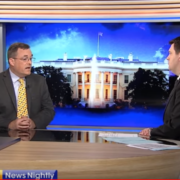
Newman Society President Patrick Reilly was recently hosted on EWTN News Nightly to discuss the latest threats facing Catholic schools and colleges.

“We’ve been seeing many exciting things happening in Catholic education,” Patrick Reilly shared with EWTN News Nightly host, Wyatt Goolsby. “But because our culture is going in a different direction, we’re seeing many lawsuits. Some of them are even coming from teachers within Catholic schools who lose their jobs because they’re not witnessing to the faith.”

“Catholic schools have to be very careful that in their Catholic identity they are consistent across the board,” Patrick explained. “They need to have very clear policies and ensure that everyone understands what is required from a Catholic institution.”

Catholic College ‘Shaped Who I Am,’ Says Nashville Dominican

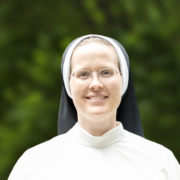
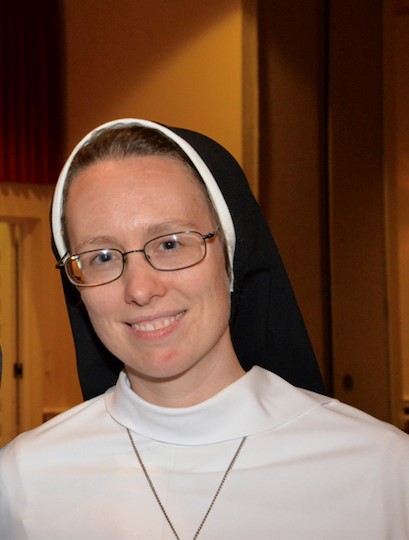
Sister Scholastica Niemann of the Dominican Sisters of St. Cecilia in Nashville, Tenn., is one of many religious sisters whose vocation was nurtured by faithful Catholic education.

Affectionately known as the “Nashville Dominicans,” her order was founded more than 150 years ago and has grown to nearly 300 sisters, with approximately 50 sisters in their initial four years of formation. The sisters, who wear the traditional Dominican habit, teach in 33 schools in the United States and several more abroad.

The Newman Society is grateful to Sister Scholastica for sharing her story and testifying to the influence of the faithful Catholic education that she received.

Newman Society: Sister Scholastica Niemann, can you tell us about yourself? Where are you from? What was the role of Catholic education in your life growing up? 

Sister Scholastica Niemann:I grew up in a small town in East Tennessee and first met the Sisters at the grade school I attended, St. Mary’s School in Oak Ridge, Tenn.

Prior to living in Tennessee, though, my family moved around the country a lot because my dad was in the Air Force. One constant in the midst of all those changes was our Catholic faith. We knew the faith was important, because we saw the sacrifices my parents made to send us all to Catholic schools. I am the youngest of eight children, so that was quite a sacrifice.

So much of our life revolved around the parish and school, we were always involved in youth groups, in after-school activities and clubs, not to mention all the parish functions… the faith was so much at the heart of our family. The only Catholic high school in the area was about 50 minutes away, but there was never any question about whether we would go there or not. We just knew.

Catholic education was a priority in our house. Though it was never said aloud, I always understood how important the intellectual part of the faith was in our family.

Newman Society: Why did you choose to attend a faithful Catholic college? What was its impact on your life and your vocation?

Sister Scholastica Niemann:As a senior in high school I had just experienced a renewal of my own faith, a deeper conviction that friendship with the Lord was not only possible, but desirable. I had always loved learning, and now I was realizing that faith, and truth, and learning, and prayer all go hand in hand. And although I couldn’t have articulated it in these words, it is because the human person is made for the Truth who is Jesus Christ.

All I knew at that time was that I wanted to study the liberal arts in a faithful, Catholic environment. At the University of Dallas [a Newman Guide-recommended institution in Irving, Tex.] I got that… and a whole lot more than I bargained for. From my first English class, to the theology and philosophy courses, to Western Civ., I was receiving a vast treasure of an education that truly shaped who I am.

I would say the professors and classes had the most impact on me. They were challenging and rigorous, to be sure, but also immensely rewarding in a way that I had not anticipated. Very often after class, my friends and I would discuss the lecture or the reading, and we would just marvel at the inherent value of what we were learning. It was not useful, in a worldly sense, it was not job training or marketable—but it was true, and good… and eminently useful for us as human beings. We were learning how to succeed at being good people.

And then, on top of all that, to spend a semester in Rome, in the heart of the Church, to see where early Christians were martyred and buried in the catacombs, to walk the streets where St. Peter and St. Paul traveled, to pray in the magnificent churches, it was a once-in-a-lifetime experience. 

All that time, Christ was drawing me closer to Himself.

Newman Society: How did you discern your vocation?

Sister Scholastica Niemann:As I neared graduation, I began to feel an interior tug, a nudge, a quiet invitation to consider Religious Life. I had taken a really beautiful course on Christian marriage, and part of that course examined the vows of consecrated religious life. It was there that a seed was planted—it took several years before I could respond to that call, but it was definitely a turning point.

Preparing Medical Professionals Who Reject Planned Parenthood

The ouster of Planned Parenthood’s president, who disappointed activists for not being aggressive enough on abortion despite her defense of horrific state laws, should be a wake-up call to Catholics to better educate future health care professionals about the reality of abortion and what true health care means. It’s a strong reason why renewing faithful Catholic education is so important to our Church and society.

Before students even arrive at medical school, the indoctrination that teaches that abortion is acceptable has already begun—and it even creeps into some of our Catholic schools and colleges. Just recently, a Catholic school teacher in South Carolina posted pro-abortion posts on her Facebook page and was appropriately removed from her teaching position. The school she was employed by is excellent—one of several recognized for strong Catholic policies by the Cardinal Newman Society. But still the teacher seems not to understand her responsibility to witness to the faith inside and outside of the classroom, and she has filed a lawsuit against the school.

Faithful Catholic schools are devoted to forming students in truth, beauty and goodness. Students learn that “reason, revelation, and science will never be in ultimate conflict, as the same God created them all” (Catholic Curriculum Standards). Catholic teachers play an important role in helping students understand moral issues like abortion and should educate them properly so that they are convicted by the truth.

In our Catholic colleges, sadly, this is not always the case. Several years ago, The Cardinal Newman Society reported on the close connections between Planned Parenthood and Catholic colleges across the country. Earlier this year, Georgetown University allowed for an abortionist to be hosted on campus who tried to justify his practice with his Christian faith. Several Catholic colleges honored pro-abortion politicians at commencement. And if we look at the Jesuit college graduates who are serving in Congress, a large majority of them are pro-abortion. 

With mostly secular options for medical training, Catholics have a tough time of it. One Catholic high school student from Pennsylvania, Natalie Hyrcza, told me that while “there are many great nursing schools out there… a lot of them are not Catholic and do not even touch on ethics in nursing.”

Still, there are some good options. Natalie is excited to be going to the Catholic University of America in Washington, D.C., this fall to begin her nursing studies, where she hopes to “learn how to treat each and every patient… as a child of God.” She cites an example of when she volunteered at a hospital and came across a patient who was “very lonely and just wanted somebody to talk to.” After some time together, Natalie noticed the patient’s rosary, and they ended up praying it together.

Another nursing student, Kaelyn Adolph, is headed to Benedictine College in Atchison, Kansas, this fall. She said that it’s so important for her to “gain a solid education that reflects my Catholic values.”

“Attending a Catholic nursing school gives the nurses confidence that comes with a complete education, which includes the moral stance on modern issues,” she said. “This beautiful profession enables you to glorify and praise God through your work of caring for others.”

Over the last few decades, many Catholic medical schools have closed, but there are still many pre-medicine, nursing, biology, health care administration, physical education and related programs at faithful colleges like those recommended in The Newman Guide. With solid education not only in health care but also ethics, theology and other liberal arts, these can provide a great formation for Catholic leaders in health-related fields.

This article first appeared at The National Catholic Register.

Who Will Defend Catholic Education?

Recent lawsuits by teachers fired from Catholic schools are part of a growing threat to Catholic education. Our schools and colleges increasingly face harmful lawsuits, legislation, the loss of accreditation, and social rejection if they do not fall in line with ideologies that deny the nature of marriage, sexuality, even human life itself.

Catholic education is the Church’s most important means of evangelization. Is every Catholic educator and bishop prepared to defend it?

America once had arguably the world’s strongest network of Catholic education, but enrollment and Catholic identity suffered greatly in recent decades. Many Catholic schools today are easy prey for those who would hollow out Catholic education altogether. In many cases, the danger comes from within the Church.

It was four years ago, when a firestorm erupted in San Francisco, California, as Archbishop Salvatore Cordileone insisted that Catholic school teachers in the Archdiocese publicly uphold the faith, inside and outside of the classroom. He updated teacher contracts and faculty handbooks and created a new Office of Catholic Identity Assessment. Morality language in teacher contracts came as a shock and disappointment to some teachers, but it was applauded by Catholics who value the unique mission of Catholic education.

Now more dioceses are coming under fire from their own school leaders and teachers. A teacher fired from Bishop England High School in Charleston, South Carolina, for publicly defending abortion is suing the school, which is recognized by The Cardinal Newman Society for faithful Catholic education. The leaders of Brebeuf Jesuit College Preparatory School have filed a canon law complaint against Indianapolis Archbishop Charles Thompson, appealing his declaration that the school cannot call itself Catholic. Brebeuf refused to dismiss a teacher in a same-sex marriage; but nearby Cathedral High School, which properly removed a teacher for the same scandal, is now being sued by the teacher.

The Lyceum, a faithful Catholic school also recognized by the Newman Society, successfully fought back a local government threat that could have severely compromised its Catholic identity, based on false claims that Catholic teaching discriminates against people who claim same-sex attraction.

Even the federal Education Department and accrediting agencies pose dangers to Catholic colleges — especially those that are committed to orthodoxy — because of poorly devised diversity and nondiscrimination requirements.

In faithful Catholic education, there can be no compromise on the role of Catholic teachers as witnesses to the faith and the key elements that are expected in Catholic schools. Catholic schools are about the integral formation of students, and teachers play a key role in witnessing and providing a faithful example. Catholic teachers are called to prepare students for sainthood.

According to the bishops’ National Directory for Catechesis (pp. 231, 233), Catholic schools are required to “recruit teachers who are practicing Catholics, who can understand and accept the teachings of the Catholic Church and the moral demands of the gospel, and who can contribute to the achievement of the school’s Catholic identity and apostolic goals.”

If the role of the Catholic teacher is so essential, then it must be protected — not only by fighting lawsuits and legislation, but by doing everything possible internally to ensure that a school or college always acts consistent with Catholic values, which is essential to asserting protection for religious freedom under the First Amendment and various federal and state laws.

A good starting place is for Catholic school leaders to review model language for “morality clauses” in teacher contracts. The Newman Society compiled examples after reviewing the policies of more than 125 dioceses.

Much can be done by lay Catholics also, to help defend and renew faithful Catholic education. When Archbishop Cordileone made strong efforts to change the direction of the schools in his diocese, he faced significant backlash but also had strong and valuable support. When a secular San Francisco newspaper put up an online poll asking if Archbishop Cordileone should be removed from his position — no doubt expecting the majority of respondents to display outrage toward the Archbishop — Catholics turned the poll overwhelmingly in favor of his efforts.

The road ahead for Catholic educators will not be easy, but Catholics everywhere should rally behind and pray for these faithful school leaders. Pray that our bishops and Catholic educators will have the fortitude to insist upon faithful Catholic education, which, when done well, is a great blessing for young people and for our Church.

This article first appeared at The National Catholic Register.

College Years ‘Uniquely Formative,’ Says Dominican Sister

Sister Albert Marie of the Dominican Sisters of Mary, Mother of the Eucharist.

Editor’s Note: Over the next several weeks, the Newman Society will be featuring profiles of graduates of faithful Catholic schools and Newman Guide colleges who are leading the renewal of the Church. The Newman Society is grateful to Sister Albert Marie and the Dominican Sisters of Mary, Mother of the Eucharist, for allowing us to share this story.

Sister Albert Marie of the Dominican Sisters of Mary, Mother of the Eucharist, attended Ave Maria University in Michigan before it moved to its permanent location in Ave Maria, Fla. She believes that she would have kept her faith at a secular college, but she wanted more out of her college experience.

“I wanted a place where I could study Catholic theology and philosophy. I wanted to be in a place where I could be deepening my understanding of God’s role in reality, rather than merely defendingmy high school-level understanding,” she said.

“One of the huge advantages of a Catholic university is the chance to mature your intellectual understanding of God at the same time that you are maturing other parts of your mind,” Sr. Albert Marie explained. “At Ave Maria, I came to see that reality itself was Catholic. I might not know all the answers, but I knew that I did not need to be afraid to ask any question. God is the source of all reality.”

During college, Sr. Albert Marie built strong friendships and made time for adoration of the Blessed Sacrament. She credits her studies at Ave Maria with drawing her toward the Dominican order and has since taught at two Newman Guide colleges: Ave Maria and the University of St. Thomas in Houston, Tex.

The Dominican Sisters of Mary, Mother of the Eucharist, is a vibrant, growing order in Michigan that recently opened its second convent in Texas. The community has more than 140 sisters with an average age of 32, and their next discernment retreat for young women is being held this November. They are devoted to Eucharistic adoration and Marian devotion, and they wear long white habits. The community, whose apostolate is Catholic education, even started its own publishing company to teach the Truth. 

Sr. Albert Marie offers advice for students on how to choose a college, whether or not they are discerning a religious vocation:

“Definitely choose a school which offers the professional formation that you need, but also consider choosing one that will offer you deeper spiritual and intellectual formation. You are more than a future employee,” she says. “Choose a school that will also help you become a better human, a better spouse, more able to appreciate of art and literature, more able to contemplate the face of God. Expanding your heart and mind in this way expands your capacity for joy and for friendship with others and with God.”

Sister echoes what many graduates of Newman Guide colleges have said: “The years in university are a uniquely formative moment in life.”

Educators Need More than ‘Male and Female He Created Them’

The Vatican has reasserted one of the most basic facts of Christian anthropology: “Male and Female He created them,” which is good as far as it goes. The question for Catholic educators is, ”Now what?” They are being challenged by the relentless march of “gender theory” or “gender ideology”—a deception that claims that sexual orientation and gender are fluid and self-determined—and they desperately need a path forward.

Cardinal Giuseppe Versaldi, prefect of the Congregation for Catholic Education, has described Male and Female He Created Them as a “practical” document, in contrast to the deeper theological reflection expected soon from the Congregation for the Doctrine of the Faith. But the education document does not give practical guidance to educators on the thorny particulars of admissions, personnel and student policies.

And educators urgently need such guidance, because every week brings another activist, lawmaker or attorney accusing Catholic educators of discrimination for refusing to comply with the dictates of the new gender ideology and a parade of related causes that are wholly contrary to the traditional Catholic understanding of human nature. This is a grave threat to faithful Catholic education.

Consider cases similar to the one in Kansas City, where the Archdiocese turned away a kindergarten student because of same-sex parents. What are the principles that guide Catholic school and college admissions policies? Can Catholic educators and administrators articulate them? Is a student always admitted out of concern for the child, regardless of the parents’ actions and ideology, or should educators consider the influence that adults can have on other children and protect against scandal? Does a school or college accept a child struggling with gender confusion? If so, what message does this send to other students and what pronouns are used, and when? Answer these questions the wrong way, and a school could compromise its Catholic mission or be the target of a lawsuit.

With regard to personnel policies, how does a Catholic school or college respond when a teacher or professor announces a same-sex marriage, declares a new gender identity, or simply insists on embracing aspects of gender ideology? At the Cardinal Newman Society, we have heard from well-intentioned academic leaders who refuse to spell out their policies, instead leaving each situation to their own discretion. That is a recipe for disaster.

In all of these examples, clear standards consistent with traditional Catholic moral and theological norms are key and will help ensure fidelity, compassion and justice.

But there’s another sense in which the truths taught in Male and Female He Made Them need to be developed further to address the practical needs of educators. As noted above, the document’s teaching addresses one of the most basic aspects of human anthropology, the fact that we are created male and female.

Following from that truth and over the centuries, Catholics had developed tried-and-true lessons and habits that helped young people preserve chastity, respect marriage and celebrate children. But in many ways, our culture has forced us to start again from scratch, re-learning simple habits and patterns of male-female relationships.

That means that Catholic educators need to recover and teach to young people these habits and patterns.

For example, not a single faithful Catholic from any generation prior to the 1960s would have doubted that coed dormitories and closed-door visits by the opposite sex in student bedrooms would result in premarital sex, mortal sin, STDs and even sexual assault. Yet most Catholic colleges, with notable exceptions at a few Newman Guide colleges, allow a student to have their boyfriend or girlfriend in their bedroom with the door closed, often after engaging in binge drinking that lowers inhibitions. How many souls have been damaged by these visitation policies that clearly invite near occasions of sin?

Yet when I and my Newman Society colleagues raise the concern of Catholic college dorm policies and near occasions of sin, we are looked upon as relics of a bygone age. I am entirely certain that near occasions of sin are still quite real. What has been lost is our sensitivity to man’s fallen nature and the grave importance of preserving chastity for the good of families and for the good of our souls.

Yes, God created us male and female. It is very good that the Vatican has reasserted this basic truth.

But like mathematicians reasserting fundamental arithmetic, we ought to also understand much more about the natural and moral implications of our sexuality and human nature—and Catholic educators especially need to teach these to the young.

Our problem, of course, is that we Catholics got comfortable compromising on little things when the culture was still reliably Christian. In today’s militantly secular culture, we had better get serious about consistently teaching the truth and remembering fundamentals like 2+2=4, that God created us male and female, and that concupiscence is real. And we had better be able to articulate the principles behind the policies we develop, to uphold Catholic identity before it is too late.

This article was first published at The National Catholic Register.

Counter-Cultural Newman Guide Colleges Recommended in 2019-20 Edition

We’re thrilled to release the 2019-20 edition of The Newman Guide!

The colleges recommended in The Newman Guide are committed to uniting faith and reason and strive to be faithfully Catholic.

The Newman Guide colleges reject the moral laxity that is typical of campus life, and instead help prepare students for this life and the one to come!

At NewmanGuide.org, you’ll find in-depth profiles on each recommended college, including:

  • Nearly 100 updated questions from the Newman Society answered by each college;
  • Photos, videos, and social media links;
  • The ability to sort colleges by major and activities offered;
  • And so much more!

A hard copy edition of The Newman Guide is not currently available, but high school students can learn more about Newman Guide colleges by signing up for our Recruit Me program. Recruit Me allows students to be recruited by Newman Guide colleges, find tips on navigating the college search, and compete in the Newman Society’s $5,000 Essay Scholarship Contest.

Throughout the year, we have been asked about the nature of The Newman Guide, and so we want to provide some clarifications.

Colleges are not members of The Cardinal Newman Society; there are no member fees, and the Newman Society does not represent any college. The colleges recommended in The Newman Guide are selected entirely at the discretion of the Newman Society following careful review of each college’s activities and policies. We do recommend and promote certain colleges as models of strong Catholic identity, primarily to assist Catholic families who are navigating the college search, but also to highlight exemplary models of strong Catholic identity.

All of the institutions recommended in the Guide are unique, each with its own special charism, approach to education, and campus culture. Not every Newman Guide college may be right for each student’s unique needs, but there are probably several that offer what a particular student needs and is looking for. To understand why a student should consider a faithful Catholic college, we encourage families to read the winning essay of this year’s Essay Scholarship Contest, which makes a convincing case to choose a “college that boldly embraces its Catholic character.”

In many ways it’s an exciting time for the future of faithful Catholic education!

In recent weeks, there have been several new presidents named at Newman Guide colleges. These include Fr. David Pivonka, TOR, at Franciscan University of Steubenville, Dr. Thomas Hibbs at the University of Dallas, Dr. Ryan Williams at Our Lady Seat of Wisdom College, and Timothy Collins, Ed.D., at Walsh University in Canton, Ohio. The search for a new president is currently underway at Ave Maria University in Ave Maria, Fla. Please pray for these leaders! They play a crucial role in ensuring faithful Catholic education.

The Newman Guide colleges provide hope and light in our culture. Yet, the reality is that every Catholic college today faces a strong pull from the culture to compromise Catholic identity and secularize.

You may notice that two colleges that were formerly recommended in The Newman Guide, DeSales University in Center Valley, Penn., and Mount St. Mary’s University in Emmitsburg, Md., are not included this year. We take seriously our role in recommending Catholic colleges to families and have done extensive work this year in dialoguing with the presidents, faculty, students, and families affiliated with these universities, in addition to monitoring their activities and policies. After careful review, we have decided not to recommend these universities to Catholic families for the 2019-20 edition of The Newman Guide. Our recommendation does not hinge on single issues, but rather a comprehensive review of the institutions.

We hope that The Newman Guide will be a great resource for you, your family, and friends!

Fake News About Brebeuf Jesuit School

According to secular news reports about Brebeuf Jesuit High School in Indianapolis, which Archbishop Charles Thompson declared to be no longer Catholic, you’d think the decision was all about the Church’s eagerness to fire a “gay” teacher.

Likewise, articles about Cathedral High School in northeast Indianapolis, which upheld its Catholic identity by dismissing one of its teachers, also emphasize the teacher’s sexuality.

Such is “fake news”—it’s rooted in some fact, but not in truth. In fact, the Indianapolis situation is primarily about a Catholic school’s obligations to teach the faith clearly and without contradiction.

The Indianapolis Star proclaimed, “Indianapolis Archdiocese Cuts Ties with Jesuit School Over Refusal to Fire Gay Teacher.” FOX News claimed Brebeuf was “Stripped of ‘Catholic’ Label Over Gay Teacher.” Newsweek announced that Cathedral “Fires Gay Teacher,” and the USA Today headline likewise reported that Cathedral “Is Firing a Gay Teacher.”

And now, a New York Times contributor has lectured the bishops on the need to defend our “L.G.B.T.Q. brothers and sisters.” The article is titled, “How to Defy the Catholic Church.”

To be sure, at both Brebeuf and Cathedral the teachers under scrutiny are identified as “gay”—but what caused the controversy is not that directly, but instead their public actions contradicting what they are supposed to be teaching in a Catholic school. Both entered into civilly approved same-sex marriages. Such public scandal makes someone ineligible to teach in a genuinely Catholic school, and this would be true of scandal leading children into any type of grave sin, whether homosexual or otherwise.

Indeed, both teachers had been employed despite apparent awareness of their sexuality, so the claim of discrimination is ludicrous. Public identification as “gay” can be scandalous, if sexuality is touted in such a way as to lead young people into sin. But this is not why the Archdiocese of Indianapolis raised concerns about the teachers at Brebeuf and Cathedral, and apparently no employee’s job was at risk because of private struggles with sexuality.

Still, the secular media and activists like Jesuit Fr. James Martin have deliberately characterized the Archdiocese as targeting people for their “sexual identity.” This falsehood stirs up the crowd to persecute the Body of Christ, with claims of discrimination and attempts to erode religious freedom.

Witnesses to the Faith

Such discrimination claims are wrong. Central to Brebeuf’s tragic loss of Catholic identity are the school’s failure to insist that teachers publicly witness to the Catholic faith, its betrayal of families who rely on Catholic education to uphold Catholic teachings, and the school’s refusal to abide by the rightful authority of Archbishop Thompson to establish expectations for Catholic schools in his diocese.

A Catholic school exists for the purpose of forming young people for the fullness of humanity, all that God intends for them. This includes formation in the Catholic faith, indeed in all truth about God, man and reality.

It is essential, then, that teachers in Catholic schools present the truth clearly in both word and deed. Their witness can powerfully reinforce Christian formation—or it can be dangerously destructive by misleading a child into falsehood.

This can be a real challenge for Catholic schools in a highly secularized and sexualized society, in which even well-intentioned Catholic teachers are confused about moral truth and may be poorly catechized.

“In today’s pluralistic world, the Catholic educator must consciously inspire his or her activity with the Christian concept of the person, in communion with the Magisterium of the Church” (Lay Catholics in Schools: Witnesses to Faith, 1982, 18). An authentic Christian anthropology, of course, recognizes only two sexes and understands sexuality in the context of chastity and matrimony between a man and woman.

While a Catholic school is a Christian community full of mercy and compassion for its members who may struggle to live good and holy lives, it is essential to the work of the school that teachers not publicly challenge or contradict the Catholic faith in which students are being formed.

Canon law is clear: “The instruction and education in a Catholic school must be grounded in the principles of Catholic doctrine; teachers are to be outstanding in correct doctrine and integrity of life” (Canon 803 §2). It is essential that Catholic schools explain to employees precisely what that means, by including “morality clauses” in teacher contracts. The Cardinal Newman Society compiled model language here that can be adopted by individual schools and dioceses.

A lesson for teachers

In his announcement that Brebeuf is no longer Catholic, Archbishop Thompson has reaffirmed what the Church has always expected from Catholic schools. And Brebeuf’s consequence was not caused by the bishop: it was the school leaders’ decision not to comply with the Archbishop’s requirements for all Catholic schools, and they chose to stand with the teacher in public contradiction to the Catholic faith. Cooperating with such public contradiction implies dissent, whether or not the school’s leaders actually agree or disagree with Church teaching.

In the past, Catholic schools were largely staffed by clergy and religious. Although there remain some priests, brothers and sisters — notably the Dominican Sisters of Mary, Mother of the Eucharist and the Nashville Dominicans who set such a wonderful example — they make up less than 3 percent of America’s Catholic school teachers.

Therefore, in the last several decades it’s been up to the laity to take up evangelization by Catholic education, serving as ministers of the faith in word and deed. Archbishop Thompson recognizes the influential role that teachers play in the formation of students.

No teacher in a Catholic schools is sinless. But teachers should do everything possible to grow in virtue and avoid scandal, with special attention to persistent, public scandals that are most damaging to students. Catholic schools should ensure that they have qualified teachers who are able to fulfill the job of aiding parents in the formation of young people in the Catholic faith.

Archbishop Thompson provides a good reminder for Catholic school teachers everywhere about the importance of their vocation. Teachers have a crucial role to play in imitating Jesus Christ, the true Teacher, to communicate Truth and sanctify the world.

This article was first published at The National Catholic Register.

Students Discerning Priesthood Find Support at Faithful Catholic Colleges

A high school student who thinks he may be called to the priesthood faces a hostile culture today—sadly even in the secularized environment of many Catholic schools and colleges. But faithful Catholic colleges offer students the opportunity for a quality education while discerning a calling to the priesthood with the support and encouragement of professors, campus ministers and peers who share a love for Christ.

John Wuller is a homeschooled student from Texas who first began thinking about the possibility of the priesthood during a youth conference hosted by Franciscan University of Steubenville. One of the speakers invited participants who believed that God could be calling them to the priesthood to come to the stage.

“At that moment, I felt for the first time that possibly God was calling me to the priesthood. During the next four years, a college’s academics, student activities, and residence life are vital to my discernment process, my formation and my life,” Wuller explained.

Wuller wants to find a place where he will be “formed by the truth” and learn from faithful Catholic professors, especially in philosophy and theology. He believes that a liberal arts core curriculum will help him to become “well-rounded” and develop “critical thinking skills.”

Wuller also wants to attend a college which will allow him frequent access to the sacraments and to be surrounded by other students who are “striving for holiness” and can help hold him accountable. Wuller believes that he has found what he is looking for at Franciscan University of Steubenville and will be heading to Steubenville, Ohio, this fall.

Daniel Donovan, who attended a Catholic high school in New Hampshire, says that he first sensed the Lord’s call when he was 13 years old. Donovan didn’t receive much support from his high school peers, but he expects that to change when he also attends Franciscan University of Steubenville in the fall. “To the students at Franciscan, becoming a priest is embraced by the student body. It is not considered strange or a waste,” Donovan explained.

At Franciscan University, he will live, study and pray with other men who are also considering vocations through the Priestly Discernment Program. “These are the friends which I have dreamt of all throughout high school. These are men that are in love with Christ and have said yes to His call, like me.”

Choosing to pursue a vocation is counter-cultural, especially when young people are being told that “what matters in the end is money” and “there is no time to have faith,” according to Joseph Rice, who attended a Catholic high school in Texas and will be a student at the University of Dallas in Irving, Tex., in the fall.Catholic colleges should be all about helping students find their vocation, Rice believes. He quotes Blessed John Henry Newman: “God has created me to do him some definite service. He has committed some work to me which He has not committed to another. I have my mission.”

Vocations are “hope for the future of the Church,” says Rice. Faithful Catholic colleges can provide students with the “best education” and help students become “pious and virtuous citizens” who learn that life is “full of meaning.”

A key reason why Jacob Brown, a Seton Home School student from Idaho, will be attending Northeast Catholic College in Warner, New Hampshire, to continue to discern a priestly vocation is “easy and frequent access to the sacraments.” Brown cited his excitement for liturgy of the hours, daily Mass and adoration of the Blessed Sacrament.

Brown is attracted to a faithful Catholic education, because he wants to avoid the “propagation of opinions” in the classroom and instead learn the fullness of truth. Additionally, he is eager for a “community that is focused on the good of the other.”

These are just a few of the many students who will be attending faithful Catholic colleges this fall. They are open to God’s plan for their lives and believe that their college experiences can provide them a strong Catholic formation. This is good for the students and for the whole Church.

This article was first published at the National Catholic Register.

10 Years After Obama, Notre Dame Continues to Secularize

It is hard to believe that already 10 years have passed since Notre Dame’s scandalous decision to honor President Barack Obama as its commencement speaker. The event drew a substantial outcry from faithful laity and bishops – but since then, sadly, the situation has not improved.

Patrick Reilly writes at the Catholic Herald:

Amid all of the scandals in the American Church over the past decade, nothing has provoked a more dramatic display of outrage and unity than the protest 10 years ago against the University of Notre Dame’s choice to honour President Barack Obama (pictured). Yet Notre Dame’s leaders seem not to have learnt their lesson. A decade later, America’s most well-known Catholic university continues to slide toward secularisation.

When a college chooses a commencement speaker or honorary degree recipient, it is a clear, public statement of a college’s values and the sort of person that the college admires – a role model for students. Whereas faithful Catholic colleges will often honour Catholic bishops, noted academics, pro-life advocates and other people with strong character, Notre Dame fatefully chose the most pro-abortion president in history to address graduates on May 17, 2009.

Notre Dame’s statement to the world was that the Catholic university – and by implication, the Catholic Church – honours and celebrates those who attack human dignity and threaten the lives of innocent babies. American Catholics were faced with a choice of their own: to tacitly condone this compromise or stand up to declare the truth.

Continue reading at the Catholic Herald…