
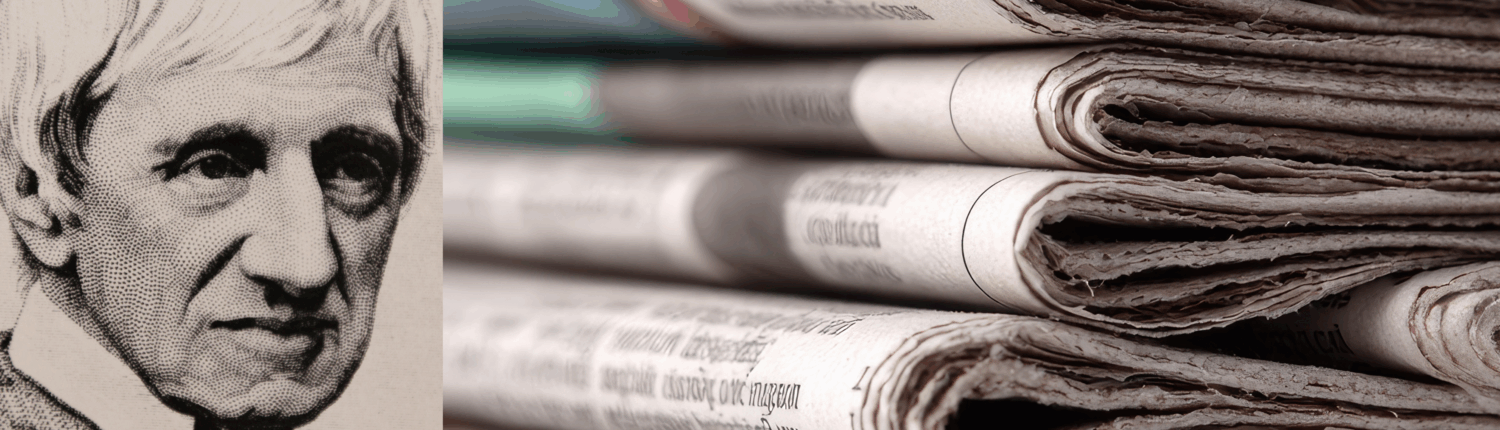
Our patron St. John Henry Newman was a scholar, convert, theologian, priest, and cardinal—but through it all, he was an educator. Cor ad cor loquitur (“Heart speaks to heart”) was his motto, and he believed strongly that “personal influence” is the best means of teaching the truths of our Catholic faith. He founded the famous Oratory School of Birmingham, England, and his Idea of a University and University Sketches helped define the Catholic university. The Newman Society led the official American pilgrimages to England for Newman’s beatification in 2010 and also attended his canonization in Rome in 2019.
See also: Faith and Reason, Mission and Catholic Identity
Commentary
Video
Rome Reports featured The Cardinal Newman Society’s pilgrimage to Rome for the canonization of St. John Henry Newman. You can read the transcript at RomeReports.com or watch the full video below:
Audio
- Newman Society President Patrick Reilly, Vatican Insider, EWTN Radio, Host Joan Lewis, Interview Part 1, Topics: What inspired Reilly to begin The Cardinal Newman Society and why he chose Cardinal John Henry Newman as a patron for the organization (2019/10/26).
- Newman Society President Patrick Reilly, Vatican Insider, EWTN Radio, Host Joan Lewis, Interview Part 2, Topics: The work, outreach and challenges of The Cardinal Newman Society, the experience of attending Newman’s canonization in Rome, and the importance of Newman today (2019/11/02).
OTHER NEWMAN RESOURCES
Internal Articles
-
The Doctor’s Prescription for a Secular Age – Cardinal Newman Society (Fall 2025 Edition of Our Catholic Mission)
-
Restoring Integrity in Education – Cardinal Newman Society (Fall 2025 Edition of Our Catholic Mission)
- Cultivating the Mind – Cardinal Newman Society (Fall 2025 Edition of Our Catholic Mission)
External Articles
-
The Cardinal Newman Society’s soon-to-be canonized patron (The Arlington Catholic Herald, 2019/10/9)
- How America embraced Newman (The Catholic Herald, 2019/9/19)
POPE STATEMENTS ON NEWMAN
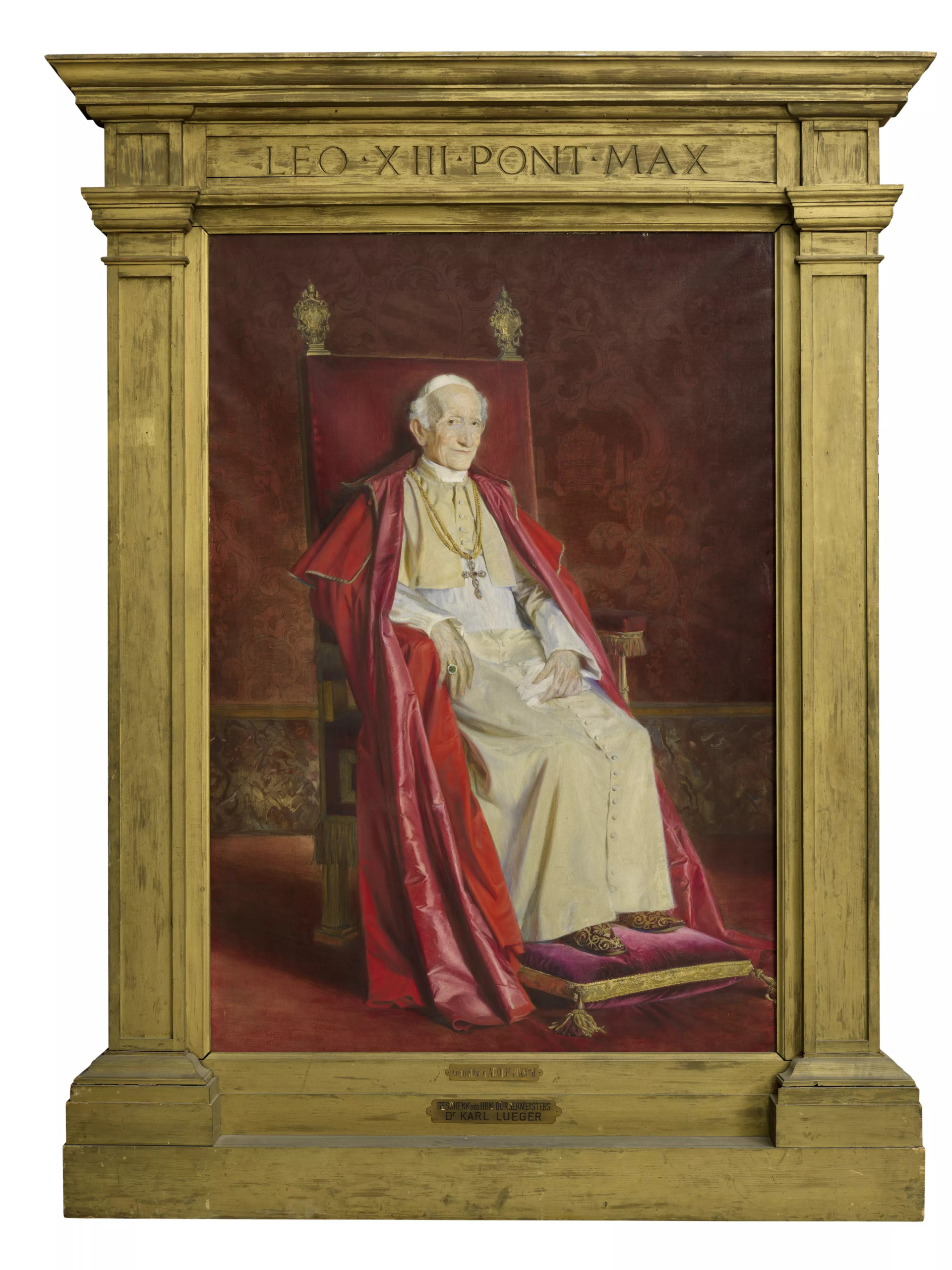
“Il mio cardinale” [my cardinal].
Pope Leo XIII, who elevated Cardinal John Henry Newman in 1879
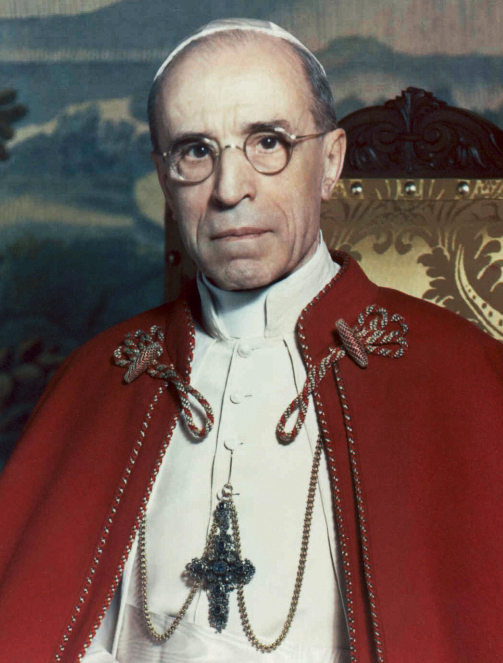
“…John Henry Newman, the pride of Britain and of the universal Church, came to harbor after his long voyage in search of Catholic truth. With anxious and loving care he had sought it; with ready assent he acknowledged at last the warning accents of the Divine Voice. …He ‘gave up his whole life to the truth’ (Juvenal, Satires iv. 91); all his efforts, all his untiring labors, were dedicated to that end. …He held to it ever afterwards with unshaken consistency, made it the guiding principle of his whole life, found in it, as in nothing else, full contentment of mind.”
Pope Pius XII, letter to the Archbishop of Westminster for the Newman Centenary, 1945
“He who was convinced of being faithful throughout his life, with all his heart devoted to the light of truth, today becomes an ever brighter beacon for all who are seeking an informed orientation and sure guidance amid the uncertainties of the modern world—a world which he himself prophetically foresaw. …the present time can be considered in a special way as Newman’s hour, in which, with confidence in divine providence, he placed his great hopes and expectations… And it is precisely the present moment that suggests, in a particularly pressing and persuasive way, the study and diffusion of Newman’s thought.”
Pope Saint Paul VI, Address to Newman Symposium, 1975
“The profound change that disturbs the world and the Church and whose effects we experience more and more every day make our contact with Newman’s thought ever more precious. This thinking was deeply grounded in the faith and, at the same time, was in close harmony with the best of the demands of intelligence and modern feelings. Like St. Augustine, Newman knew what it cost in suffering to discover the full truth. He recalls to our mind that the search for the truth is an irresistible need of the human spirit and that “to discover the truth, it is indispensable to seek it with a great seriousness of purpose”. Confident in the intelligence of man and in the action of grace which penetrates it from within, Newman invites us to deepen our understanding of the faith with serenity, and to foster the development of conscience strengthened by the Holy Spirit, in fidelity to the Gospel, after the example of the Virgin Mary. …With Newman, may we advance in the Church with the same love for the truth, the same keen sense of God, the same prudent spiritual discernment, the same familiar piety of the invisible world, the same profound taste for the spiritual, ex umbris et imaginibus in veritatem.”
Pope Saint Paul VI, “The Wealth of Cardinal Newman’s Thought,” 1970
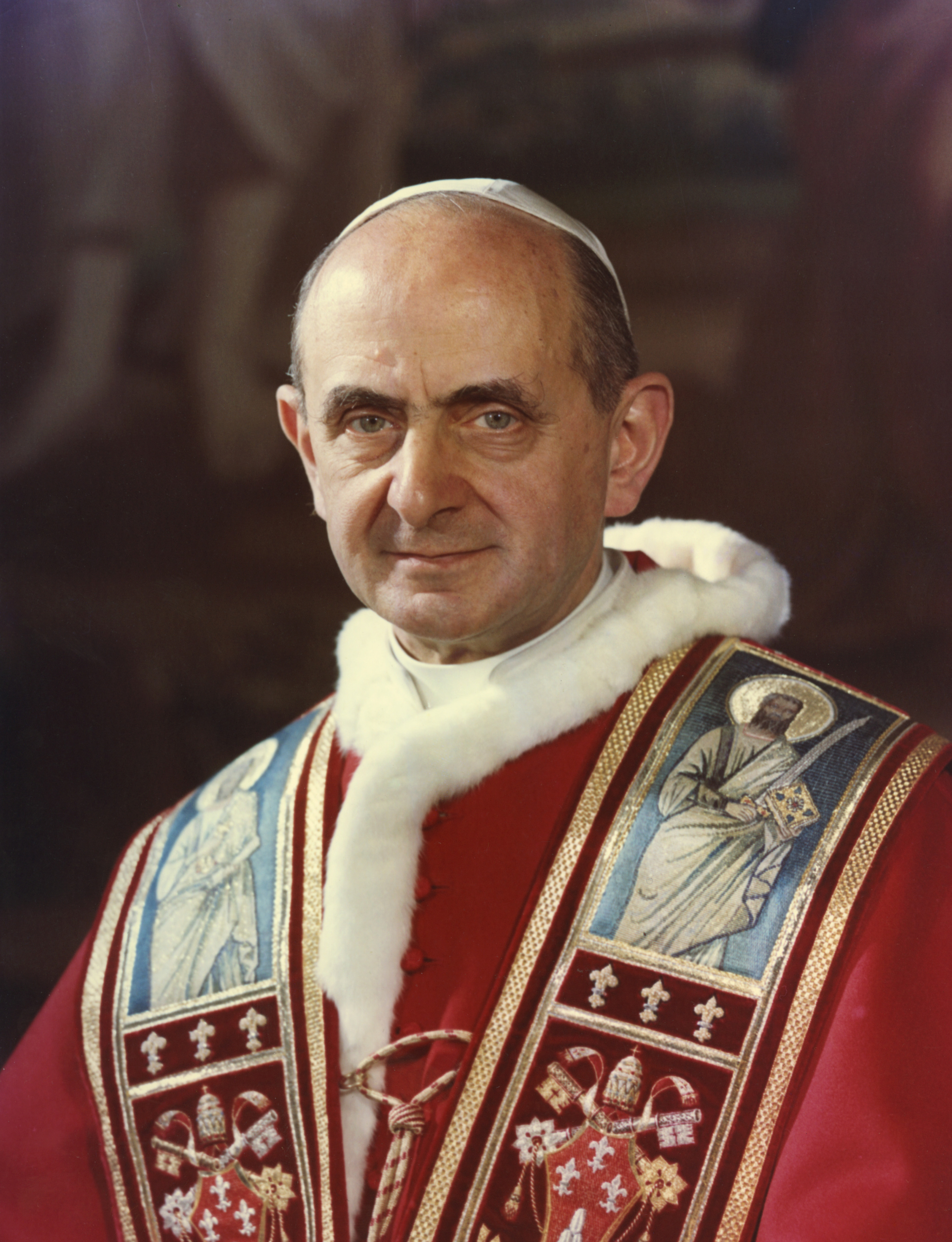
“We see the same fruitful relationship between philosophy and the word of God in the courageous research pursued by more recent thinkers, among whom I gladly mention, in a Western context, figures such as John Henry Newman… attention to the spiritual journey of these masters can only give greater momentum to both the search for truth and the effort to apply the results of that search to the service of humanity.”
Pope Saint John Paul II, Fides et Ratio, 1988
“Newman’s long life shows him to have been an ardent disciple of truth. …In periods of trial and suffering he persevered with confidence, knowing that time was on the side of truth. Newman’s quest for the truth led him to search for a voice that would speak to him the authority of the living Christ. His example holds a lasting appeal for all sincere scholars and disciples of truth. He urges them to keep asking the deeper, more basic questions about the meaning of life and of all human history; not to be content with a partial response to the great mystery that is man himself; to have the intellectual honesty and moral courage to accept the light of truth, no matter what personal sacrifice it may involve. Above all, Newman is a magnificent guide for all those who perceive that the key, the focal point and the goal of all human history is to be found in Christ and in union with him in that community of faith, hope and charity, which is his holy Church, through which he communicates truth and grace to all.
“One of Cardinal Newman’s lasting merits, in fact, is his struggle to make clear and uphold the vital principle that revealed religion, with its content of doctrine and morals, is the bearer of objective truths which can be known with certitude and assented to with joy and ease. …It was characteristic of him to be firmly faithful to the truth once grasped, while being always ready to develop and deepen his understanding of the deposit of faith. It might be added, moreover, that he combined fidelity to the truth with an attitude of respect and receptivity to the ideas and testimony of those with whom he disagreed.
“…It is my fervent hope that the present Centenary year will occasion in the minds of many people who thirst for truth and genuine freedom a renewed awareness of the lessons to be gained from the life and writings of this outstanding Englishman, priest and cardinal. A man of such consistent loyalty and sincerity could not fail to inspire and draw many others towards the ideal he faithfully served. …Down to the present day, Newman remains for many a point of reference in a troubled world. They look to him as a man of great natural talent who put every ounce of it at the service of God and the Church. His remarkable life, void of sham and ambition, but steeped in a prayerful communion with the Unseen, while it remained alive to the problems of his age in Church and society, continues to inspire, to uplift and to enlighten.”
Pope Saint John Paul II, Letter to Archbishop of Birmingham on First Centenary of Death of John Henry Newman, 1990
“Newman came eventually to a remarkable synthesis of faith and reason which were for him “like two wings on which the human spirit rises to the contemplation of the truth”. It was the passionate contemplation of truth which also led him to a liberating acceptance of the authority which has its roots in Christ, and to the sense of the supernatural which opens the human mind and heart to the full range of possibilities revealed in Christ. “Lead kindly light amid the encircling gloom, lead Thou me on”, Newman wrote in The Pillar of the Cloud; and for him Christ was the light at the heart of every kind of darkness. For his tomb he chose the inscription: Ex umbris et imaginibus in veritatem; and it was clear at the end of his life’s journey that Christ was the truth he had found.”
Pope Saint John Paul II, Letter on Second Centenary of Birth of Cardinal John Henry Newman, 2001

“The characteristic of the great Doctor of the Church, it seems to me, is that he teaches not only through his thought and speech but also by his life, because within him, thought and life are interpenetrated and defined. If this is so, then Newman belongs to the great teachers of the Church, because he both touches our hearts and enlightens our thinking.”
Pope Benedict XVI (while Cardinal Joseph Ratzinger), Presentation on First Centenary of Death of John Henry Newman, 1990

“Saint John Henry Newman took as his motto the phrase Cor ad cor loquitur, since, beyond all our thoughts and ideas, the Lord saves us by speaking to our hearts from his Sacred Heart. This realization led him, the distinguished intellectual, to recognize that his deepest encounter with himself and with the Lord came not from his reading or reflection, but from his prayerful dialogue, heart to heart, with Christ, alive and present. It was in the Eucharist that Newman encountered the living heart of Jesus, capable of setting us free, giving meaning to each moment of our lives, and bestowing true peace.”
Pope Francis, Dilexit Nos, 2024
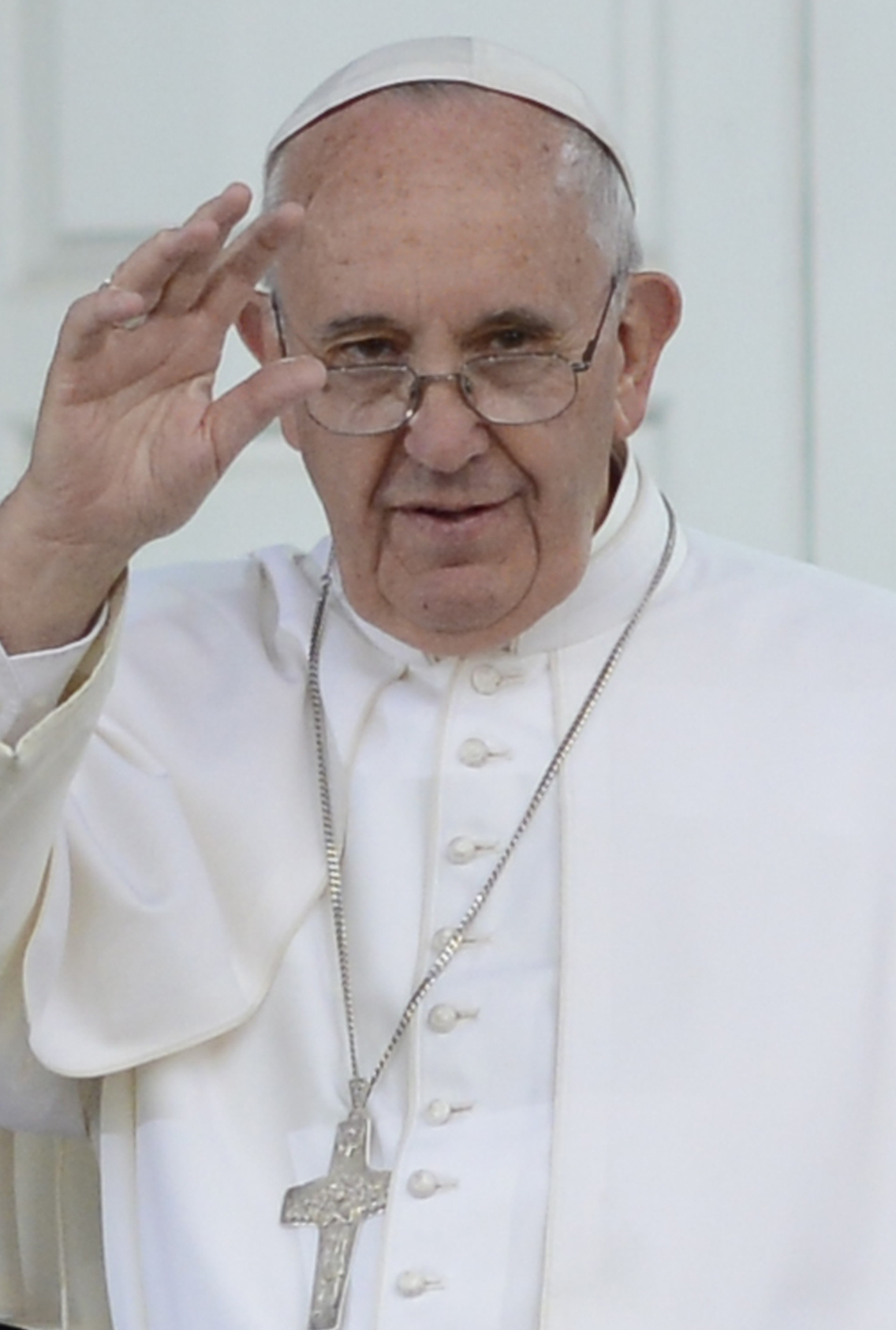
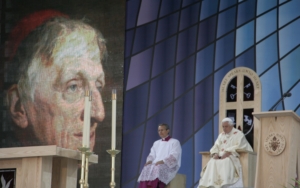
Homily of Pope Benedict XVI at Newman’s Beatification
September 19, 2010
…England has a long tradition of martyr saints, whose courageous witness has sustained and inspired the Catholic community here for centuries. Yet it is right and fitting that we should recognize today the holiness of a confessor, a son of this nation who, while not called to shed his blood for the Lord, nevertheless bore eloquent witness to him in the course of a long life devoted to the priestly ministry, and especially to preaching, teaching, and writing.
…Cardinal Newman’s motto, Cor ad cor loquitur, or “Heart speaks unto heart”, gives us an insight into his understanding of the Christian life as a call to holiness, experienced as the profound desire of the human heart to enter into intimate communion with the Heart of God. He reminds us that faithfulness to prayer gradually transforms us into the divine likeness.
As he wrote in one of his many fine sermons, “a habit of prayer, the practice of turning to God and the unseen world in every season, in every place, in every emergency—prayer, I say, has what may be called a natural effect in spiritualizing and elevating the soul. A man is no longer what he was before; gradually… he has imbibed a new set of ideas, and become imbued with fresh principles” (Parochial and Plain Sermons, iv, 230-231).
Today’s Gospel tells us that no one can be the servant of two masters (cf. Lk 16:13), and Blessed John Henry’s teaching on prayer explains how the faithful Christian is definitively taken into the service of the one true Master, who alone has a claim to our unconditional devotion (cf. Mt 23:10). Newman helps us to understand what this means for our daily lives: he tells us that our divine Master has assigned a specific task to each one of us, a “definite service”, committed uniquely to every single person:
“I have my mission”, he wrote, “I am a link in a chain, a bond of connexion between persons. He has not created me for naught. I shall do good, I shall do his work; I shall be an angel of peace, a preacher of truth in my own place … if I do but keep his commandments and serve him in my calling” (Meditations and Devotions, 301-2).
The definite service to which Blessed John Henry was called involved applying his keen intellect and his prolific pen to many of the most pressing “subjects of the day”. His insights into the relationship between faith and reason, into the vital place of revealed religion in civilized society, and into the need for a broadly-based and wide-ranging approach to education were not only of profound importance for Victorian England, but continue today to inspire and enlighten many all over the world.
I would like to pay particular tribute to his vision for education, which has done so much to shape the ethos that is the driving force behind Catholic schools and colleges today. Firmly opposed to any reductive or utilitarian approach, he sought to achieve an educational environment in which intellectual training, moral discipline and religious commitment would come together. The project to found a Catholic University in Ireland provided him with an opportunity to develop his ideas on the subject, and the collection of discourses that he published as The Idea of a University holds up an ideal from which all those engaged in academic formation can continue to learn.
And indeed, what better goal could teachers of religion set themselves than Blessed John Henry’s famous appeal for an intelligent, well-instructed laity: “I want a laity, not arrogant, not rash in speech, not disputatious, but men who know their religion, who enter into it, who know just where they stand, who know what they hold and what they do not, who know their creed so well that they can give an account of it, who know so much of history that they can defend it” (The Present Position of Catholics in England, ix, 390).
On this day when the author of those words is raised to the altars, I pray that, through his intercession and example, all who are engaged in the task of teaching and catechesis will be inspired to greater effort by the vision he so clearly sets before us.
While it is John Henry Newman’s intellectual legacy that has understandably received most attention in the vast literature devoted to his life and work, I prefer on this occasion to conclude with a brief reflection on his life as a priest, a pastor of souls.
The warmth and humanity underlying his appreciation of the pastoral ministry is beautifully expressed in another of his famous sermons: “Had Angels been your priests, my brethren, they could not have condoled with you, sympathized with you, have had compassion on you, felt tenderly for you, and made allowances for you, as we can; they could not have been your patterns and guides, and have led you on from your old selves into a new life, as they can who come from the midst of you” (“Men, not Angels: the Priests of the Gospel”, Discourses to Mixed Congregations, 3).
He lived out that profoundly human vision of priestly ministry in his devoted care for the people of Birmingham during the years that he spent at the Oratory he founded, visiting the sick and the poor, comforting the bereaved, caring for those in prison. No wonder that on his death so many thousands of people lined the local streets as his body was taken to its place of burial not half a mile from here.
One hundred and twenty years later, great crowds have assembled once again to rejoice in the Church’s solemn recognition of the outstanding holiness of this much-loved father of souls. What better way to express the joy of this moment than by turning to our heavenly Father in heartfelt thanksgiving, praying in the words that Blessed John Henry Newman placed on the lips of the choirs of angels in heaven:
Praise to the Holiest in the height
And in the depth be praise;
In all his words most wonderful,
Most sure in all his ways!
—The Dream of Gerontius