The 2020-21 academic year was challenging for colleges across the country, due to the COVID-19 pandemic. Belmont Abbey College in Belmont, N.C., which is recommended in The Newman Guide for faithful Catholic education, made the decision to “trust completely… in Divine Providence” and be “prudent” in decision making.
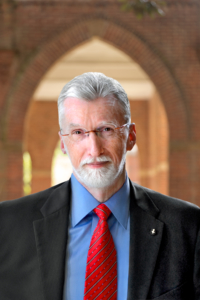
Dr. Bill Thierfelder
The Newman Society recently asked Dr. Bill Thierfelder, president of Belmont Abbey, about the college’s Catholic identity, how it influenced the decisions that were made this year, and how it will continue to impact the College in the years ahead.
Newman Society: While many Catholic and public colleges opted for online learning this fall, why did Belmont Abbey College decide to move forward with in-person learning? How did the Benedictine hallmark of “community” influence this decision?
Dr. Thierfelder: The reason we committed to returning to in-person learning in August of 2020 was grounded in our Catholic belief in the Real Presence of Jesus Christ in the Eucharist and our call to emulate Him by sharing our real presence with others. As a Catholic college, we believe in educating and forming the whole person in mind, body and soul. It is far from the secularistic and materialistic philosophy of simply exchanging or sharing information. Although technology can be a useful adjunct or tool to enhance learning, it can never be a substitute for real presence.
Newman Society: Belmont Abbey’s return to campus included practical measures to help prevent and slow the spread of the virus on campus, including quarantining and isolating students as needed. But what role did trusting in God play in the plans?
Dr. Thierfelder: Jesus, I trust in You! At Belmont Abbey College, we trust completely and absolutely in God’s Divine Providence and, at the same time, we realize our obligation and desire to fully cooperate with His grace that is raining down on us. Giving our 100 percent requires being prudent in all that we do. Jesus makes clear in the parable of the talents (Mt. 25:14-30) that we are called to double the talents that He has given to us.
Newman Society: How did Belmont Abbey lean on the monks and their prayers during this time?
Dr. Thierfelder: The 1,500-year Benedictine monastic tradition that helped build and preserve Western Civilization is foundational to our community. Belmont Abbey College is their apostolate. It is their ora et labora. Every day, seven days a week, 365 days a year, for their entire lives, they are praying throughout the day, offering Mass, confession and spiritual direction to our students, faculty and staff. The Monastic community’s stability, peace and life of welcoming every person as Christ, in persona Christi, is ever present. The Monks continually remind us that Mary, Help of Christians, the Abbey’s Patroness, continually surrounds us with her mantle of protection.
Newman Society: What do you think Belmont Abbey’s leadership during this unusual time says about the College to prospective students?
Dr. Thierfelder: Be not afraid! We are people of faith, hope and love. Belmont Abbey has survived two world wars, the Spanish flu, the Great Depression and so much more, and we are confident that by the grace of God, and our cooperation with it, we will overcome every challenge including COVID-19.
Newman Society: How do you expect the College’s strong Catholic identity to shine in the weeks and years ahead?
Dr. Thierfelder: Our strategic plan, BAC2030 Love in Truth, has three goals. The first is to secure financial freedom and eliminate dependence on federal funding, through strategic institutional growth in development, enrollment, retention, academic entrepreneurship and brand recognition. The second is to be active contributors to, and influencers of, culture, society and education by contributing to the common good and evangelizing through faith, reason, excellence and virtue. And third is to prepare students to seek the good, the true and the beautiful. Guided to live lives rooted in objective truth and animated by authentic love, they will come to know their purpose in life and the true meaning of friendship, professional success and love of God, family and country.
Through objective truth and authentic love, we will melt hearts, enlighten minds and win souls so that the world and each one of us becomes what God is calling us to be!


Statement from the Cardinal Newman Society on amicus brief in Maxon v Fuller Theological Seminary
/in Blog Latest, Statements and Press Releases/by Cardinal Newman Society StaffThe Cardinal Newman Society joined an amicus brief at the U.S. Court of Appeals for the Ninth Circuit in the case Maxon v Fuller Theological Seminary, urging the court to protect the seminary’s right to set religious and moral standards for its students and members, regardless of the Biden administration’s interpretation of Title IX as applying to homosexuality and gender identity.
The plaintiffs, two students who were expelled for violating the seminary’s rules against same-sex unions, argue that the religious exemption in Title IX should not protect a nondenominational and independent religious institution.
“It is dangerous and un-American to deny a share in religious freedom for nondenominational and independent religious institutions,” said Patrick Reilly, president of The Cardinal Newman Society. “Such a policy would unconstitutionally discriminate against many of America’s religious schools and colleges, including those Catholic schools and colleges that are faithful to their beliefs but legally independent of the Catholic Church.”
The brief, which the Newman Society joined with the Christian Legal Society and other religious organizations, schools, and colleges, calls on the Ninth Circuit court to recognize that an independent institution controlled by a board of trustees with deeply held religious convictions and a religious mission is “controlled by a religious organization” for the purposes of the Title IX exemption.
The Cardinal Newman Society recognizes faithful Catholic schools and colleges and invited several to join the brief, including Belmont Abbey College (N.C.), Benedictine College (Kan.), Franciscan University of Steubenville (Ohio), Lumen Christi High School (Ind.), Marian High School (Ind.), the Regina Academies (Penn.), and Thomas More College of Liberal Arts (N.H.).
Other signers represent a variety of beliefs, including the American Association of Christian Schools, Association for Biblical Higher Education, Association of Christian Schools International, General Conference of Seventh-Day Adventists, Jewish Coalition for Religious Liberty, and Lutheran Church-Missouri Synod.
Read the brief here
CNS Joins Amicus Brief Upholding Title IX Religious Exemption – Maxon v Fuller Theological Seminary, 9th Circuit
/in Blog Amicus Briefs, Public Policy and Legal (General)/by Cardinal Newman Society StaffThe Cardinal Newman Society joined an amicus brief at the U.S. Court of Appeals for the Ninth Circuit in the case Maxon v Fuller Theological Seminary, urging the court to protect the seminary’s right to set religious and moral standards for its students and members, regardless of the Biden administration’s interpretation of Title IX as applying to homosexuality and gender identity.
Newman Society Statement on Supreme Court Decision in Fulton v. Philadelphia
/in Blog Latest, Statements and Press Releases/by Cardinal Newman Society StaffThe Cardinal Newman Society is heartened by the U.S. Supreme Court’s landmark religious freedom ruling today in Fulton v. City of Philadelphia, including the protection it provides for Catholic education. The Court’s ruling echoes the central theme of Hosanna-Tabor, that no religious organization forfeits its First Amendment rights by engaging in a public service. The Biden administration must immediately end its assault on religious freedom and allow the free and faithful practice of religion that our Founders envisioned.
Procedure and Checklist for the Evaluation and Use of Secular Materials and Programs in Catholic Education
/in Academics Curriculum, Policy Standards and Guidance/by Cardinal Newman Society StaffInstruction in Catholic education should not be driven by any particular text or program, but rather by rich and comprehensive standards that are informed by Catholic priorities. Resources such as the Catholic Curriculum Standards and Standards for Christian Anthropology can assist in this effort.
With proper standards in place, the first goal should be to seek out excellent Catholic programs and materials to aid in instruction. Should these not exist, or if available Catholic programs and materials are found insufficient, secular programs might be considered but should be carefully evaluated for their congruence with the mission of Catholic education. The following checklist, derived from The Cardinal Newman Society’s Policy Standards on Secular Academic Materials and Programs in Catholic Education, may be helpful.
Keep in mind that all secular programs, no matter how effective, will need to be supplemented with materials that present a Catholic worldview and understanding of the subject at hand.
Procedure for Considering the Use of Secular Materials and Programs
Checklist for Evaluating the Use of Secular Materials and Programs
- If the materials explicitly and positively raise challenges in this area, reject the program.
- If the materials only tangentially or in a minor way raise challenges in this area, heavily supplement with Catholic instruction and provide teacher training.
- If the materials subtly and in a minor way raise challenges to a Catholic understanding, either through omission or unevaluated assumptions, supplement with Catholic instruction or eliminate the particular area of concern.
If all responses are “No,” the program is a possibly valid resource. Regardless, it still should be supplemented with instruction to provide for a Catholic understanding of the subject at hand.Why Critical Race Theory is Contrary to Catholic Education
/in Blog Commentary, Critical Race Theory Latest/by Dr. Denise Donohue Ed.D.Catholic education offers a truthful and morally sound framework for considering issues of race, human dignity, and social justice. Yet cultural norms, historical developments, commonplace and novel assumptions, and associated passions all have some influence over Catholic education—sometimes for the good, but often distorting and even contradicting sound Catholic teaching. The human condition and social inequities and injustices can and should be addressed in Catholic education, with confidence in the Church’s wisdom and the ability of societies to respectfully unify around racial and cultural differences. In times of heightened concern and emotion, it is necessary that Catholic education inform and guide students’ understanding with great caution against divisive ideological and political influences.
Today emotional and heated discussions and protests focused on race seem to fill social media, endless news cycles, and opinion journalism. Concepts including “wokeness,” “intersectionality,” and “systemic racism” may be explicitly advocated or implicitly underlie conversation and classroom teaching. Terms such as “racist,” “hate,” “intolerance,” and “oppression” belong to the conversation, but they can at times be harmfully wielded as hasty moral judgments and powerful rhetorical weapons.
Continue reading at the Catholic World Report…
After a Tough Year, Catholic College Graduations Celebrate Blessings
/in Blog Commentary, Speakers and Honors Latest/by Patrick ReillyNothing has been typical about this spring’s commencement ceremonies at Catholic colleges. Many of the ceremonies are socially distanced, outdoors, or even online. But the limitations are unlikely to dampen excitement about the distinctive achievements of the Class of 2021, who endured more than a year of COVID-19, financial struggles, and safety precautions to get to this moment.
There is also extraordinary relief about the continued vitality of Catholic higher education: every Catholic college in America survived the 2020-21 school year, and enrollment numbers at many of the most faithful Catholic colleges are looking quite good.
It’s also a welcome surprise that—according to The Cardinal Newman Society’s preliminary review of commencement speakers and honorees, with some colleges late in reporting their plans as of mid-May and others foregoing the typical celebrity pomp—there seems to be a reduced appetite for honoring public opponents of the Church’s teaching on abortion, marriage, sexuality, and other moral issues. This has been a sad trend over the past few decades at many Catholic colleges, which have largely secularized.
Continue reading at Crisis Magazine…
The Remedy for “Canceling” and Division: Catholic Education
/in Blog Commentary, Critical Race Theory Latest/by Dr. Dan GuernseyIn the present moment, much of the popular culture is taken up with concerns about race, gender, and equity. But these questions are unfortunately complicated by radical ideologies and an intolerant “cancel culture,” a type of religion that separates the woke from the un-woke, the privileged from the oppressed.
The cancel culture surrounds us and now threatens to infect Catholic schools, colleges, and homeschooling. But we should not yield to it.
Authentic Catholic education does not cancel culture; it elevates, redeems, and transmits culture. It seeks out and celebrates truth, beauty, and goodness, wherever they are found – and if they are missing, Catholic education points that out as well. The transcendentals are not bound by culture, time, race, or gender. They do not flourish equally at all times, among all members of all cultures, but can always be celebrated in God’s Creation and the best human works.
Continue reading at The Catholic Thing…
Benedictine College Raises the Bar in Fight Against Porn Addiction
/in Blog Latest, Newman Guide Articles, PR Register Column/by Patrick ReillyStudents at The Catholic University of America in Washington, D.C., made national headlines in 2019, when they petitioned the university to block pornographic websites on the campus Wi-Fi network. The university administration readily agreed, joining the growing number of faithful Catholic colleges that realize just how damaging pornography use is for students and therefore block pornography on their campus networks.
But in the past year, the social isolation wrought by the COVID-19 pandemic has only solidified the place pornography websites hold as among the most trafficked in the world, reminding even the most devout Catholic institutions that this evil is more rampant now than it has ever been.
A thousand miles to the west of D.C., at Benedictine College in Atchison, Kansas, administrators have embraced a much broader approach to tackling this crisis of health and virtue, driven by the knowledge that “personnel is policy.” Instead of simply blocking websites, the college has developed a multi-pronged approach to tackling the issue, providing a model for other Catholic institutions to follow.
In an ever-changing digital and social media landscape, leaders at Benedictine understand that the social and personal ills from pornography consumption will never be fully quashed, especially since most students have been exposed or addicted prior to attending college. Benedictine has developed a robust support system designed to help students struggling with pornography and sex addiction, while also encouraging healthy social behaviors that limit the opportunities to slip into temptation.
And while these policies have been effective and have proved immensely beneficial to the student body, Benedictine’s dean of student life, Joseph Wurtz, says they would be nothing without the right staff implementing them.
“Having the right people who can interpret … policies and create the right culture is critically important to maintaining the Catholic identity of an institution,” Wurtz said. “This does not diminish the need for sound policy. As administrators committed to Catholic identity, we should have clear and unambiguous polices that support the Church’s teachings — intellectual, moral and social.”
The “hiring and promotion of personnel who ‘strive to live a life of virtue guided by the teachings of the Catholic Church’ must be one of the highest institutional priorities,” Wurtz said, citing The Cardinal Newman Society’s recommended Human Sexuality Policies. “Culture is most effectively transmitted by people. To the degree Catholic institutions can attract personnel who themselves are committed to creating a strong Catholic culture, and model it joyfully, then good policy can be generated and successfully implemented.”
The Newman Society last year highlighted the efforts of Benedictine College and other faithful Catholic colleges in a report that offered a blueprint for combatting pornography on campus. For Benedictine, the effort began two years ago with a committee of religious leaders, campus staff and counselors who were tasked with establishing a strategy to combat pornography use among the student body.
Benedictine’s approach follows extensive research showing that, in order to overcome addiction and dependency, students greatly benefit from group therapy, an accountability partner and counseling.
Benedictine has both a male and a female counselor trained in pornography and sex addiction at the campus counseling center. It hosts a presentation on the topic at least once a semester, and single-sex group therapy is available, with tailored approaches to men and women.
Encouraging healthy and chaste behaviors, establishing an emotional and spiritual support system, and developing healing programs are all essential tools in the fight against pornography addiction in a world that promotes it. Benedictine College’s embrace of these tools — in addition to regular access to the sacraments, especially confession — has yielded positive results.
Catholic colleges would do well to emulate Benedictine’s approach to promoting virtue, healing and forgiveness. It is precisely this sort of Christian communion that Catholic families seek in authentic Catholic education.
This article first appeared at the National Catholic Register.
Challenges to Religious Exemption in Title IX
/in Mission and Governance Public Policy and Legal (General), Research and Analysis/by Patrick ReillyThe Cardinal Newman Society hosted a webinar on April 29, 2021, for selected Catholic college leaders, in which Gregory Baylor, senior counsel and director of the Center for Religious Schools at Alliance Defending Freedom, provided an update on challenges to the religious exemption in Title IX of the Education Amendments of 1972.
The following summarizes the Newman Society’s understanding of what we learned from this webinar and other sources. Educators should consult their attorneys for professional legal advice.
Title IX and Religious Exemption
Title IX is a federal civil rights law that bans sex discrimination in “any education program or activity receiving Federal financial assistance,” including aid to students. The law exempts religious organizations, to the extent that the “application” of the law conflicts with their religious beliefs.
The exemption states, “this section shall not apply to an educational institution which is controlled by a religious organization if the application of this subsection would not be consistent with the religious tenets of such organization.”
Equality Act
The Equality Act (H.R.5) was approved by the U.S. House and has been sent to the Senate. In his speech to Congress on April 28, President Biden urged passage. The bill would effectively bypass the religious exemption in Title IX by allowing students and employees to file sex discrimination lawsuits against Catholic schools and colleges under Title VI, which regulates all recipients of federal funding and has no religious exemption. The bill would also:
Current and former students from 25 Christian and Mormon colleges (none Catholic) have sued the U.S. Education Department in federal court, claiming that the religious exemption in Title IX is unconstitutional. 1) It violates the Establishment Clause by giving preference to religious institutions. 2) It violates the Equal Protection Clause of the 14th Amendment by allowing federal funding for institutions that discriminate based on “sexual orientation and gender identity.” The second claim rests on precedent barring funds for institutions that practice racial discrimination.
Alliance Defending Freedom is representing three Christian colleges that have moved to intervene in the case to ensure a strong defense of Title IX. The concern is that the Biden administration will provide a weak defense, readily agree to a settlement, or even decline to defend the law.
Maxon v. Fuller Theological Seminary
Fuller Theological Seminary is a multidenominational Christian seminary with campuses in Pasadena, Houston, and Phoenix. Two students who were expelled for violating the seminary’s rules against same-sex marriage and extramarital sexual activity sued the seminary, but in October 2020 a U.S. district court dismissed the case. It has been appealed to the U.S. Court of Appeals for the Ninth Circuit. Among other claims, the plaintiffs are asking the court to rule that the religious exemption in Title IX does not apply to independent and nondenominational institutions that are not legally controlled by an established church. The Cardinal Newman Society and several Catholic colleges will be joining an amicus brief that argues for the exemption.
Challenges to Religious Exemption in Title IX
Efforts to dismantle or undermine the Title IX exemption focus on three key areas:
Recommendations:
Catholic Identity Standards Project: The Newman Society is working on policy standards to help Catholic schools and colleges stay firmly grounded in Catholic identity while establishing the best protection against legal threats. This work depends on the assistance of a large number of expert reviewers. If you would like to assist, please contact the Newman Society.
Belmont Abbey College Exhibits ‘Faith, Hope and Love’ During Unusual Year
/in Blog Newman Guide Articles/by Cardinal Newman Society StaffThe 2020-21 academic year was challenging for colleges across the country, due to the COVID-19 pandemic. Belmont Abbey College in Belmont, N.C., which is recommended in The Newman Guide for faithful Catholic education, made the decision to “trust completely… in Divine Providence” and be “prudent” in decision making.
Dr. Bill Thierfelder
The Newman Society recently asked Dr. Bill Thierfelder, president of Belmont Abbey, about the college’s Catholic identity, how it influenced the decisions that were made this year, and how it will continue to impact the College in the years ahead.
Newman Society: While many Catholic and public colleges opted for online learning this fall, why did Belmont Abbey College decide to move forward with in-person learning? How did the Benedictine hallmark of “community” influence this decision?
Dr. Thierfelder: The reason we committed to returning to in-person learning in August of 2020 was grounded in our Catholic belief in the Real Presence of Jesus Christ in the Eucharist and our call to emulate Him by sharing our real presence with others. As a Catholic college, we believe in educating and forming the whole person in mind, body and soul. It is far from the secularistic and materialistic philosophy of simply exchanging or sharing information. Although technology can be a useful adjunct or tool to enhance learning, it can never be a substitute for real presence.
Newman Society: Belmont Abbey’s return to campus included practical measures to help prevent and slow the spread of the virus on campus, including quarantining and isolating students as needed. But what role did trusting in God play in the plans?
Dr. Thierfelder: Jesus, I trust in You! At Belmont Abbey College, we trust completely and absolutely in God’s Divine Providence and, at the same time, we realize our obligation and desire to fully cooperate with His grace that is raining down on us. Giving our 100 percent requires being prudent in all that we do. Jesus makes clear in the parable of the talents (Mt. 25:14-30) that we are called to double the talents that He has given to us.
Newman Society: How did Belmont Abbey lean on the monks and their prayers during this time?
Dr. Thierfelder: The 1,500-year Benedictine monastic tradition that helped build and preserve Western Civilization is foundational to our community. Belmont Abbey College is their apostolate. It is their ora et labora. Every day, seven days a week, 365 days a year, for their entire lives, they are praying throughout the day, offering Mass, confession and spiritual direction to our students, faculty and staff. The Monastic community’s stability, peace and life of welcoming every person as Christ, in persona Christi, is ever present. The Monks continually remind us that Mary, Help of Christians, the Abbey’s Patroness, continually surrounds us with her mantle of protection.
Newman Society: What do you think Belmont Abbey’s leadership during this unusual time says about the College to prospective students?
Dr. Thierfelder: Be not afraid! We are people of faith, hope and love. Belmont Abbey has survived two world wars, the Spanish flu, the Great Depression and so much more, and we are confident that by the grace of God, and our cooperation with it, we will overcome every challenge including COVID-19.
Newman Society: How do you expect the College’s strong Catholic identity to shine in the weeks and years ahead?
Dr. Thierfelder: Our strategic plan, BAC2030 Love in Truth, has three goals. The first is to secure financial freedom and eliminate dependence on federal funding, through strategic institutional growth in development, enrollment, retention, academic entrepreneurship and brand recognition. The second is to be active contributors to, and influencers of, culture, society and education by contributing to the common good and evangelizing through faith, reason, excellence and virtue. And third is to prepare students to seek the good, the true and the beautiful. Guided to live lives rooted in objective truth and animated by authentic love, they will come to know their purpose in life and the true meaning of friendship, professional success and love of God, family and country.
Through objective truth and authentic love, we will melt hearts, enlighten minds and win souls so that the world and each one of us becomes what God is calling us to be!