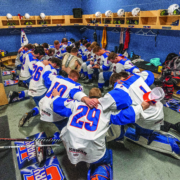
Wyoming Catholic College Graduates Help Others Experience ‘God’s First Book’

For a young adult used to spending time in a classroom or online, encountering God’s grandeur in the mountains of Wyoming can be a profound spiritual experience. Now graduates of Wyoming Catholic College in Lander, Wyo., are sharing what they experienced with others through an exciting outdoor retreat program.

In Sacred Scripture, mountains are often places of prayer and encounters with God. Abraham was called to sacrifice his only son on a mountain—but then had a profound experience of God when He commanded him not to complete the sacrifice. Moses received the Ten Commandments and spoke with God on Mt. Sinai. Elijah heard God’s still, small voice on a mountain. Jesus often went to the mountains to pray by Himself. Throughout the Scriptures, we see again and again how God can be discovered in the wilderness and on the mountaintops.

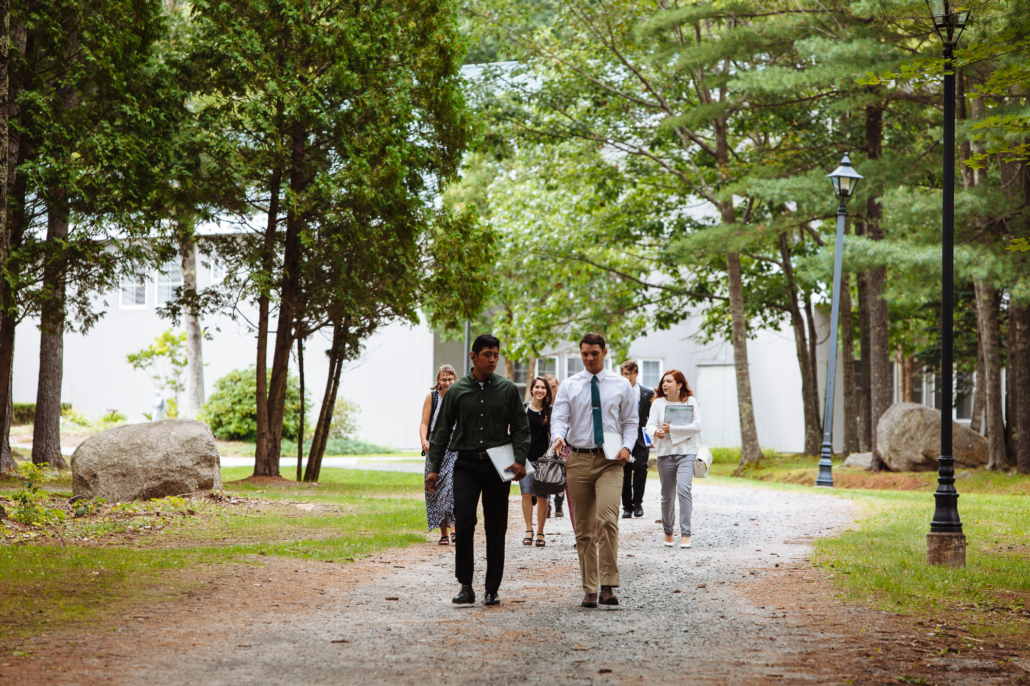
Students at Wyoming Catholic College, which is recommended for its faithful Catholic education in The Newman Guide, encounter God in the wilderness and on the mountaintops through a rigorous outdoor program. Students explore the wilderness, or “God’s First Book,” to find Him and renew their relationship with Him while backpacking, whitewater kayaking and ice climbing. It’s more than just having a good time in the wilderness—it’s about education, communication, preparedness, leadership, and growing closer to God.

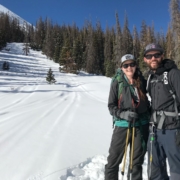
Zachary Carlstrom, who graduated from WCC in 2016, had a profound encounter with God during his 21-day freshman expedition, which is the College’s freshman orientation trip in the Wind River Mountains. Never in his wildest dreams did he think that, years later, he would be operating COR Expeditions (Catholic Outdoor Retreat), which is an outreach of WCC, alongside his wife Sarah, a 2014 graduate. Today, the two are using the education and formation they received at WCC to help others encounter God through nature.

COR “facilitates transformative encounters with Christ through what the wilderness has to offer,” according to the Carlstroms, and gives those who haven’t attended WCC a taste of the College’s outdoor program.

In 2012, a few ministry-focused organizations and seminaries started asking WCC to facilitate trips for them and their students, because they could see the benefits of outdoor education. “We wanted to offer outdoor education in an authentically Catholic way,” Zach explained, because many outdoor programs already in existence are either secular or Protestant.

“As we had more qualified staff from the student population to offer the trips,” he said, “we felt like there was a real need in the Church, and there wasn’t anyone doing that: authentic outdoor trips with professional guidance. We started to offer trips to more and more groups.”

Zach was COR’s first employee in2016. “From there, we’ve doubled the number of trips each year, aside from 2020 during coronavirus,” he said.

For a while, there was some question as to whether COR would stay connected with WCC. Now, it’s been decided that “WCC wants COR forever. We’ve officially been operating as an outreach of WCC since the beginning; we share a mission in the shared values of the Catholic faith through contact with God’s first book.” The benefit of partnering with WCC is that the groups share permits, which means that COR can offer trips in Wyoming, Colorado and Utah. They have also offered custom trips in California, Florida, Texas, Kentucky, Montana, and even abroad in New Zealand, Iceland and Scotland. Front-country leadership trainings are available across the United States.

“We’re bringing the liberal arts and holistic education to others through steeping people in wonder and helping them grow in their spiritual lives from that position of wonder,” Sarah said.

Zach added that COR focuses especially on two types of client. ”We want to help renew the faith of those who are already in the Church, such as religious orders like the CFRs or discipleship groups like FOCUS, and we see COR as a way to engage them more deeply.

“At the same time, we have a big heart for those who haven’t had contact with the Church, or maybe haven’t practiced in a while, and somehow they got onto one of our trips,” he said. “They experience the sacraments in a new way: we’ve had people make first confessions, Rosaries, Adoration. Our mission is unique because we can draw someone in who might not otherwise do a ‘faith based’ activity, but they get excited about a rock climbing, backpacking or rafting trip.”

Their impact so far has been impressive. They have worked with more than 2,500 college students, 350 FOCUS missionaries, 100 seminarians, 30 chaplains, 400 school students, 50 wounded veterans and 100 families. They have nine full-time missionaries who fundraise their salaries.

For both Zach and Sarah, their time at WCC had an undeniable influence on their development of COR. Sarah explained, “There’s the practical component that WCC provided us with our first formal training in the outdoors, beginning to develop those core skills in the outdoor program. I would also say that the opportunities at WCC to develop leadership and to have mentorship in leadership were helpful, such as for me, being a prefect, or for Zach, being involved with the parish’s youth group.”

“From the academic perspective,” she added, “when I graduated from WCC, I felt incredibly blessed with the education that I had received, especially in theology, philosophy and humanities, and because of the appreciation I had for it, it made me strongly desire to share it. When I graduated from the College, I was still among a small number of people who had received that education. There were so many who hadn’t received such an education, and this is why I wanted to work in ministry.”

For Zach, “COR would not have been possible without the mentorship and position that Dr. Zimmer [the College’s outdoor program coordinator] gave me, and the empowerment that the outdoor program gave me. My experiences in the outdoors here opened my eyes to wonder for the first time, and the idea that God can work through His First Book. I never thought that ministry could exist in outdoor programs, that it didn’t need four walls. God could encounter people individually in the wilderness.”

WCC has inspired the entire COR missionary team: “From the communication skills in rhetoric to the leadership from the outdoor program, it astounds me how well we work together as a team, in comparison to some other organizations I’ve worked with,” Zach said. “Some of the simple things we learned here are profoundly new ideas in other places.”

Sarah added, “WCC set an incredible example, especially in the founders, that we feel called by the Church to do this, and we’re going to make it happen, against all odds. That really inspired us. When God asks, we answer. We believe that He will provide.”

“A small group of people can change the world, our ideas matter, our thoughts matter, our passions matter,” Zach said. “The examples we had for those realities were really strong, simply by the College saying that our students will be the leaders of the Church.”

The Carlstroms hope that COR will continue to grow. “Coming to a college that was just getting its feet made starting a ministry not seem as daunting,” they said. “The pioneer spirit of WCC just carried forward in COR, and will only continue to do so.”

Newman Society, Newman Guide Colleges Featured on Ave Maria Radio

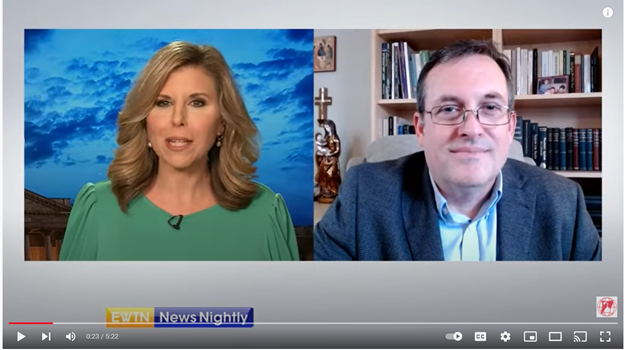
The Cardinal Newman Society recently organized a college fair of sorts with Coleen Kelly Mast, host of the “Mast Appeal” Radio Show on Ave Maria Radio (also syndicated on EWTN).

Newman Society President Patrick Reilly kicked off the discussion with Coleen by explaining why colleges are recommended in The Newman Guide, and the unique value of faithful Catholic higher education.

For the remainder of the two-hour radio show, Coleen interviewed students and recent graduates of Newman Guide colleges about their experiences at the colleges. What amazing things they had to say!

A recording of the show is available and would make a great resource to share with Catholic families who are navigating the college search. Here is the link to the show from December 11, 2021.

Down to the Buzzer, Religious Colleges Score with NCAA

Here’s some great news, just in time for the holy feast of Christmas: At the last moment before approving its new revised constitution, the governing board of the National Collegiate Athletic Association (NCAA) added broad protection for Catholic and other religious colleges to continue participating in the college association.

The NCAA constitution still needs to be ratified by the membership on Jan. 20, but the draft they will be considering is much improved.

Just last week, with the desperate hope that sunlight might help disinfect the NCAA’s diseased constitutional revision process, I went public at the National Catholic Register with concerns raised by faithful Catholic and other Christian colleges. They have been struggling valiantly to defend against an earlier amendment to the NCAA constitution that seemed intended to push out religious colleges with traditional (i.e., truthful and rational) views of sexuality and gender.

By adding deliberately pointed language to its constitution — that colleges must “comply with federal and state laws and local ordinances, including respect to gender equity, diversity and inclusion” — the NCAA appeared to be stacking the deck against religious colleges, at least those colleges that have remained faithful to Christian tradition and have refused to violate the integrity of women’s sports and the sanctity of marriage and sexuality.

This was the result of lobbying by activists including the anti-Catholic Human Rights Campaign, which last month sent a letter to NCAA governors complaining that drafts of the constitution did not explicitly embrace gender ideology. Although the HRC complained about a few state and local laws that prevent biological men from competing in women’s sports, drafters of the NCAA constitution cleverly latched onto the much more extensive push by many states, counties, cities, and even the federal government to force gender ideology on schools and colleges.

Such efforts, of course, violate the First Amendment’s Free Exercise Clause if they interfere with religious colleges’ ability to conform to their religious beliefs, and colleges are likely to prevail in court when they contest violations of their religious freedom. Nevertheless, last week’s draft of the NCAA constitution could have allowed the association to ban Catholic colleges from participation even while they fight in court to preserve their mission.

“The Catholic attempt to use sport toward the integral formation of the human person and to give praise and honor to the Creator is subverted by competing ideologies in the common culture, especially gender ideology,” warns the Cardinal Newman Society’s standards for athletics policies at Catholic schools and colleges. “The issue is bigger than just about sexual politics; Catholic educators must resist gender theories that aim to annihilate the concept of nature and our understanding of who we are and how we exist in the world.”

Faithful Newman Guide colleges including Benedictine College, The Catholic University of America, the University of Mary and Walsh University joined many other religious colleges in urging the NCAA to add another provision to its constitution, ensuring their rights to uphold their religious missions. The effort succeeded, just as the NCAA governors approved the final constitution.

The proposed language from the Council of Christian Colleges and Universities said, “Consistent with the principles of institutional control, nothing herein should be construed to restrict or limit private religious institutions from adopting or maintaining policies consistent with their legal rights as private religious institutions.”

No one in the NCAA should have had a problem with that language. But the “woke” agenda prevented its inclusion in the final draft constitution that was presented to the NCAA governors last week, before the governors apparently decided that losing Catholic colleges as members would be a harmful to the association and patently unfair to religious institutions.

In a surprising and exciting turnaround, the constitution approved by the governors on Thurs., Dec. 16, is very similar to what the religious colleges wanted and should be helpful in protecting their distinctive missions. It includes the language: “Consistent with the principle of institutional control, no provision in this Constitution should be construed to restrict or limit colleges and universities, public or private, from adopting or maintaining missions and policies consistent with their legal rights or obligations as institutions of high learning.”

Deo gratias! We shall see whether the constitution is approved on Jan. 20. But already religious colleges have taken an important step forward, and by their witness they have shown the importance of never giving in to the worst elements of our culture. Faithful Catholic education is worth fighting for, and it was the smaller but most faithful colleges that helped achieve this valuable protection.

This article first appeared at the National Catholic Register.

Will the NCAA Force Out Catholic Colleges?

Athletics has long been an important part of Catholic education in the United States, but trouble is brewing.

Already schools and colleges face social and legal pressure to abandon their Catholic mission and conform to gender ideology by allowing biological males to play on girls’ sports teams and enter locker rooms.

Now, proposed changes to the constitution of the National Collegiate Athletic Association (NCAA) could prevent Catholic colleges from participating in the premier league, unless it takes steps to protect Catholic education’s commitment to truth and religious freedom. At the moment, it seems the NCAA has no intention of doing that.

The hurried effort to update the NCAA constitution — with a vote expected on Jan. 20 — is prompted by legal issues concerning the commercialization of student-athletes, financial disparities among the association’s three divisions and calls for greater institutional autonomy. Still, the process could not avoid the political correctness of our time. The latest draft proposal includes a new provision demanding that colleges “comply with federal and state laws and local ordinances, including respect to gender equity, diversity and inclusion.”

That might seem harmless, to require compliance with the law. But then again, why is there a need to add such a provision, with specific reference to “gender equity, diversity and inclusion”? There is an agenda here that threatens religious institutions.

Pushing out Catholic colleges

Earlier this year, the NCAA Board of Governors updated its policies to allow women to participate on either men’s or women’s teams, based on their self-declared gender. Men may compete on women’s teams if they have completed a year of testosterone suppression treatment. But religious colleges have preserved their autonomy to do what they know is best for their student-athletes.

The NCAA also publicly opposed state and local laws upholding the integrity of women’s athletics, declaring that it “firmly and unequivocally supports the opportunity for transgender student-athletes to compete in college sports.” No law, in fact, excludes students from participating in college sports, but they may be required to compete with others of the same biological sex.

The most dangerous laws go in the other direction. Many states and localities — and more recently, the federal government under the Biden administration — have sought to force religious institutions to adopt gender ideology in direct contradiction to their moral beliefs and understanding of human biology. This is done under the guise of nondiscrimination law.

Faithful Catholic colleges, however, do not truly discriminate against students with gender dysphoria. Instead, they have steadfastly upheld the advances made in women’s sports and have protected students morally and physically from the unreasonable demands of gender ideology, while the secular world endangers girls to satisfy activist demands and undermines hard-won opportunities to compete in sex-specific competitions.

Under federal law, religious institutions currently have some protections — despite recent court case attempting to erase the religious exemption in Title IX, which opposes sex discrimination in education but has been interpreted to mandate certain LGBT policies. The Biden administration supports legislation including the horrendous Equality Act that would unconstitutionally force religious institutions to comply with gender ideology.

If it becomes necessary for Catholic colleges to assert their rights and fight any new law or regulation in court — a law or regulation violating the religious mission of the colleges — how will the NCAA respect its members’ religious freedom? Based on the proposed new amendment to the NCAA constitution, it might be that the NCAA would exclude faithful colleges like Belmont Abbey College, the Catholic University of America and the University of Mary from participation. They could technically be in violation of existing (although clearly unconstitutional) laws.

In states and localities, legal protection for religious freedom is less secure, since the Title IX exemption for religious colleges and the Religious Freedom Restoration Act (RFRA) concern only federal law. Catholic colleges do have recourse to claims under the First Amendment, but fighting state and local laws that threaten religious education takes time, and many courts are not friendly to religious concerns when set against gender ideology.

Again, how will the NCAA treat a Catholic college fighting an unjust state or local law? Will it stand by its members? Instead, it seems the new constitutional provision is intended to push out any college that stands by traditional and natural divisions of the sexes in college sports.

This is the irony of the campaign for LGBT nondiscrimination protections: whereas new laws and private association rules will likely have minimal effect in correcting unjust discrimination — which has never been proven to be a widespread problem for LGBT-identifying Americans — the nation’s majority of religious people will be targeted and subjected to all kinds of legally protected discrimination for maintaining their religious beliefs and truthful policies toward gender and sexuality.

The result is much more discrimination, not less, and the erosion of America’s bedrock principle of religious freedom.

Solution rejected

If the NCAA does not intend such a threat to religious education, there is an easy fix: another amendment that recognizes the distinctive and appropriate needs of religious colleges.

That is precisely what some Catholic colleges, together with the Council of Christian Colleges and Universities, proposed before the latest draft constitution — and yet their request was ignored. The language they suggested was quite simple: “Consistent with the principles of institutional control, nothing herein should be construed to restrict or limit private religious institutions from adopting or maintaining policies consistent with their legal rights as private religious institutions.”

The NCAA’s failure to embrace religious freedom and adopt this simple amendment is a very clear signal that its intentions toward Catholic and other religious colleges are not good. Efforts continue to advocate a religious freedom amendment in the new draft expected around Dec. 15. Without the amendment, NCAA members should reject the new constitution.

Otherwise, faithful Catholic colleges may have no option but to leave the troubled NCAA. What a great tragedy for all concerned, especially the young men and women whose interests are the last priority in the relentless march of ideological extremism.

This article first appeared at the National Catholic Register.
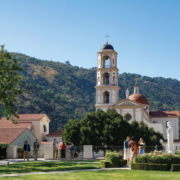
Newman Guide Colleges Increase ‘Recruit Me’ Scholarship to $20,000

Several faithful Catholic colleges recognized by The Cardinal Newman Society have generously chosen to supplement the Society’s “Recruit Me” scholarship, potentially increasing the amount from $5,000 to $20,000 over four years.

The Newman Society’s annual Essay Scholarship Contest rewards a U.S. high school senior with a one-time $5,000 scholarship toward the cost of attending one of the colleges recommended in The Newman Guide. To be eligible, a student must sign up for Recruit Me, a program that invites Newman Guide colleges to compete for promising candidates.

High school seniors can submit their application and essay for the seventh annual Essay Scholarship Contest until February 20, 2023. 

The winner will have the opportunity to be awarded $20,000 over the course of four years. Several of the Newman Guide colleges have agreed to supplement the Newman Society’s scholarship with additional $5,000 grants over three additional years. In order for the scholarship to continue, the student must be enrolled full-time and maintain satisfactory academic progress. Some of the colleges have additional requirements.

The following Newman Guide colleges have opted to supplement the Newman Society scholarship, should a winning student choose to attend their institution:

  • Ave Maria University (Ave Maria, Fla.)
  • Belmont Abbey College (Belmont, N.C.)
  • Benedictine College (Atchison, Kan.)
  • Campion College (Toongabbie East, NSW, Australia)
  • Christendom College (Front Royal, Va.)
  • Franciscan University of Steubenville (Steubenville, Ohio)
  • Holy Angel University (Angeles City, Philippines)
  • Holy Apostles (Cromwell, Conn.)
  • John Paul the Great Catholic University (Escondido, Calif.)
  • Magdalen College of the Liberal Arts (Warner, N.H.)
  • Our Lady Seat of Wisdom College (Barry’s Bay, Ontario, Canada)
  • The Thomas More College of Liberal Arts (Merrimack, N.H.)
  • University of Dallas (Irving, Tex.)
  • University of Mary (Bismarck, N.D.)
  • University of St. Thomas (Houston, Tex.)
  • Wyoming Catholic College (Lander, Wyo.)

The Newman Society’s $5,000 scholarship is made possible by the generosity of Joseph and Ann Guiffre, supporters of the Newman Society and faithful Catholic education. Supporters of the participating Newman Guide colleges have generously provided the funds for the supplemental awards.

The Newman Society encourages Catholic families to tell family and friends about the Essay Scholarship Contest and the value of faithful Catholic education. Questions about the Essay Scholarship Contest can be directed to Programs@CardinalNewmanSociety.org.

Abortion Advocacy, Sex Contests Have No Place in Catholic Education

What kind of lunacy must this be, when the Pope unambiguously calls abortion “murder,” yet a Catholic university hosts a fundraiser to support America’s largest abortion business?

Or when students at a Catholic high school walk out in protest of a pro-life speaker?

Or Catholic college students compete for numbers of sexual conquests?

Catholic education is an expression of the Church’s mission of salvation and an instrument of evangelization: to make disciples of Christ and to teach them to observe all that he has commanded.” If ever the need for a renewal of truth and fidelity in our Catholic education was more obvious, it is certainly clear now.

Faithful alumni of Loyola Marymount University (LMU) in Los Angeles — sponsored by the Jesuits, Marymount Sisters, and Sisters of St. Joseph in Orange — are urging signatures on a petition protesting a university-hosted fundraiser for the abortion giant Planned Parenthood scheduled for this Friday, Nov. 5. It is sponsored by a student group, LMU Women in Politics.

The University told Catholic News Agency, “The fundraiser being hosted by Women in Politics is not a university-sponsored event. However, the existence of these student organizations and their activities are living examples that LMU embraces its mission, commitments, and complexities of free and honest discourse.”

Not a university event? Consider this:

1.  LMU Women in Politics is a “Registered Student Organization” at the University. Its radical feminist mission includes emphasis on “LGBTQ+ women, gender queer, and non binary individuals.” In September, the group protested the “terrifying” Texas ban on many abortions.

2.  Friday’s event is scheduled to occur in LMU’s Roski Dining Hall on campus.

3.  The “Planned Parenthood Fundraiser” was advertised in LMU’s student calendar until this afternoon, after substantial media attention. Calls to the LMU media office to confirm the reason were not returned before publishing this article.

Then there are the students at Archbishop Riordan High School, a Catholic high school in San Francisco, which last year became co-ed after being an all-boys school. A recent school assembly featured pro-life speaker Megan Almon, part of the Life Training Institute, which, as Catholic News Agency states, seeks to “empower others with the knowledge and conviction necessary to make a case for life that changes hearts and minds.”

About five minutes into Almon’s speech, almost all 800 students walked out, leaving only a few dozen students left to listen to her talk. The interim president, Tim Reardon, appropriately defended the talk, telling CNA, “Many of the parents sent their kids to Catholic school so that the kids could learn about Catholic social teaching. To avoid these topics would be a failure to serve these individuals.”

The College of St. Benedict and St. John’s University are investigating reports that male students from St. John’s held a “sex competition” to see who could score the most female sexual partners from the College of St. Benedict.

Students who were appalled by the news recently staged a walkout, because they believed that the colleges were not doing enough about the allegations. Aisha Sadik told those who gathered in protest, “Some Johnnies allow their peers and friends to get away with these actions because it has nothing to do with them. … Bennies have talked about how scared they feel walking alone at St. John’s University.”

In Ex corde Ecclesiae, the apostolic constitution on Catholic higher education by Pope St. John Paul II, he states, “If need be, a Catholic University must have the courage to speak uncomfortable truths which do not please public opinion, but which are necessary to safeguard the authentic good of society” (No. 32).

He specifically calls on Catholic educators to fulfill their duty in proclaiming the truth of the dignity of all human life. Especially in our current culture, these truths are not always popular, especially as we’ve seen in the debates over the Texas Heartbeat Bill.

Nevertheless, it is the purpose of Catholic education to teach truth in fidelity to our Catholic faith. When failures occur, Catholic families need the entire Church to stand with them in protecting students from scandal, rejecting institutions that deny the truth of Catholic teachings, and redoubling efforts to renew faithful Catholic education.

This article first appeared at the National Catholic Register.
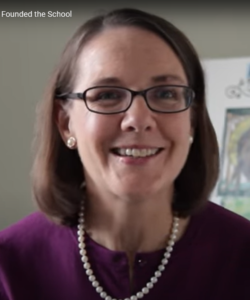
A Parochial School Finds New Life in the Heart of a Parish

A few years ago, a visitor traveled to Grand Rapids, Michigan, to tour Sacred Heart Academy, a classical, K-12, parochial Catholic school that has turned around completely after nearly closing its doors.

The visitor said, “This is incredible. This is like looking into the past.”

Fr. Robert Sirico, then the pastor of Sacred Heart Parish, replied, “No, what you’re looking at is the future.”

A bright future for Catholic parochial schools would be a welcome change. The number of elementary students in parish schools has declined nearly 75 percent since the 1960s, and weak catechesis has propelled many Catholic parents toward independent schools and homeschooling.

But a change is underway. Sacred Heart Academy is one of a growing number of parochial schools that have embraced a more distinctly Catholic formation in both the faith and the liberal arts, which is attracting more Catholic families and strengthening parish life.

And Fr. Sirico, whose faith and leadership made the transformation possible at Sacred Heart, has helped spark excitement among other priests and bishops to bring about the renewal of parochial education.

Continue reading at Crisis Magazine…

John Paul II Was Right: Catholic Athletes Must Be Champions of Virtue

Twelve-year-old me looked forward to one thing every day: swim practice. Every day, five days a week, I was in the pool churning out laps for at least an hour. And I did not want to be anywhere else.

Between dreams and aspirations of one day living Michael Phelpsian Olympic glory in the water, that hour a day was an important part of my daily Catholic education.

My mother, in her highly-structured homeschool curriculum, was adamant that physical activity was as important to my education as was the time I spent learning about the sacraments, the saints, the American Revolution, fractions and coefficients, and everything else a 12-year-old kid learns in school.

For centuries, it was commonly understood that an education, fully realized, included athletic practice and competition, and the practice of such things nurtured greater virtue and intelligence. The classically educated person nourished mind, body and soul.

Today, athletic competition is no less formative. It has the potential to impress and the potential to depress — to inspire celebration or disgust. And as such, it embraces the human experience, with all its highs, lows, twists and turns.

Continue reading at National Catholic Register…

Liberal Arts, Science, Technology ‘Work Together,’ Says UST Houston President

Students interested in deepening their understanding of the Catholic intellectual tradition while also embracing developments in the sciences will find a beautiful harmony of both at the University of St. Thomas in Houston, Tex. Dr. Richard Ludwick, president of The Newman Guide-recommended University, explains that Catholic universities have the “responsibility to search for meaning in these developing fields.”

The Newman Society recently asked Dr. Ludwick to discuss the University of St. Thomas’s majors and initiatives in the sciences and how the University is a leader in uniting faith and science.

Dr. Richard Ludwick

Newman Society: The University of St. Thomas is unique among colleges in The Newman Guide with its variety of majors and initiatives in science and technology, while also embracing the liberal arts and the Catholic intellectual tradition. Can you tell us how the University balances this approach? 

Dr. Ludwick: It’s not so much of a balance as it is a beautiful symbiosis. The liberal arts can actually work together with science and technology for the benefit of both and for all humanity. That is an essential part of the Catholic intellectual tradition and the part that will continue to lead us forward. For 75 years, the University of St. Thomas has been bringing together the greatest minds of our time to study and teach philosophy and theology and the many other disciplines that we treasure in an education grounded in the liberal arts, but the most essential question is how do we use that expertise not just to study the past but to win the future? How can we call upon the 2,000-year repository of great Catholic thought to help us understand and leverage these unprecedented breakthroughs in science and technology for the benefit of the human person? Ex corde Ecclesiae doesn’t just tell us we should do this, it tells us that we must. For the authentic good of all humanity, it is our responsibility to search for meaning in these developing fields. It’s also a lot of fun, and it continues to demonstrate daily to students the importance and relevance of our faith in the modern world.

Newman Society: What are some of the University’s new digital ventures, and how are you drawing inspiration from St. Maximilian Kolbe for them? 

Dr. Ludwick: In his time, St. Maximilian Kolbe built the largest media apostolate in human history by leveraging radio and print. Not many people know that he even had plans to start a movie studio! Those were the platforms that he had available to him at the time. Just imagine what he would have done today using YouTube, social media, Virtual and Augmented Reality, learning management platforms and a host of other spaces across the digital landscape. Just as with science and technology, we are called to use these tools for the authentic good, to advance society. Guided and inspired by St. Maximilian Kolbe, we have opened the USTMAX Center, a micro-campus concept; the St. Maximilian Kolbe Innovation Network for integration of technology and innovation, focused on the dignity of the human person; and MAX Studios, a new digital apostolate at the University of St. Thomas that seeks to encounter the culture with a missionary spirit. We create podcasts and shows with a focus on intentional dialogue that help us understand our faith and role in this world. We are also forming partnerships with other apostolates for innovation and technology, as well as businesses, including e-sports, for pathways of evangelization.

Newman Society: What do you think makes the University attractive to Catholic students in the 21st century?

Dr. Ludwick: Catholics come to St. Thomas now in growing, record numbers! They want and need more in their formation and they get it: Jesus Christ, the living love of the Father. They tell us they need a coherent core curriculum, not a buffet of unrelated classes, so they can answer timeless questions and make sense of the world. They want the best faculty and relevant majors, all in an authentically Catholic culture that is vibrantly alive. That’s what attracts them to UST. The special bonus is that they get to do all that in one of the world’s top cities, Houston. Our town is the biggest little town ever. It is a community that best reflects the entirety of our human family, and students get the chance to come together with Catholics from all across the globe. We also enjoy the food that such a mix of cultures brings. With the nation’s largest medical center just down the street, amazing museums and unparalleled career opportunities, it’s no wonder that Houston is one of the fastest growing cities. Students get access to all of that from our serene, leafy campus in the middle of the arts district. Once prospective students visit our campus, they almost always make the decision to stay.

Newman Society: Looking forward to the future, how can the University of St. Thomas be a leader in uniting faith and science? 

Photo via University of St. Thomas – Houston

Dr. Ludwick: There is a void to be filled in society, as science and technology continue to rocket forward at accelerating speed. We must keep pace. Armed with our values and a core curriculum that sets students up to ask the big questions, we will make sure that the human person remains at the heart of research and innovation. Whether our graduates go on to be priests, nurses, theologians, engineers or philosophers, they will be a force for good in the world. Ex corde Ecclesiae calls us to a continuous renewal as both “universities” and “Catholic.” As we navigate this bold new world, guided by that apostolic constitution, we will continue to engage the unknown without fear, but instead knowing that our questions will always lead to the Truth. It is that spirit, which we often refer to as the Spirit of St. Thomas, that will lead us into the future for centuries more to come.

Faithful Catholic College Prepared Nurse to Make Daily ‘Gift of Self’

Scott and Clare Held

When Clare Held (née Stiennon) graduated from St. Ambrose Academy in 2012, she knew she wanted to be a nurse—but what she didn’t know was what that path would look like.

She chose to attend the University of Mary in Bismark, N.D., one of the faithful Catholic colleges recommended in The Newman Guide, because of its highly rated nursing program. She was blessed to receive scholarship money to attend the University because she attended Catholic school, and the University was looking to increase the number of Catholic students on campus. “I got out of it what I intended to get: a bachelor’s degree in four years, the ability to work, affordability (I have no debt between my scholarships and the help from my parents) and development as an individual person.”

“I really valued the community. I was on the campus ministry; I have a lot of friendships that have lasted. I felt very well formed with very good friendships with other people who care about Catholicism.” She even met her future husband there, but they didn’t marry until July of this year—after they re-met years later!

She majored in nursing with a minor in theology. She worked as a certified nurse assistant (CNA) all throughout college, and perhaps unexpectedly, she hated her work. She worked in a nursing home at the time, and while she enjoyed ministering to the elderly, the environment was a challenge. She tried a psychology degree, but when that didn’t feel quite right either, she started working in the insurance business.

“I was an insurance claim examiner and producer for a while. I just didn’t enjoy it much. I did enjoy reviewing medical notes to preauthorize treatments and medications. So, I decided to switch back to medicine.” Now, she works as a CNA on the cancer floor in her hospital, which also receive a lot of medical patients. She ministers to the dying through doing a lot of the practical tasks such as flipping patients, giving them comfort baths, changing them and helping them use the restroom.

“I don’t find it to be emotionally challenging, because I think it’s meaningful to help care for those patients. I like my work better now, because I believe we offer better care to our patients, and my co-workers are good people.”

She likes the fact that she’s come full circle. “I am doing a corporal work of mercy every time I go to work.”

From her time at the University of Mary, she distinctly remembers the opening talk that President, Monsignor James Shea, gave to freshmen. He talked about how students must find a way to give theirselves away, and that’s how they find fulfillment, both in a career and in their personal lives.

“That’s always stuck with me,” Held says. “When I switched from insurance back to nursing, I felt that extra-strong feminine desire of giving myself in a meaningful way. How do I make a sincere gift of self? That was an influencing topic when I was at the University, in the culture, friendships and theology. I’ve come to see that nursing is a really wonderful way to give yourself away: I can give myself to the sick and dying.”

Clare has truly come full-circle. After being in an unfulfilling career, one in which she struggled to see how she could give herself away—a strong theme from her time at the University—she has discovered that caring for the sick and dying is how she can truly “make a sincere gift of self,” as Pope St. John Paul II encouraged. Thanks to her time at the University of Mary, she is able to pursue her vocation in nursing in a profoundly radical way and give herself in a Christ-like manner.