A Family’s Journey with The Newman Guide

The Cardinal Newman Society has been hugely influential in my family’s life. As a mother of ten children, my main concern is the salvation of their souls.

I was a public-schooled kid, and my Catholic faith was one of ritual, not true understanding. We never missed Mass as children, Confession and Holy Days being de rigueur. However, my understanding was sorely lacking. I knew something was missing in my life. I did not delve into my Catholic faith until my husband, Andre, and I welcomed our first child, Elizabeth.

By the time she was school-aged, we made the decision to send her to a Catholic grade school. In filling out the forms, the question of “Why do you desire your child to have a Catholic education?” appeared with a couple of empty lines on which to write. Well, the words came forth in unbelievable speed. I quickly responded with over a page of prose of why our daughter should be a recipient of a Catholic education. I spoke of my lack of formation, understanding of the faith, and desiring much more for our child.

I envisioned our daughter being immersed into our Catholic faith, with Catholicism being woven into every subject. I expected the lay teachers to be expert theologians. My husband and I were left somewhat disappointed and disillusioned to learn this was not the case. It was a wake-up call for us as parents to learn that we were the primary educators of our children, and we were responsible to transmit the faith to our growing family. It was not enough to be what I call “ritual” Catholics.

Immersed in Catholicism

We spent two years at one Catholic grade school and two-and-a-half years at another, at which point we had six children. During those early years, we began to learn about our faith, reading Catholic books, listening to Immaculate Heart Radio, and having avid discussions with our pastor. We were busy building our domestic church: praying the family Rosary, praying as a couple, and also introducing other Catholic devotions into our growing family’s life. It became paramount to us parents that we must be able to explain our faith, encourage our young children’s questions, and rely on God’s providence in all areas of our lives. We attended Marian conferences, parish talks, read Church documents, and basically set out to school ourselves on our rich Catholic faith.

As we were immersing ourselves in Catholicism, a suggestion was made to my husband by our neighbor, who happened to be a public middle-school teacher. He suggested we try homeschooling. With much trepidation, prayer, tears, and familial support, we ultimately chose that path to educate our ten children.

We were acutely aware of what was being taught in public schools, as well as colleges and universities. We were concerned for our children’s future higher education choices. I fretted over how we could possibly navigate choosing a college. I tried to calm myself by reminding myself that God had always given us what we needed when we needed it. I questioned older parents and their college-aged offspring about how they approached discerning which colleges and universities were authentically Catholic. I got mixed answers, not all to my satisfaction, until I met a lovely, intelligent, pious woman named Maria Fran.

This dear woman told me about The Cardinal Newman Society and a book they had recently published that listed authentically Catholic colleges and universities. Immediately, I ordered and received a paperback book that listed all the authentically Catholic colleges and universities that existed in the U.S. My prayer had been answered. Soon, we began seeing some of these colleges being profiled in the National Catholic Register. We were thrilled to learn what each school offered and that they were true to Church teaching.

It was vitally important to us that our children learn in an environment that was not opposed to what they had been taught and believed. In August of 2009, our eldest daughter Elizabeth began her classics study at Ave Maria University, in part because of The Cardinal Newman Society. We then encouraged our other children to read through The Newman Guide and choose a college from the list. We have had children attend many authentically Catholic schools: Thomas More College of Liberal Arts, Benedictine College, University of Dallas, University of Mary, and Catholic International University. While there is no longer a paperback book being published, the online information is exceptionally thorough and up to date. I appreciate knowing schools are constantly being monitored and, if they can no longer check off the boxes of being authentically Catholic, they are removed from the list. This resource is incredibly helpful to parents who are committed to helping their children navigate higher education institutions.

Prepared for life

Personally, I could not be happier with the results of our children’s college educations. They have a deep and clear understanding of their Catholic faith and have made it their own. Most of the colleges on the Cardinal Newman list have a required core of classes. In addition, to their respective major courses, our kids were exposed to great literature, philosophy, and theology. This has prepared them for life. It is not enough to be successful at their chosen profession if they do not know how to live a Christian life. It has been a blessing for our children to learn in environments that do not attack Christianity, but bolster the one true Church that Christ established.

I was so pleased to learn the Cardinal Newman list now includes elementary, secondary, and graduate programs. It will make clear for parents exactly which schools are in line with Church teaching and which will not undermine their domestic church. Looking back, it would have been so helpful to know about the Catholicity of local elementary and high schools. My prayer is that all levels of Catholic education will strive to be on this coveted list.


Connecting Catholic Education

No one truly deserves to be called “educated.”

What I mean is, no human ever completes their education. It’s never accomplished, except in small part. Education is a lifelong journey that probably continues into eternity!

Nevertheless, we talk of high school graduation as a conclusion, college as the pinnacle of education, and doctorates as “terminal degrees.” We carve up education into a multi-step progression—from primary to secondary to higher education—and treat each level like a distinct program. Both students and teachers at each level are regarded as entirely different, and in most schools and colleges, there is minimal interaction across levels.

While there are reasons for this, The Cardinal Newman Society thinks Catholic education needs to unify. Next June, we’ll shatter convention with our Newman Guide Leaders Summit for administrators from all levels and types of Newman Guide Recommended education. And through our Newman Guide Network, we’re encouraging collaboration among peer groups but also across all Newman Guide Recommended institutions.

While Catholic schools, colleges, and other programs—and the grades and levels within them—are beautifully diverse in particular aspects, The Cardinal Newman Society strives to restore the common foundation and mission of all Catholic education. Our Newman Guide standards draw attention to the end toward which all Catholic education should stive: the full communion of every person with the Father, through Jesus Christ, guided by the Holy Spirit.

This is the meaning of the high red bar in the Cardinal Newman Society logo, typically running across the page. It symbolizes the high standards of faithful Catholic education, to which all Newman Guide Recommended institutions are committed. But it also is meant to remind us of the lifelong continuum of Catholic education, which begins with the parents’ baptismal promise to raise a child in the Faith and continues through the Christian life.

We think the practical divisions of Catholic education should not get in the way of ensuring faithful formation for every Catholic of every age. The divisions also need not prevent collaboration for the good of all. It’s time to unite and hold the center against the confusion, legal threats, and ideological distortions of our age, for the good of Catholic families.

Lifelong continuum

After nearly two decades of celebrating Catholic colleges in The Newman Guide, with rapidly growing numbers of recommended grade schools and graduate programs and soon also homeschooling, online, and hybrid options, we’re emphasizing the lifelong continuum of Catholic education for people of all ages.

Formation in faith and virtue isn’t just for children. And college isn’t the moment when young adults no longer need guidance—far from it! In fact, we need Catholic education throughout our lifetimes.

Of course, it’s a great blessing that educators today know so much more about the psychological development of their students and can ensure that curricula and pedagogy are age-appropriate. It helps to classify education by grade level, stage of formation (primary, secondary, and higher education), and educational approach. Some classical educators are embracing developmental stages called grammar, logic, and rhetoric, although others regard these as liberal arts that should not be strictly age-limited.

And yet, while broad age-related divisions are helpful, we must remember that they are conceptual and can be too rigidly enforced. We risk shackling students and preventing them from exploring the unity of all knowledge and ascending above it toward God. If we don’t serve every Catholic at every age, we risk excluding people who would benefit from Catholic education. If we don’t keep focus on the enduring mission of Catholic education across all levels, then we narrow our expectations to particulars and lose sight of the goal that lies beyond this life.

It doesn’t help that modern society is preoccupied with the diploma—a piece of paper signaling preparation for employment—instead of delighting in the daily encounter with truth. That encounter is no less fulfilling for the elderly as it is for children.

Mutual success

Moreover, just as Catholic education serves the good of the individual student as well as the good of the Church and society, so should every Catholic school, college, or other educational program be individually excellent yet also collaborate in its mission of evangelization with other educators.

We are excited to see leaders from the Newman Guide Recommended colleges already working in many ways to strengthen personnel policies, share costs, recruit students, etc.—always united in their shared mission. Now, as the number of recommended schools and other programs increases, our Newman Guide Network is forging ties among those faithful Catholic educators for mutual support.

The big task that remains is to build ties across levels. Our leaders summit in June will be a big step, with two cohorts—higher education leaders and leaders of grade-school, homeschool, and other programs—meeting separately for some time but then also gathering together for fellowship and attention to their shared mission. In addition, we are encouraging elementary and secondary education leaders to promote attendance at Newman Guide Recommended colleges, and we are encouraging colleges to forge relationships with Newman Guide Recommended schools and homeschool programs.

One key area of collaboration that is urgently needed is in the defense of faithful education from threats to religious freedom and from ideological activism. The Cardinal Newman Society has long been a vital conduit of information and advice from legal experts to educators. We also recommend actions to stand up and protect these precious institutions.

Heaven or hell

I’ll end with a brief reflection: At what stage of life do we become perfect?

It seems a ludicrous question, and yet I have heard it pronounced with great conviction by various Catholics that catechesis and formation in virtue is for the young, and it does not belong in college. Education in general is something that ends with high school or college graduation. The rest of life is just career and tending to families, perhaps with some private reading along the way.

So is it graduation, then, when we become perfect?

I ask this, because at the moment a Catholic decides education is no longer relevant to his or her life, that must be the moment when the intellect is without error, and the will and passions are perfectly aligned with reason. Only at that moment of perfection does the human have no need of learning and growing.

Until then, all our activity should still be striving for God, by growing in understanding and wisdom without ceasing.

Or maybe there’s an alternative. Perhaps, instead of perfection, we are on the opposite side of holiness when we lose our desire to learn. Perhaps we have lost our desire to know God.

Catholic education belongs in every stage of life. If we move from the liberal arts to specialized studies and skills needed for a particular career, all the more important is the Catholic worldview that situates the particular within the Whole. The alternative to striving for knowledge of God and His wisdom is to fall away from the very purpose for which man was created—and that doesn’t end well.

May faithful Newman Guide education thrive and grow at every level, and by every productive means, for the good of the student and the good of the Church.

Ep. 42: What Sports, Saints, and Smartphones Reveal About the Soul – Catholic Formation at Belmont Abbey

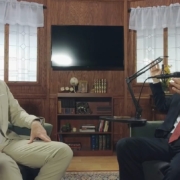
In Part 2 of our interview with Dr. Bill Thierfelder, outgoing president of Belmont Abbey College, we dive into the deeper layers of Catholic education, sports, culture, and the soul. With stories from NFL training sessions to his own Olympic-level athletic career, Dr. Thierfelder unpacks what sport is really for and how it can form or deform the human person depending on its aim.

From Saint John Henry Newman’s vision of the university to Pope Pius XII’s theology of sport, this episode explores the radical claim that virtue, beauty, and discipline belong in both the classroom and the weight room. Dr. Thierfelder also warns of the spiritual cost of tech dependence and offers a moving reflection on what it means to be truly present, to God, to one another, and to the purpose He gives each life.

Whether you are a parent, athlete, or educator, this is a must-listen episode on Catholic formation, real presence, and human flourishing in a distracted age.

Click here to watch on YouTube

Ep. 41: How Dr. Bill Thierfelder Revived Belmont Abbey Through Faith, Love, & Benedictine Tradition

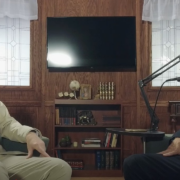
Dr. Bill Thierfelder’s path to Belmont Abbey was anything but predictable — from NCAA Division I athlete and Olympic-level sports psychologist to business executive and devoted father of ten children, his journey ultimately led him to a small Catholic college in crisis. But what followed was nothing short of providential.

Rooted in the Benedictine tradition and inspired by the monks who built the college brick by brick over 150 years ago, Dr. Thierfelder helped transform Belmont Abbey into a faithful Catholic institution that now thrives spiritually and academically.

With humility, conviction, and a deep love for Christ, he shares what it means to live “according to the Rule” — not just as a motto, but as a daily mission. In this conversation, he unpacks the true meaning of love, the spiritual battles of modern education, and the simple prayer that defines his life: “Thank you, Jesus.”

This is a powerful testimony of renewal, leadership, and the beauty of Catholic tradition in action.

Click here to watch on YouTube

Leave a legacy of faithful Catholic education

We’re now in June, with many people making plans for summer vacations. But did you know last month was “Leave a Legacy Month”?

If you haven’t made plans for how your values will be passed on in your will, now’s a perfect time.

Leaving a gift in your will to The Cardinal Newman Society is an easy way for you to leave a lasting legacy of support for faithful Catholic education. And if you don’t yet have a will, you can easily create one in 15 minutes for free through our partnership with My Catholic Will.

For more details about legacy giving, please visit cardinalnewmansociety.org/legacy.


Continue reading…

…Read the previous article.

View the entire Programs Report as a PDF.

We have a winner! Meet our 2025 scholarship student, Teresa White

Teresa White, a homeschooled student from Illinois, will attend the Newman Guide Recommended University of Mary in Bismarck, N.D., thanks to our $5,000 Newman Guide scholarship.

“Attending a truly Catholic college will decidedly strengthen me spiritually, prepare me to be a virtuous defender of the Faith, and assist me in living out my vocation according to God’s plan,” Teresa wrote.

Can you believe that scholarship applications increased 225% this year? You helped make
that happen—thank you!


Continue reading…

…Read the previous article.

View the entire Programs Report as a PDF.

Facebook campaign celebrates pro-life Newman Guide education

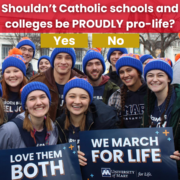
Perhaps you heard about Planned Parenthood’s annual report: they killed a record 402,200 unborn babies in 2023-24—while using almost $800,000,000 of our tax dollars. Still, wayward Catholic colleges refer students to Planned Parenthood, hire pro-abortion professors, and give credit for internships at pro-abortion groups.

That’s why we launched an online poll on social media asking, “Shouldn’t Catholic schools and colleges be PROUDLY pro-life?” And we’re offering our free eBook, Catholic Means Pro-Life, as part of the campaign. (Contact us for a copy.)


Continue reading…

…Read the previous article.

View the entire Programs Report as a PDF.

‘Newman Guide News’ reaches worldwide EWTN audience each week

I’m thrilled to announce that Kelly Salomon, Vice President for Newman Guide Programs, will now appear weekly on EWTN Radio to promote faithful Newman Guide education and address the latest issues facing Catholic educators. Her “Newman Guide News” segment airs each Tuesday at 10:30 a.m. (Eastern) on Catholic Connection with Teresa Tomeo. Be sure to tune in!


Continue reading…

…Read the previous article.

View the entire Programs Report as a PDF.

We’ll keep promoting Newman Guide standards… with your help

Thanks to your generous support, 1,612 schools serving 434,390 students in 48 dioceses are now using The Cardinal Newman Society’s Catholic Curriculum Standards!

Back in 2016, most Catholic dioceses in the U.S. adopted the Common Core State Standards and claimed they had no satisfactory Catholic alternative. With leading experts, we developed standards for English literature, history, math, and scientific topics in grades K-12 to keep focus on Catholic education’s mission to integrally form students in Christ and transmit a Christian worldview.

Next year, on the 10th anniversary, we plan to update and issue a second edition of our Catholic Curriculum Standards. We’re also updating our Principles of Catholic Education, a synthesis of Vatican teaching on Catholic education. And a handbook of our Newman Guide policy standards is in the works, culminating years of developing guidance to ensure faithful Catholic education. Please continue praying for the success of all this work you make possible.


Continue reading…

…Read the previous article.

View the entire Programs Report as a PDF.

…and we can DOUBLE the size of our Newman Guide Leaders Summit

After its soft launch this year, our Newman Guide Network will be fully staffed in 2025-26 to support more than a dozen working groups of leaders from Newman Guide institutions and dioceses. Nicholas Reilly will coordinate Network activity, manage an online Network platform, and communicate with Newman Guide leaders.

Anong the Network plans for 2025-26 is a very special event. You may recall our successful summit of Newman Guide college leaders in June 2024. This time we hope to DOUBLE the Newman Guide Leaders Summit by inviting two cohorts to our summer 2026 sequel: leaders of Newman Guide schools and homeschool programs, and leaders of Newman Guide colleges and graduate programs. That would be amazing!


Continue reading…

…Read the previous article.

View the entire Programs Report as a PDF.